
USA Today via Reuters
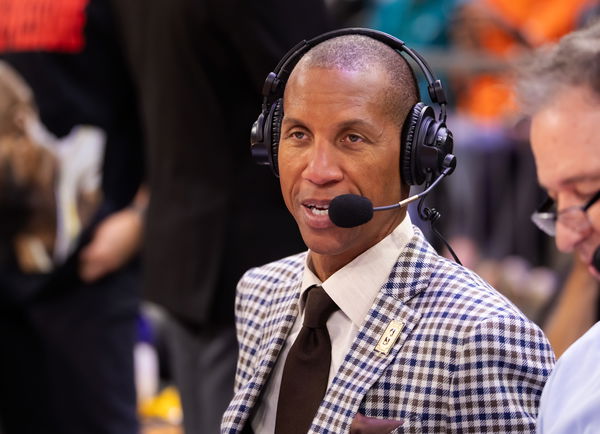
Apr 9, 2024; Los Angeles, California, USA; TNT analyst Reggie Miller during the game between the Los Angeles Lakers and the Golden State Warriors at Crypto.com Arena. Mandatory Credit: Kirby Lee-USA TODAY Sports
USA Today via Reuters
Apr 9, 2024; Los Angeles, California, USA; TNT analyst Reggie Miller during the game between the Los Angeles Lakers and the Golden State Warriors at Crypto.com Arena. Mandatory Credit: Kirby Lee-USA TODAY Sports
The moment fists started flying in Charlotte, the NBA’s past came rushing back into the present. Not because of how the fight looked on the floor, but because of what tends to follow after the tape stops rolling. For Reggie Miller, the Pistons-Hornets brawl was not just another ugly night. It reopened a wound that has never fully healed since 2004.


During Detroit’s game against Charlotte at Spectrum Center, the situation escalated fast. Isaiah Stewart left the bench and threw punches at Miles Bridges, triggering a chaotic scene that led to multiple ejections and an NBA investigation. Stewart’s actions immediately placed him in dangerous territory under league rules. Leaving the bench during an altercation alone carries heavy consequences. Throwing punches adds another layer.
Watch What’s Trending Now!
Speaking on The Dan Patrick Show, Miller made it clear that the league is unlikely to show leniency. “He left the bench and he threw hands. That’s multiple games,” Miller said.
Imago
Nov 26, 2024; Phoenix, Arizona, USA; NBA on TNT television analyst Reggie Miller during the Los Angeles Lakers against the Phoenix Suns during an NBA Cup game at Footprint Center. Mandatory Credit: Mark J. Rebilas-Imagn Images
That assessment carries weight because Miller has lived through the league’s harshest response to a fight. Miller understands why the NBA reacts aggressively to incidents like this. Still, he was careful to separate the Hornets-Pistons fight from what happened in 2004.
According to him, the defining difference was never just the players. It was the fans. “What made that a little bit more unique and different is the fan aspect of it,” Miller recalled. “When the fans started to come onto the court, we entered the stands as well because you didn’t know where players or fans were going to come from. You never knew where a punch was coming.”
That night in Detroit spiraled after a drink was thrown at Ron Artest, leading to players charging into the stands. The league responded with historic suspensions and sweeping security changes that still shape arena protocols today. Miller himself was suspended one game for leaving the bench, despite acting as a peacemaker.
The narrative that still bothers Reggie Miller
Time has not softened Miller’s frustration with how the fallout was framed. What lingers is not just the punishment, but the label that followed the Indiana Pacers for years. “What I didn’t like was them trying to frame it as we were a bunch of thugs,” Miller told Dan Patrick. “If you listen to the broadcast, Bill Walton was livid with the fan behavior. By the time we landed back in Indiana, it was all about us. It was all the players’ fault. As opposed to it really being 50/50. But we should have known better.”
That shift in narrative dismantled more than reputations. It dismantled a contender. The timing could not have been worse for Indiana. Under Rick Carlisle, the Pacers had just finished a 61-21 season built around Miller, Jermaine O’Neal, Stephen Jackson, and Artest. They entered the 2004-05 season as legitimate championship favorites.
Nine games in, everything collapsed. Five Pacers were suspended, including Artest, for the remainder of the season. Jackson and O’Neal missed 25-plus games. Indiana never recovered. “It cost us,” Miller said. “I thought that was one of our best chances to win a championship.”
The stakes are different, but the warning is the same. Detroit is not facing the scale of punishment Indiana endured. Still, suspensions to key defensive pieces like Stewart or Jalen Duren would matter in a season where the Eastern Conference lacks a runaway favorite.
Miller’s reflection is less about predicting identical outcomes and more about understanding how quickly momentum can vanish once discipline takes over the story. The NBA’s ruling is still pending. What history shows is that the punishment rarely stops with the whistle.
Written by

Edited by

Ved Vaze