
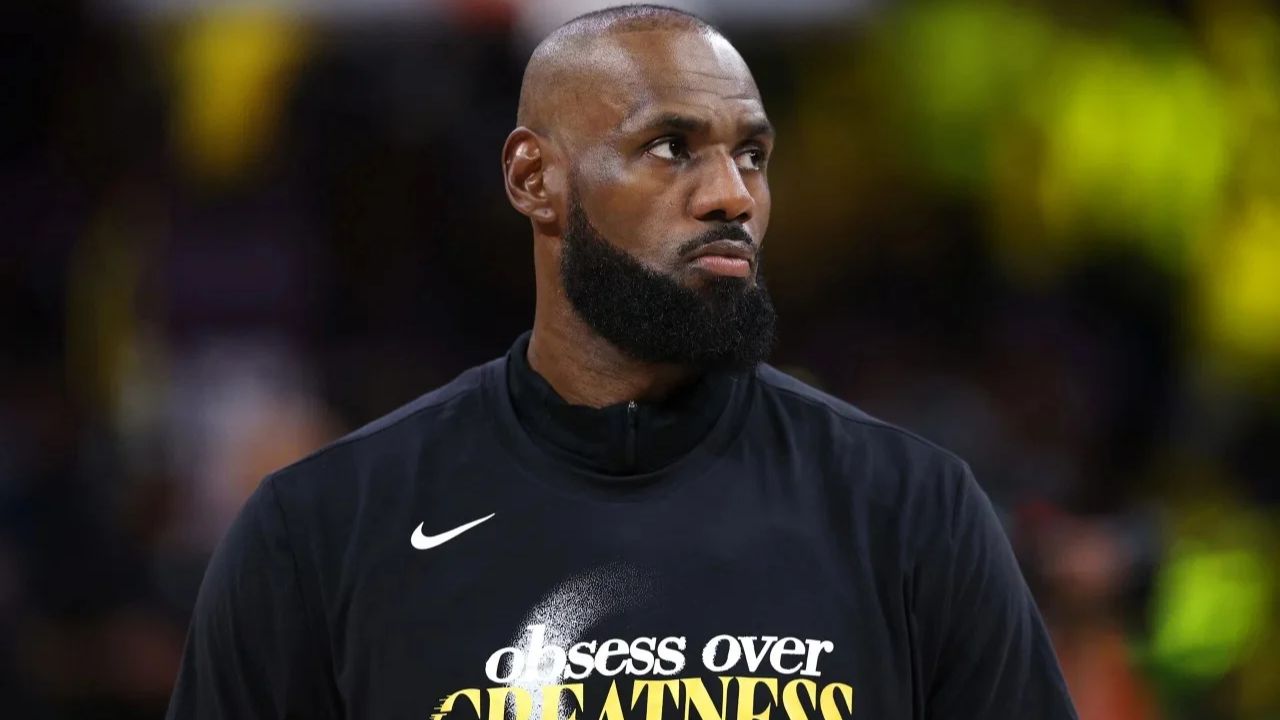
Comparing stars from different generations is never straightforward, especially when their peaks are separated by decades. But the debate over who was greater at his best, LeBron James or Larry Bird, has turned heated. Nick Wright displayed his passive aggression while defending LeBron against Dan Patrick. Both players have built compelling cases as all-time greats, yet they have differences.
And when it comes to judging their respective primes, not everyone sees it the same way.
That disagreement came into focus when Patrick and Wright discussed the comparison on The Dan Patrick Show. Wright hit Patrick with a pointed remark to set the tone:
“Senior moment?”
Patrick refused to back down, defending his opinion with the advantage of firsthand experience. “I don’t need to lie, Nick. I saw it,” he said, before reminding Wright that not many people in sports media could make the same claim. “Not many people in our business can play that card, Nick.”
But Wright wanted to move beyond nostalgia and establish whether Bird’s best season could genuinely stand above LeBron’s peak.
Patrick started without any hesitation: “No, I don’t think he (LeBron James) would have been better than Larry Bird in 1986. Yeah.” In response, Wright got into the details.
“He’s (LeBron James) definitionally a far better defensive player. He is, in my opinion, a better passer. I think Bird was a more flashy passer, but I can call that a draw, because I think Bird is actually an underrated passer by the numbers because of that. He is a more reliable, definitively more reliable scorer, as evidenced by the fact that the ’80s were one of the highest-scoring decades of NBA history, and LeBron still far outstrips him in raw scoring and efficiency. And he’s obviously the more durable, reliable player. So, like all of those things, Bird, the rebounding is tough, because we’re doing peak.”
Defensively, LeBron James has an upper hand, winning 6x All-Defensive teams, that included 5 first teams. Meanwhile, Larry Bird had 3 selections; all of them were second team.
Wright initially included durability, but Patrick reminded him that the comparison was about peak performance rather than longevity. Wright accepted that distinction and shifted his argument toward what each player could do at his best.
Patrick then made his case for Bird.
“Bird, to me, is the equal passer. He didn’t handle the ball as much as LeBron did, so LeBron’s going to have more opportunities for that. Bird’s a far better shooter. And they didn’t even have the three-point shot… LeBron’s a better scorer. Absolutely. Yeah. Bird’s a better shooter. They didn’t even really use the three-point shot. He’s a better rebounder. He’s far more clutch than LeBron has been.”
Patrick’s claim here is factually incorrect. The NBA introduced the three-point line in the 1979-80 season, which was Larry Bird’s rookie year. While three-point attempts were far less frequent in the 1980s than they are today, the shot did exist and was used.
Wright agreed that Bird was the superior pure shooter, but rejected the idea that this automatically made him the better scorer. LeBron James’ scoring production and efficiency, he argued, gave him the edge.
This is where things get heated. Who is more clutch?
Who is clutch between LeBron James and Larry Bird?
The discussion became more contentious when Patrick explained whom he would trust with a game-winning shot.
“Game on the line. Who do you want? Game on the line, who’s taking the shot? Who’s taking the shot, Bird or LeBron?”
His choice was Bird, suggesting LeBron James did not trust his jumper and preferred driving to the basket.
Wright pushed back, arguing that getting to the rim was a perfectly effective way to win a game.
“Guess what? LeBron probably wouldn’t take the shot. He’d probably just drive to the basket and get a layup, as he did against the Pacers to win a series. The goal is to get to the basket.”
Wright’s description is factually imprecise. The play in question was LeBron’s game-winning layup in overtime of Game 1 of the 2013 Eastern Conference Finals against the Indiana Pacers. Miami ultimately won that series 4-3, but the basket itself did not clinch the series.
Wright also brought up LeBron James’ 2013 NBA Finals performance against the San Antonio Spurs. James scored 37 points in Game 7, including a crucial jumper over Kawhi Leonard, as Miami secured its second consecutive championship.
Patrick countered yet again:
“But Kyrie hit the big jumper to win the title,” Patrick said, referring to the 2016 Finals.
Wright clarified that Irving’s shot gave Cleveland a three-point lead rather than directly winning the championship. He also reminded Patrick that LeBron’s free throws helped close out the game.
The disagreement exposed a familiar divide in how basketball greatness is evaluated.
Bird’s reputation as a fearless shooter in decisive moments remains a major part of his legacy. Wright, however, refused to accept that reputation as sufficient evidence that Bird was more clutch.
“But you also make a very interesting case when we’re talking about other players about how we can’t disregard the defensive side of the ball. And in your entire paean right there to Larry Bird, you did not mention the defensive side of the ball. So if we’re talking about peak, when LeBron was arguably the single best defensive player in the league and came a vote away from winning Defensive Player of the Year, does that not heavily tilt in his favor?” Wright said, before closing the argument.
Bird was a capable defender, earning three All-Defensive Second Team selections, but Wright believed James’ defensive versatility gave him a substantial advantage.
On the other hand, Patrick maintained that he was not undermining LeBron James, whom he regularly defended in comparisons with Michael Jordan. Still, Wright’s central argument was that a peak comparison had to account for both ends of the floor.