
Enes Kanter may have opened the floodgates to a conversation the WNBA can no longer ignore. After Sophie Cunningham voiced her stance on transgender athletes, the former NBA star responded unexpectedly. His bold move to declare himself for the 2027 draft sparked fresh questions about women’s sports, league accountability, and who truly stands up for women.
Watch What’s Trending Now!
Fox reporter Emily Compagno commended Kanter for what he did for women athletes.
“My first thought when I saw that was like, thank you. Enes, thank you for standing up for us,” Compagno said. “Oh, thank you. And then I’m like, why is a league for women, by women, of women? Why aren’t they standing up for us? Where’s the commish? Where are the coaches?”
Many believe that commissioner Cathy Engelbert was too lenient in dealing with the Indiana Fever’s Sophie Cunningham. For some, it felt like the WNBA effectively signaled tolerance towards her remark. That lack of accountability fueled political backlash and increased tensions around the transgender community, hurting the league’s reputation.
At the same time, Sophie Cunningham isn’t the only cause for the Enes Kanter episode around the WNBA. The league’s unclear definition of a woman, and most importantly, Natasha Cloud’s latest verbal altercation with Kanter, have also stolen considerable spotlight.
“The coach that stood by Cloud there, the Sky team coach, I wish that Sophie Cunningham’s coach, the Fever coach, would take an example from her. That’s how you stick up for a player because Cloud was firmly in the wrong,” Campagno slammed the Chicago Sky star. “I think it’s juvenile and ridiculous for a professional athlete to show that side of themselves, to show that triggering from whatever.”
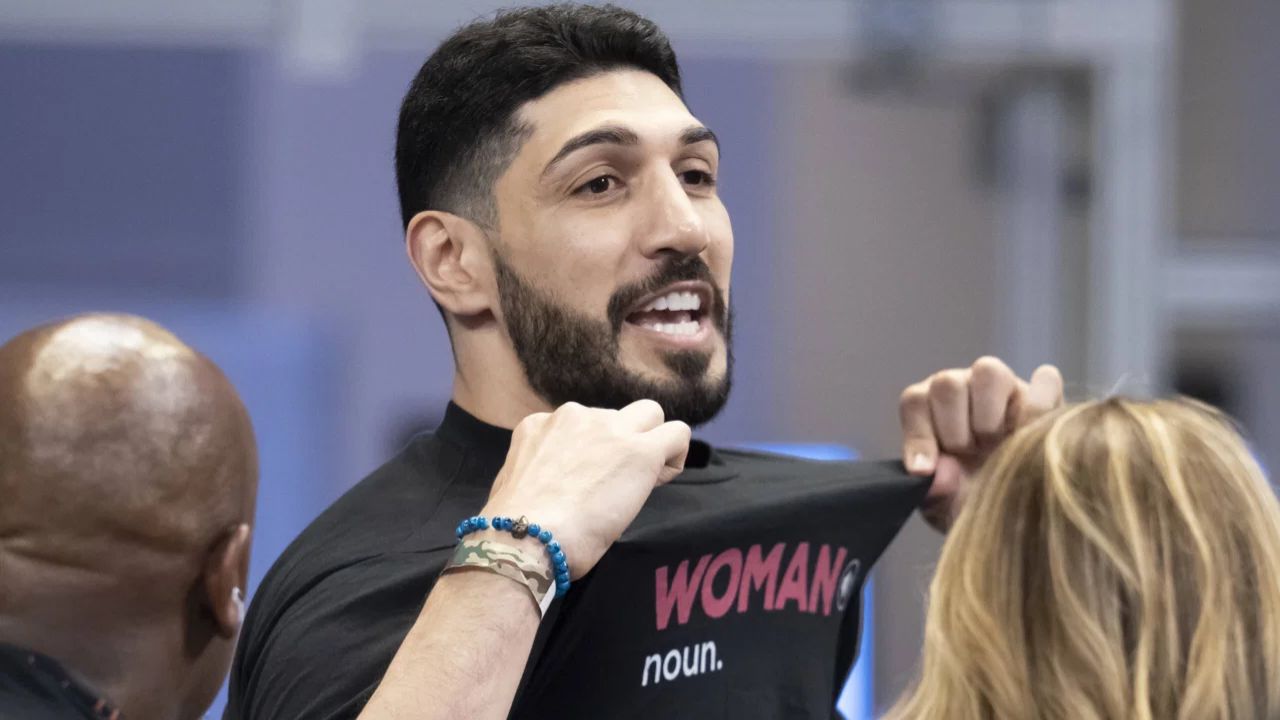
Enes Kanter attended last Sunday’s Sky-Fever matchup with a clear statement on his shirt. It read, “WOMAN noun. adult human female.” The message soon became part of a tense moment with Natasha Cloud. After scoring with 1:22 remaining in the third quarter, Cloud approached Kanter near the baseline. She shouted and pointed toward him. Kanter then rose and moved onto the court boundary. An official called for security, and he was escorted from his courtside area.
Once again, the league did not take action against its athlete. Campagno added, “If it’s just about her thinking, Sophie’s getting too much attention and he wanted to, then so it’s jealousy? Or is it the argument that he’s standing up for women? Either way, to me, is untenable, frankly.”
She noted, “And I think it’s laughable too that a league that has children removed and women have to take off their shirts because they just say chromosomes on them are blasting on the Jumbotron. ‘Hey, trans fans, everyone is welcome.'” Like, the virtue signaling has rotted that league.”
Even if we keep aside the players revolting against transgender athletes, the WNBA takes the bigger stage. Following Enes Kanter and Royce White’s declarations earlier in August, the league higher-ups got together, but failed to define a woman.
The WNBA’s current policy leaves the definition of “woman” unclear. It also sets no specific standards for biological sex, hormone levels, or physical traits. That could give Kanter an opening to pursue a return to basketball under a different gender identity. Thus, solidifying Emily Campagno’s support for him.