
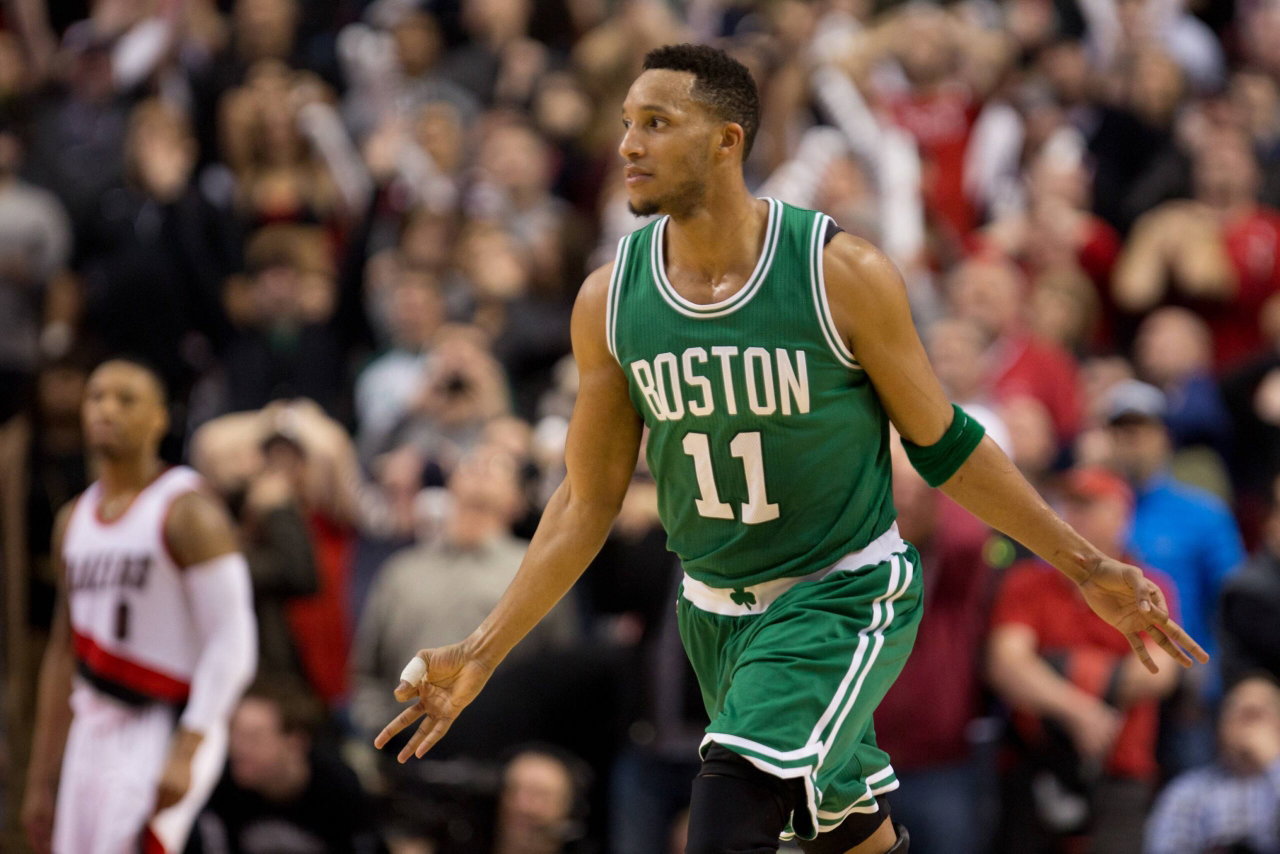
Evan Turner knows what it feels like to enter the NBA with the weight of enormous expectations. Selected No. 2 overall in the 2010 NBA Draft, he arrived in the league with the kind of promise that can shape a young player’s entire career. But as Turner would discover, talent and draft position do not always guarantee the opportunity to become the player a franchise expects.
Watch What’s Trending Now!
His decade in the NBA also gave him a front-row seat to something that can make or break a team’s ambitions: its culture. Having played for Boston and later coached with the Celtics, Turner saw how accountability, player development and a shared commitment to winning can shape an organization. And his assessment of Boston’s approach starts with the people setting the standard, from Brad Stevens and Joe Mazzulla to Jayson Tatum.
In an exclusive conversation with NBA analyst Mat Issa, Turner reflected on the pressure of being a high draft pick, explained why he stepped away from coaching, and offered an insider’s take on what separates the Celtics from other NBA franchises. His answers go beyond the usual praise for a winning team, touching on the difficult choices players face early in their careers and the commitment required to build something that lasts.
Evan Turner spoke exclusively with EssentiallySports via Covers.com, where readers can also explore the terms and conditions of the Stake promo code for betting.
Editor’s note: The following one-on-one conversation was conducted via interview. The transcript has been edited and condensed for clarity.
How are you doing? How is life after playing in the NBA?
It’s all about chapters, man. You go from being a dreamer to a has-been, so you try to find balance, you know?… When people say you miss playing, I just miss competing. You know what I mean? I don’t think there’s a level of… just even gauging, man. Competition is fun. You know what I mean? Even if you went outside and played duck, duck, goose, you would get turned up. You know what I mean? I’m always into that.
I think life is chapters, so I was always preparing for that chapter of my life. I think halfway through my career, I kind of started comprehending the next chapter of my life. So I think looking back on it, I was super grateful. I was super like, man, I played and the odds of making the NBA were super tough. And I’m like, how the h*ll did that happen? But it’s super cool to look back on it and be cool about it. And now you just want to thrive here. So you’re grateful for when you can lose that itch because it is competing, playing, doing something your whole life. That’s a love, that’s a passion that can become an addiction. You know what I mean? A lot of people, they go left when they lose something they love.
You’ve dabbled in a lot since retiring, from coaching to media and business. Why did you choose media and business over full-time coaching?
For one is my daughter, you know, the hours. So my daughter was three. I just finished playing, you know, coaching. Much respect to you guys. Hooping is four hours a day. Coaching is an 18-hour day job for seven, eight months. And to be completely honest with you, I just finished a 10-year career. I was kind of figuring out what I wanted to do next, and coaching wasn’t kind of like an idle space to be in. You have to be all in. And you’re committed to developing people’s careers.
Like I have so much respect for coaches and teachers because it’s bigger than rap. And I think one thing that occurs if you’re not all in where the number one thing is, hey, Joe Mazzulla wants to win an NBA championship—you’re not all in for that? Get off the boat. You understand what I’m saying?
And being a professional and being an old player, you comprehend how important it is. Everybody be committed. You comprehend how important it is. How you heard a teammate might be like, ‘No, I can’t come back and get shots because my girl needs this.’ It’s like, man, what are you talking about? Like, you know, like you got to kind of be committed to being detached and being insane and blacking out. That’s the dark side.
I have so much respect for coaches. I think there’s just certain parts of even enjoying my retirement, but also maturing to be able to snap into that. And, you know, luckily I did what I had to do so I can do what I want to do. So if my daughter turns 11 or 12 and she’s—last night went to Olivia Rodrigo—but once I stop getting those invites, I might start [when] I’m not cool, I guess I will get a job… I live by the decade rule: whatever you do in your 30s, you live off in your 40s. And I’m just trying my best to give that a full run. So I stopped coaching at 32. I’ll be 38 in like two weeks.
You were the second overall pick in the 2010 NBA Draft. Did having those high expectations bring more confidence or more pressure?
You definitely feel pressure. Everything was kind of surreal to be completely honest with you. Getting into the NBA, especially the old NBA, going into a locker room filled with men and just trying to keep up with the pace and adapting. I felt pressure once it took a little while to adjust to what was going on. But I understand basketball. No one was knowing systems and things like the system I played in, nobody averaged more than 13 points per game. Do you understand what I’m saying? When I’m averaging nine or 10, that’s comparatively back in the day, that’s 80.
I think you have to come into situations where it’s all about where the franchise is going. Are they going to develop young talent or are they going to try to win? Back then, I was young. Andre Iguodala, young Lou Williams, Jrue Holiday was there and everything. And you have to go two different ways and, you know, not saying it’s bad, but we try to win as opposed to develop. I envy guys like John Wall. It was terrible. You lose your first two seasons, but you get your footing under you. You know what I mean? And you learn how to lead a team, lead a franchise, and, you know, they kind of build your identity in a sense, and it’s really on your back.
I think the only frustrating part was, like, I never really got a chance for it to be on my back and be able to lead normally as opposed to just being like, hey, I’m playing 25 minutes a game. Like, this ain’t what I was advertised. I had a system set up for me to go run this, that, and the third. Usually rookies come in and they’re coming in and develop, not telling me, like, hey, if you don’t hit an open jump shot because you never have, you got to play behind Andre Iguodala and call it a day. I just don’t think the depth… It was different, and I appreciate it. They let guys duke it out. Do you understand what I’m saying?
If you were drafted second overall in today’s era, do you think your career trajectory would have gone differently?
To be completely honest with you, when I was getting drafted in 2010, I wanted to fall to three or seven. Three was New Jersey, you know what I mean? So I thought I could have been a combo guard. But seven, most importantly, I just thought, like, hey, that’s Golden State. So you got a sharpshooter who can do it all. And then I was coming in a big, big combo guard to play alongside that. I just thought something along those lines would have been completely different.
If I would have went—I want to say nine or ten in Utah, who went nine? Gordon Hayward or Paul George? I mean, Gordon Hayward got to develop and shoot mediocre. Analytically, his game wasn’t the best towards that, but he got to develop for eight years. You know what I mean? Development was everything. About halfway through my second year, I’m getting called to get out. I think that’s what comes with high picks and expectations of it. You look at Anthony Bennett. He’s the number one pick when he was 19. By the time of 21, they’re claiming he’s not good enough to be in the NBA, but I’m pretty sure he’s one of the best 21-year-olds in the world. So I think perception is reality, and much is given, much is expected.
But I never really worried about that after that point. I just started playing good basketball, and I started accepting my role. For eight or nine years, I was playing 28 to 30 minutes a game in one of the best leagues in the world…. I came in the league proving I can shoot as opposed to being like, yo, put him in position until he develops a shot. I’m just standing in the corner. It’s like, hey, bro, I don’t play like this, and that was okay. It’s not bad going back that way, but I think when you sit there—I always respect coaches. I always respect systems, and I always respect coaches that put players in positions to be successful.
That’s why I always had tons of respect for Brad Stevens because it wasn’t so much a system more so than how can you make that system function fluidly at all times. So even if you play Gigi Datome for six minutes, he’s going to get three drawn-up plays, three drawn-up shots because it’s like, hey, if he gives us three points out of three shots, he did his job. You know what I mean? So you understand those type of plays, and when you start comprehending where you’re going to win it and where you fit in, you don’t so much worry about going from five to maybe top eight, you know what I mean, if it’s better for the team, especially for how your game is.
You played in Boston and coached in Boston. What is it about the Celtics that allows them to consistently build such a winning machine?
I just think it’s culture and accountability. I think at the top levels you have some amazing individuals that really set the tone and don’t—they don’t take a shortcut. That goes from Brad Stevens to the executive office to Joe Mazzulla to coaching to even Jayson Tatum, who is a robot when it comes to his discipline and consistency at work. And I think that kind of trickles down. And, you know, for the longest time, the past 10 years, they’ve had some of the best—besides my two years being in here, in between they’ve had some of the best talent over the past two decades. You know what I mean? And I think iron sharpens iron. And, you know, before you know it, you realize you’re in a different environment with some killers. And I just think that really builds it up.
You hear the phrase ‘culture beats talent,’ and that’s what Boston really builds is just a culture. Similar to Miami, they don’t worry about who’s playing, who’s around. Even when JT went down and I went to a UFC fight with Coach Mazzulla, I said, ‘Man, how you feel about this year?’ And he was like, ‘Man, I’m excited, Brad. People are doubting us, but it should be fun. We’ll be able to try some new things. I’ll actually be able to coach it out. Like, it’ll be more challenging coaching because having Jayson and Jaylen kind of makes things easy and looks like I’m just driving the mud ball.’ So, you know, I think even Joe just stepping up there and not overreacting and going to go win 56, 57 games and, you know, be one of the top teams in the NBA and win Coach of the Year. I think that it’s just a mentality and guys continue to work. They take their job serious. Jayson understands who he is and the chapter he’s in. And, you know, I think Brad always has a vision.
Do other NBA franchises have a similar culture?
Man, to be completely honest with you, you always hear this—I don’t know now, but it might be seven teams, eight teams trying to win and the rest are just rocking out of rock. I mean, you got to comprehend sometimes certain teams don’t know what the h*ll they’re doing. Like I’ll look back and even right now I look and see them become the GM and you’re like, ‘Wait, that’s a joke. There’s no way this guy’s about to lead an organization.’ Do you understand what I’m saying? So when you get there, you start realizing there’s—and it’s in every field, there’s a lot of incompetent people high up. There’s certain people that interview well as opposed to over talent. You know, we see that all the time. So you don’t get upset about it. You just comprehend where you’re at.
And, you know, if you ever won, you’re always, all right, you can show them like this isn’t a winning organization. This isn’t what winners do. They’re not trying to win. Like a guy taking a step back and being like, ‘Let’s lose’—like that’s just not how you do the basketball gods. Like shout out to [Sam] Hinkie, shout out to Trust the Process, all that, bro. Like you don’t play with the lovely game of basketball by tanking and shifting your cards. Like I’m not calling Hinkie… It’s just some weird old goofy nerdy shit, you know. So I don’t—I think only a couple teams have done that. But, you know, that’s what makes culture special. Sometimes you’re part of organizations and then you’re part of franchises. And, you know, it’s a blessing to play for Boston, even going to Portland. That was a fun time because how they conducted themselves at a high level and, you know, how they showed up each year to try to get better.
You think you should be at the highest, highest. That one is like, no, you might meet some guys and say, like, ‘How did you get an NBA coaching job? You coached the G3.’ Or, ‘My best friend was Mike such-and-such.’ So now you coach NBA players. Like, do you understand what I’m saying? And that’s why you just got to keep getting better and better at what you do because sometimes you can’t control everything. But when people see the work you do, they’ll catch on. But at the end of the day, being a good guy is better than anything. Like every year, you know, thank God if I needed to go somewhere, the Celtics would let me, you know?
Throughout your career, which teammates left the greatest impression on you or influenced your approach the most?
I think it’s a mixture of—I think just like examples-wise, I think like Dame [Damian Lillard] and Isaiah [Thomas]. I just think how they’ve showed up. You know, to be able to see them do that at a high, high level was kind of like, you know, OD crazy. You know what I mean? But I think those are unique individuals and unique minds. You know, Dame’s a rare individual. I think Isaiah, what he’s able to do in a fire, even just what he does to this day, I always say, ‘Man, that dude was just all heart.’ And then obviously Iguodala, we’re still tight to this day. So those are a few teammates that, you know, I always admire, but I’m always like, hey, if you would have seen them work, you understand.