
Imago
Image courtesy: Imago
Imago
Image courtesy: Imago
Shaquille O’Neal has never hidden his frustration with where the center position has gone. In his mind, dominance is loud, physical, and unmistakable. Anything less feels unfinished.


That belief resurfaced this week when Shaquille O’Neal delivered a blunt verdict on Joel Embiid, questioning whether the Philadelphia 76ers star has the edge he believes defines greatness at the position.
Watch What’s Trending Now!
The comments came during O’Neal’s appearance on The Jawn Podcast, where he explained that his criticism is intentional and designed to provoke a response. “When I be talking s–t about Joel, it’s not that I don’t really care,” O’Neal said. “I’m gonna see if he gets pissed off. He never gets pissed off ever. Oh, we don’t play like that anymore. That tells me he ain’t got it.”
The statement landed hard because it arrived as Embiid has been openly reflecting on his career path, his injuries, and the misconceptions surrounding his mentality.
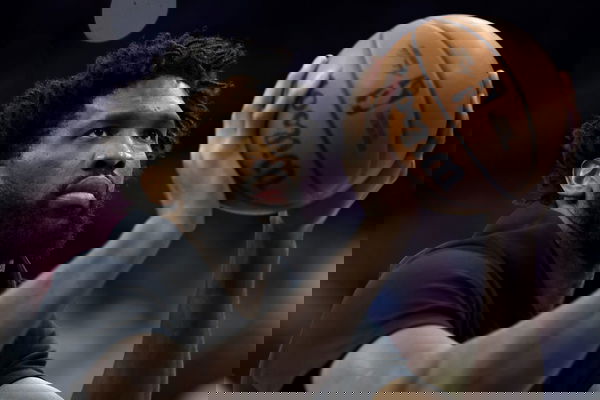
Imago
Jan 16, 2026; Philadelphia, Pennsylvania, USA; Philadelphia 76ers center Joel Embiid before action against the Cleveland Cavaliers at Xfinity Mobile Arena. Mandatory Credit: Bill Streicher-Imagn Images
O’Neal’s critique is rooted in how he defines toughness. As a former paint-dominating force, the Hall of Famer believes centers should punish defenders and impose their will at the rim. Spacing, finesse, and patience do not move the needle for him the same way brute force does.
By contrast, Embiid represents the modern prototype. The 76ers star scores at all three levels, bends defenses with footwork and touch, and controls games through efficiency rather than intimidation. That difference is what fuels the tension in O’Neal’s assessment.
Still, context matters. Embiid has dealt with multiple knee injuries over his career, including several procedures on his left knee. Absorbing constant punishment inside the paint carries long-term consequences, and Embiid has been deliberate about preserving his body for the postseason.
That reality does not factor into O’Neal’s evaluation. For him, greatness is measured against the standards of his era, not the constraints of today’s game.
Joel Embiid: a master by the numbers
The criticism also runs into a statistical wall. Despite dunking less than earlier in his career, Embiid still operates primarily inside the arc. Of the 269 field goals he has made this season, only 35 have come from three-point range. His scoring diet remains rooted in the mid-post, the paint, and the free-throw line.
After a brief adjustment period early in the season, Embiid has been overwhelming. The seven-time All-Star is averaging 26.4 points per game and has already scored 30 or more points eleven times. On many nights, he reaches that mark without forcing the issue.
That efficiency is part of his control. While it may not look violent, it consistently bends defenses and dictates matchups. Embiid has also pushed back on the idea that his approach reflects a lack of drive. In discussing his journey, he has repeatedly emphasized how quickly his career accelerated after he began playing basketball at 16.
“It’s like when people say, he’s lazy, this and that,” Embiid said. “First of all, you can’t be lazy if you start playing basketball at 16 and then make it to the league in three years. It’s been tough. But I’m always going to fight.”
Those words underline the disconnect. O’Neal looks for visible fury. Embiid points to survival, adaptability, and longevity in a body that did not have years to adjust to elite physical demands.
O’Neal’s comments are unlikely to change Embiid’s style, and Embiid’s production is unlikely to soften O’Neal’s stance. That is because this argument is larger than one player.
It is about whether dominance must look the same across eras. Embiid may never bully defenders the way O’Neal once did. However, his complete, controlled approach continues to produce elite results in today’s NBA. As long as those numbers remain, the debate will persist, even if neither side ever fully concedes the point.
Written by

Edited by

Ved Vaze