
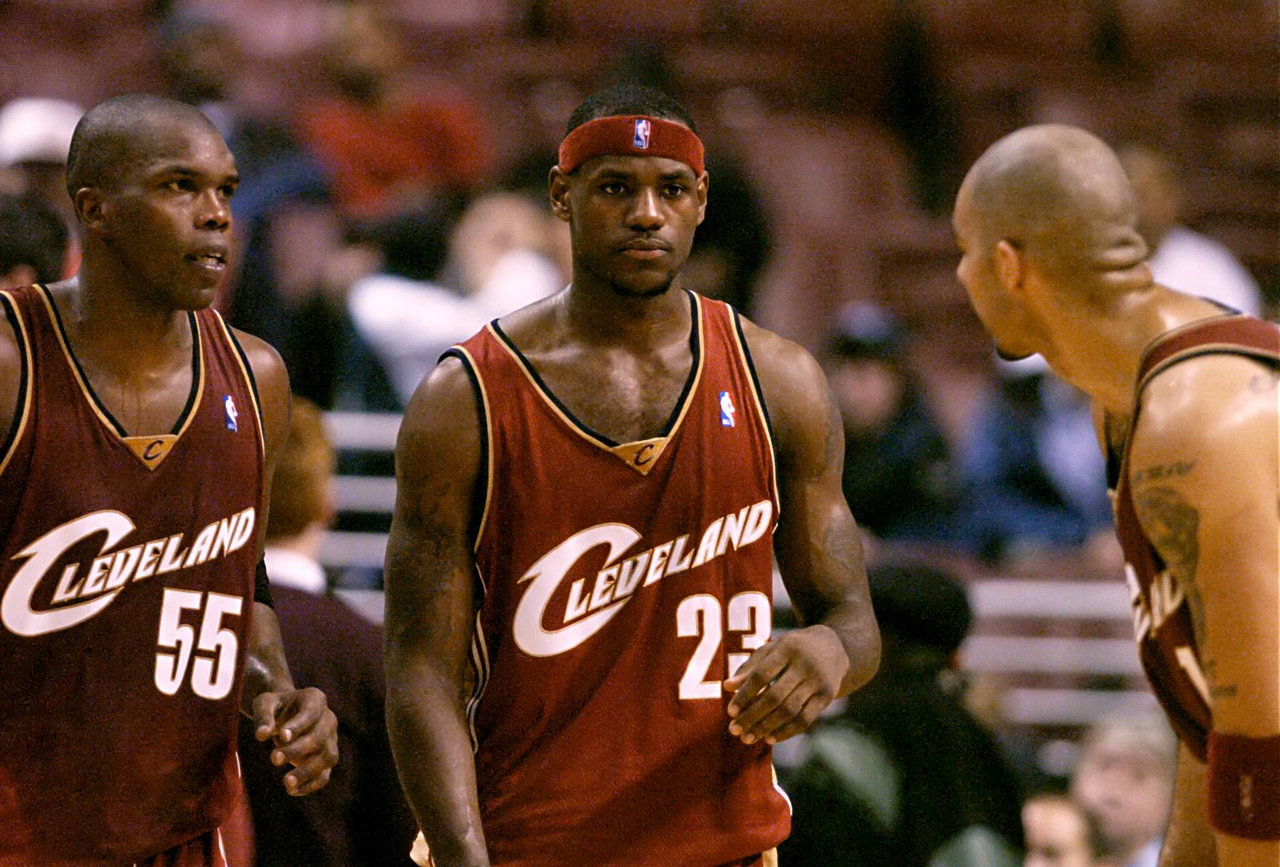
Ricky Davis was having one of the best seasons of his NBA career when the Cleveland Cavaliers made a franchise-altering decision in the 2003 offseason. The team had just secured the No. 1 overall pick, and the arrival of an 18-year-old prospect was about to change the direction of the organization.
Watch What’s Trending Now!
During an appearance on the Out the Mud podcast, Davis recalled how he viewed the situation when LeBron James arrived in Cleveland. He was confident in his ability to score but Cleveland was on its way to building the team around the newly drafted hometown star.
“They thinking like, this ain’t gonna work. How we gonna get LeBron (James) to score,” Davis said, explaining the Cavs were having him to play alongside the rookie. He added that he was already comfortable creating his own opportunities and did not need plays specifically designed for him.
Davis was already an established scorer in Cleveland, coming off a season in which he averaged 20.6 points and 5.5 assists per game. But the Cavaliers were preparing to build around their new franchise cornerstone, LeBron James, and Davis believes his presence became an obstacle to that plan.
Looking back at his brief time playing alongside James, the former Cavaliers guard suggested that NBA politics played a major role in his departure. Davis believes the organization wanted to give its rookie more opportunities to become the primary scorer, even if that meant moving on from a player who was already producing.
The problem, according to Davis, was how that dynamic affected James’ development. The rookie was still learning how to navigate the NBA, and Davis said James often looked to pass rather than force his own offense.
“He passing it my way, I’ma score,” Davis recalled. “So they figured out, we got to kind of get Rick out, because if Rick keeps going, I don’t know the pace of how we gon’ develop young fella, how he gonna be the best player in the world?”
Davis also reflected on the Cavaliers’ broader strategy during that period, acknowledging that the organization had a plan and that it ultimately worked. “You know, it worked what they’ve tried to do,” he said.
His comments offer a different perspective on a trade that came just months after he had established himself as one of Cleveland’s leading offensive options.
The Cavaliers selected James with the first overall pick in the 2003 NBA Draft after finishing the previous season with a 17-65 record. Cleveland had been rebuilding, and landing the hometown superstar gave the franchise a clear centerpiece for its future.
Davis, meanwhile, had emerged as a major part of the team’s offense. However, their time together did not last long. Davis appeared in just 22 games alongside James before the Cavaliers traded him to the Boston Celtics on December 15, 2003.
Cleveland also sent Chris Mihm and Michael Stewart to Boston in exchange for Eric Williams, Tony Battie, and Kedrick Brown. The deal effectively ended Davis’ short stint playing with the future four-time NBA champion.
The former guard’s recollection suggests that he did not view the move as a personal falling-out with James. Instead, he believed the organization wanted to create a different offensive environment for its young star.
Davis was not criticizing the rookie for passing the ball but he was describing a situation in which his own scoring ability and the franchise’s plans for James did not necessarily fit together.
The Cavaliers’ decision to prioritize James’ development ultimately shaped the next era of the franchise. He quickly became the team’s centerpiece, winning Rookie of the Year honors and eventually turning Cleveland into a consistent playoff contender.
James’ first stint with the Cavaliers ended without a championship, but his return in 2014 changed the franchise’s fortunes. He led Cleveland to its first NBA title in 2016, completing a historic comeback against the Golden State Warriors.
Davis’ departure was one of the early roster decisions made during the transition toward building around James. Whether the Cavaliers moved him specifically to clear the scoring opportunities for their rookie, as Davis believes, remains his account of the situation.
Still, his latest comments offer a glimpse into the organizational decisions that surrounded James at the beginning of his career, when Cleveland was already making sacrifices to help its young star become the player the franchise envisioned.