
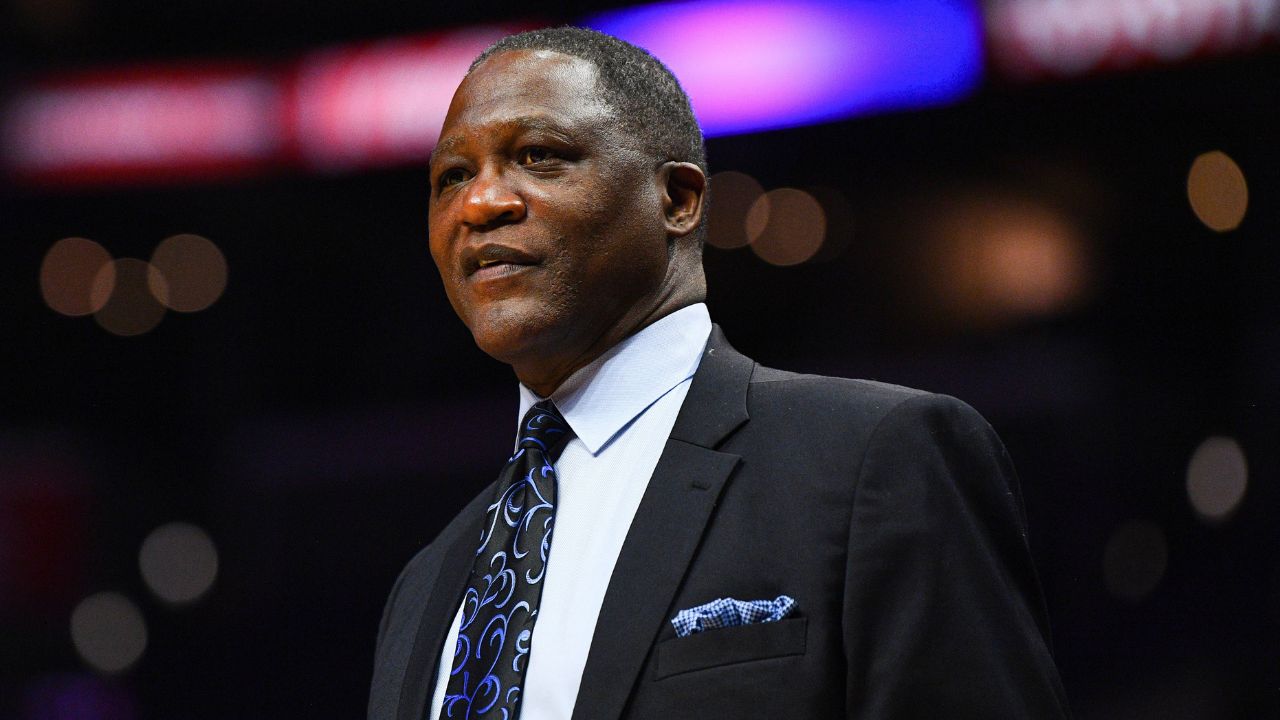
Dominique Wilkins became a hometown hero in Washington, North Carolina, before he had played a minute in the NBA. But the decision that shaped his future also turned some of that admiration into hostility. The HoF says the backlash was so frightening that he stayed away from the town for 30 years.
Watch What’s Trending Now!
A painful chapter beyond the highlight-reel dunks and celebrated career.
Wilkins was a natural, and right from the beginning, he dominated the game. He held a 76-1 high school record. The state of North Carolina loved him. But what happened after that?
“Well, they went from loving me to hating me,” said Dominique Wilkins in a recent sit-down with Sean Callagy.
“Back then in the state of North Carolina, if you’re a great player in the state of North Carolina, you don’t leave the ACC. It was against the rules, almost. And I was the first one to do that, a great player to do that out of North Carolina. I went to Georgia. When I signed with Georgia, they went from loving me to hating me, and I got death threats, cross burning in my yard. It was a bad situation. And when I left there, I didn’t go back for 30 years.”
The reaction was rooted in more than basketball rivalry.
In 1979, Dominique Wilkins, the Washington High’s star, was one of the country’s most sought-after recruits. He helped his team win back-to-back state championships. Local fans expected him to remain close to home and play in the ACC, where North Carolina State, North Carolina, and Duke dominated.
Georgia, by contrast, was outside the conference and offered Wilkins a chance to build a name of his own.
That decision triggered a campaign of intimidation.
Apart from death threats, Wilkins had also described windows being smashed at the family home and paint being poured over his mother’s car. He has also recalled school records being changed to show failing grades, in an attempt to strangle his college prospects. Police arrested him after a store employee accused him of stealing a roll of tape.
Dominique Wilkins was still a teenager.
The danger eventually became serious enough that his cousin, a police officer, warned the family that staying in town was not safe. They packed up and left during the night. Wilkins didn’t return for three decades. He carried the memory of a place that had once celebrated him before turning on him.
“The only reason I went back, the mayor of that town drove from Washington, North Carolina to Atlanta to view my film, my life story. And I said to myself, I said, If he can do that, the mayor of that town, I can drive by myself. I can go back. And I was kind of reluctant, but I went back. I remember coming, driving down the road, and I see all these people on the road; I mean, I was nervous, right? I didn’t realize it was a parade for me that he kind of orchestrated. So that’s still a part of your history, so you have to at some point go back.”
The welcome did not undo the threats or the years away. But it offered Dominique Wilkins a different memory to carry. One that acknowledged both the harm and the possibility of reconciliation. His story remains a reminder that an athlete’s choice should belong to the athlete, not to a hometown that believes it owns him.
Meanwhile, his NBA career became the stuff of highlight reels.
Known as “The Human Highlight Film,” Wilkins became a nine-time NBA All-Star, won the NBA scoring title in 1986, and captured the Slam Dunk Contest twice. His achievements made him one of the game’s defining high-flyers, but they could not erase what happened in NC.