
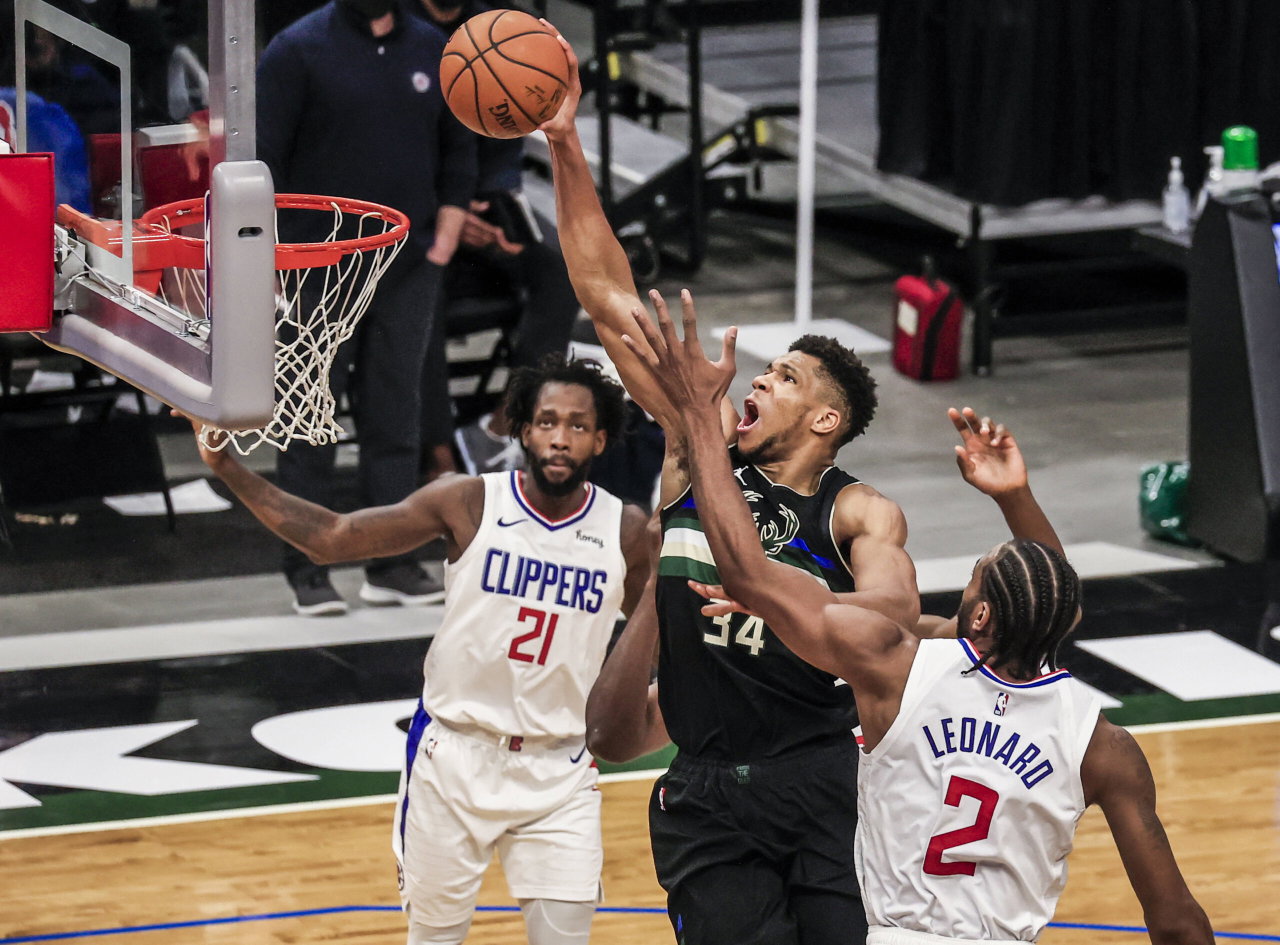
The NBA has long operated on a simple hierarchy: Stars get the final say, while everyone else adjusts. But Patrick Beverley believes that hierarchy became impossible to ignore when the Clippers discussed his contract. After sacrificing a huge pay cut to remain in LA, the veteran guard expected his loyalty and role in the franchise’s breakthrough to matter. Instead, he says the Clippers took a surprising step when negotiations stalled, forcing him to question whose approval actually mattered. Kawhi Leonard?
Watch What’s Trending Now!
“I turned down a three-year, $50 million deal with Sacramento just to stay with the Clippers,” Patrick Beverley opened the story, speaking with Thanasis Antetokounmpo on Thanalysis.
Beverley revisited the contract meeting that ultimately changed his relationship with the LA side. He recalled the team initially offering roughly $4 million to $5 million less than he expected for a one-year deal. Bev walked out of the meeting and called Kawhi Leonard.
“I left the meeting. I called Kawhi,” Beverley said. The Clippers then contacted his agent and increased the offer by roughly $6 million to $8 million for a year. For Beverley, the sudden adjustment created a bigger question than the money itself.
“Why do you need to call Kawhi for anything when I’ve been here the longest? Why are you calling him?” he asked.
The frustration was rooted in a decision Beverley had made two years earlier. In 2019, after helping the Clippers push the mighty Warriors to six games, he entered free agency with significant interest. The Kings offered him three years and $50 million, but Beverley chose to stay in LA on a three-year, $40 million contract.
That meant leaving $10 million on the table.
Pat Bev believed the sacrifice represented more than a financial decision. He wanted to remain part of the culture he had helped establish. Meanwhile, the Clippers pursued Kawhi Leonard and Paul George, transforming themselves into a legitimate contender.
By 2021, that gamble had produced the franchise’s biggest playoff breakthrough.
“I was part of that starting five that helped the Clippers go to the first time ever Western Conference Finals,” Beverley added.
He pointed to the long list of accomplished guards who had previously passed through LA, including Chris Paul, Rajon Rondo, and Russell Westbrook, arguing that his group finally accomplished what those earlier teams could not.
That history shaped Beverley’s expectations when extension talks began. He had been with the organization longer than the new stars, sacrificed money to stay and helped deliver the deepest postseason run in franchise history. From his perspective, a meaningful extension seemed like a natural reward.
Instead, the opening offer left him feeling undervalued.
His decision to walk out of the meeting became the turning point. The Clippers’ willingness to improve the offer only after Beverley contacted Leonard made the situation feel more personal.
If the organization could find additional money after the meeting, Beverley questioned why that money had not been available from the beginning.
The episode also highlights how dramatically the Clippers’ power structure had changed. Beverley had helped shape the team’s identity before Kawhi Leonard arrived. But Leonard was now the franchise centerpiece whose influence extended beyond the court.
That distinction mattered.
Beverley’s complaint was not simply that the Clippers initially offered less than he wanted. It was that his years of service and financial sacrifice appeared to carry less weight than the involvement of the superstar around whom the organization had built its future.
His Clippers tenure eventually ended. Also, it became a starting point for a spiral down. Pat Bev played short stints with 5 different teams before removing himself from the league.
He made stops at Minnesota, the Lakers, Chicago, Philadelphia, and Milwaukee. Yet the contract story remained a window into why the relationship deteriorated.
The Clippers may have gained their superstar era. But Beverley left with a lasting question: if loyalty can be sacrificed for the team, should respect have to be earned through someone else’s approval?