
Earlier, former NBA player Enes Kanter made an almost identical announcement, declaring himself eligible for the 2027 WNBA draft based on the league’s self-identification guidelines. On Fox Sports Radio, Royce White decided one declaration wasn’t enough to make the point.
Watch What’s Trending Now!
White, a 2012 first-round pick who played three career NBA games with the Sacramento Kings, announced he’s also declaring for the 2027 draft:
“Right now I’m just having a blast in my feminine era,” White said live on TV. “I never thought that I was a woman. I’ve always trusted the science and I thought I was a man my entire life, but after further review and a strong look at my personal preferences, it would appear that I am indeed sometimes identifying as a transgender woman. And I think it’s only fair that I get to play with some of my queens here in the twilight of my career, my athletic prime.”
In a separate interview with Fox News Digital and OutKick, White said: “I’m transgender. I’m a woman. I identify as sometimes as a woman for purpose of basketball, professional basketball, so I’ll be declaring for the WNBA draft in 2027 as well,” he said. “I think I’d be unstoppable. But I’m a team-first guy. I’m a pass-first kind of player. I do the little things. I led my team in all five major stat categories at Iowa State University.”
White’s announcement was seen as a direct challenge to the league to clarify its eligibility standards rather than a genuine roster pursuit. “I’d like to know what the parameters are,” he said. “What exactly are the specifics? What criteria do I need to meet in order to be able to play? Is it just a wig? Do I have to cut my beard? Does my voice have to get a little bit lighter?”
The WNBA’s 2026 collective bargaining agreement states that “only players who are women are eligible to play in the WNBA.” But according to Fox News’ review of the 409-page document, it does not define the term or lay out specific standards for transgender or intersex athletes.
The controversy began when Indiana Fever guard Sophie Cunningham said she wants “to protect young girls in a locker room… who shouldn’t have to go against biological men.” Those remarks drew both support and sharp criticism from around the WNBA.
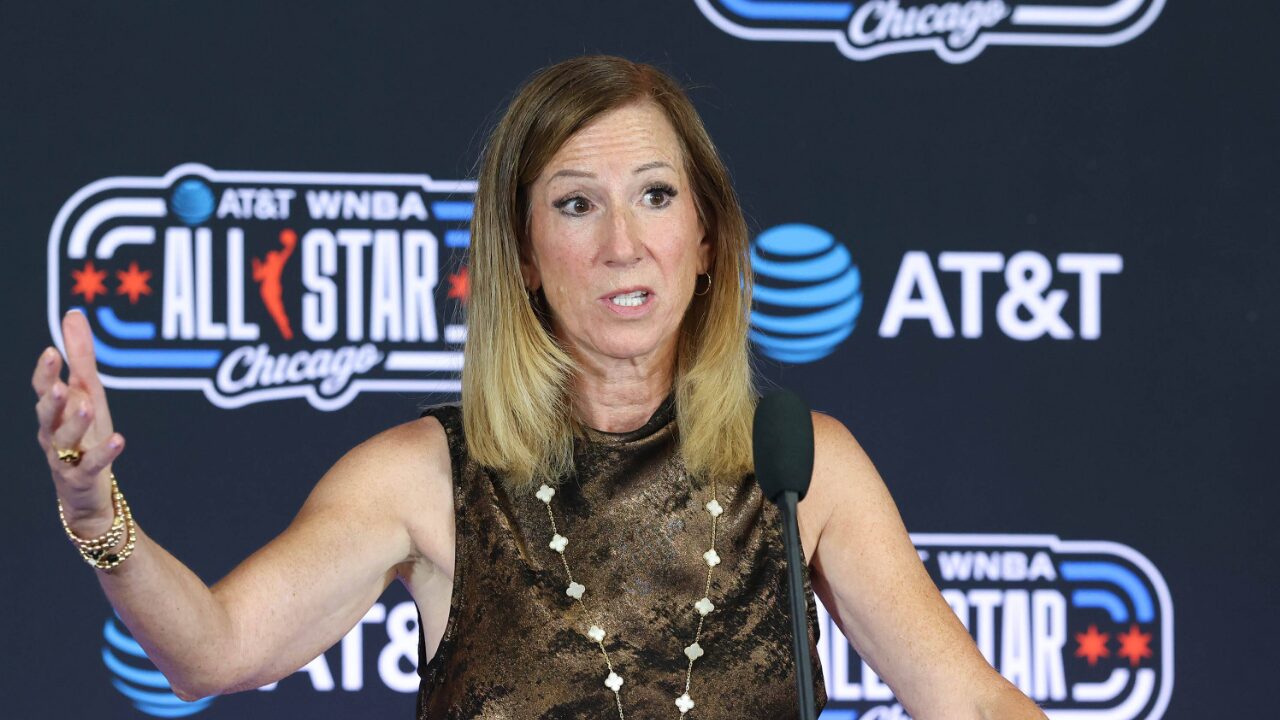
Commissioner Cathy Engelbert addressed it in a memo to teams, writing, “I know many of you have received questions in recent weeks regarding transgender athlete participation in women’s basketball, and I expect this topic will continue to receive significant attention.” The league separately issued a statement saying it would not be used as a “political pawn.”
Neither declaration formally places White or Kanter in the WNBA’s draft pool, and neither guarantees eligibility or a roster spot. The league has not issued a detailed policy addressing how it would evaluate a transgender applicant under the CBA’s women-only language.