
A recently released Amazon Prime Video documentary, “Jerry West: The Logo,” explores the life, career, and complexity of one of basketball’s most influential figures. The film traces his journey from a difficult childhood in West Virginia, marked by the loss of his brother in the Korean War and an abusive household, to a Hall of Fame career as both a player and executive.
It connects those early struggles to the relentless competitive drive that defined Jerry West’s legacy, fueling both his success with the Los Angeles Lakers and his frustrations, including eight NBA Finals losses. That same intensity later shaped his front office career, where he helped build championship teams across multiple organizations.
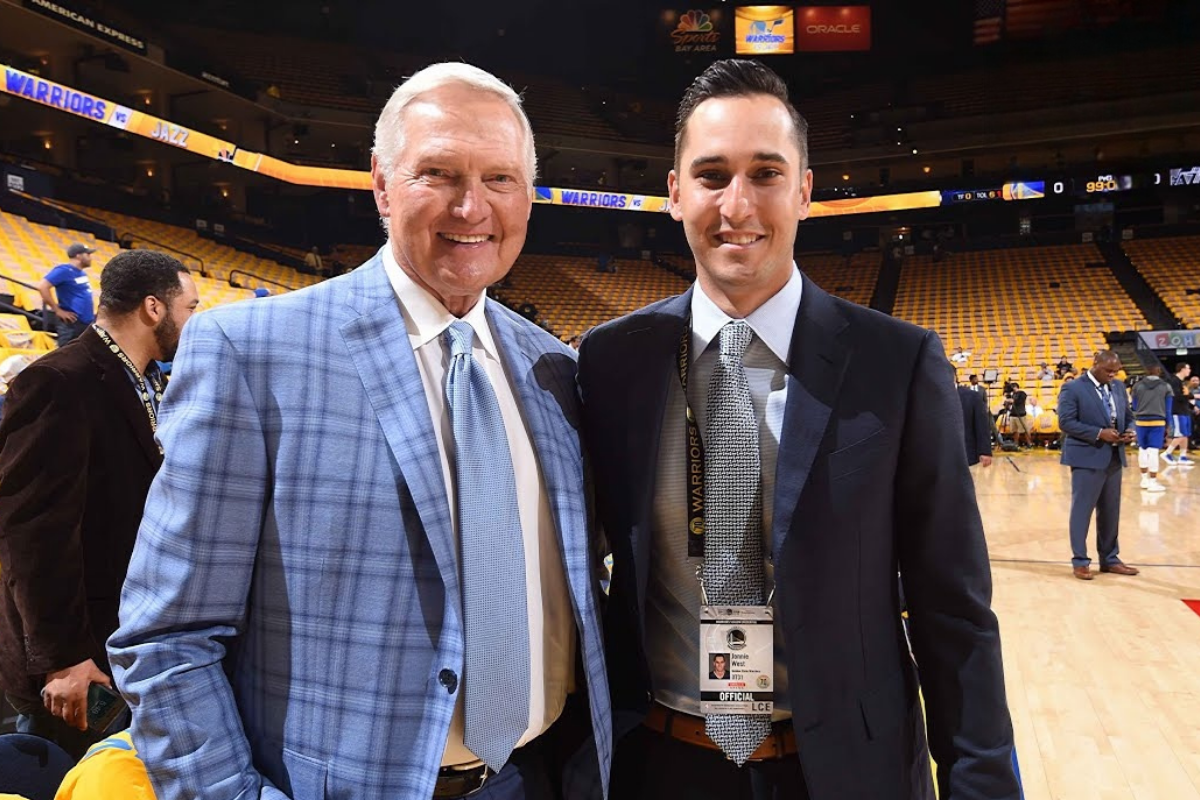
Jonnie West, the Golden State Warriors’ senior director of pro personnel, spoke to EssentiallySports about the project centered on his late father. He also discussed presenting at his father’s third Hall of Fame induction shortly after his passing in 2024, the Kobe Bryant and Shaquille O’Neal acquisitions, and memorable examples of his dad’s competitive intensity. Jonnie also addressed his father’s complicated relationship with the Lakers after leaving the organization in 2000.
Editor’s note: The following one-on-one conversation has been edited and condensed.
You’ve been part of the different stages with this documentary. You were part of the interview process. You saw the finished product. You attended the premiere recently. What are the things that stuck with you during those moments?
West: “This was really the first time of being part of something at this level with a documentary. My brother, Ryan, and I were heavily involved with everything. It was an amazing experience. Obviously, it started out one way and ended another way with my Dad’s passing. Obviously, that was never intended. But it kind of changed the whole dynamic of the documentary. It went from telling my Dad’s story about his life and his career to also becoming a legacy piece for him once he passed. It was jus ta tremendous experience. The people we worked with all along the way was amazing to work with, starting with Kenya Barris and his team, Propagate, Amazon and the NBA. It was an amazing experience all the way through.”
We obviously miss Jerry every day ever since we lost him two years ago. We all miss Jerry, and I hope you and your family have been hanging in there under tough circumstances. With that in mind, what are the stories, both familiar and new, that have really stayed with you?
West: “After his passing, I took a lot of time and talked to a ton of people in the first few days after his passing. I think the thing that stuck out and impacted me the most is the impact that he had on so many people and the variety of people. You can go all the way from the superstars to the legends of the NBA to people who are in video rooms in organizations and analytics departments. The amount of people that I cried on the phone with those first couple of days is something that I would never share who it was. But with the vast majority and range of those people, you would be pretty surprised about the personal and professional impact that he had on a lot of people.
He was an incredibly open and honest person. That is something that he showed when people talked to him. But it was on a much deeper and personal level too than what people realized. It was a really comforting thing to talk to people and go through that and realize the impact that he had. Obviously, we were going through a certain type of loss. But we weren’t alone in it at all.”
What was the process for you in being Jerry’s presenter on his behalf for his third Hall-of-Fame induction in 2024?
West: “In that first week after he passed, my Mom, Ryan and I were sitting and talking. My Mom was like, ‘Crap, the Hall-of-Fame is coming up. We haven’t even thought about this.’ What are we going to do?’ We talked about a few different things. I felt that it had to be somebody from our family that needed to talk. My first thought was my Mom. But my Mom is a very emotional person. She said, ‘There is no chance that I can do this.’ So I quickly said, ‘If you won’t do it, I’ll do it. It needs to be somebody from our family.’
Going through that process, I worked with [longtime NBA reporter] Marc Stein. He helped me a ton. That was great. Marc’s first job as a beat writer was covering the Lakers. He had a close and personal connection to my Dad. Marc has publicly told this story. With one of the first stories that he had to do covering the Lakers, I forget what it was about, but he had to call my Dad at home. My Dad answered, and they talked forever. That’s something that my Dad did with a lot of people.
Marc has always had such a genuine appreciation for him. It was easy to go through that process. The first time we talked, it was for about two hours so I could put all of my thoughts out there on what I wanted to say. Then, he helped me organize it and put it into what a speech should look like. I would’ve had no idea how to do that. That experience was definitely emotional. But going through it, practicing and reading the speech so many times, by the time I got to the Hall of Fame and had to do it on that stage, I was almost numb to everything. I was honestly more nervous sitting in the crowd than being on stage and doing the speech.
It was an opportunity to honor his legacy. The contributor title is something that, in a way, meant more to my Dad than his playing career. It was about his ability and career as a general manager and his ability to be a role model and mentor for so many people. He helped so many people along their career, whether it was a player, front office person or a coach career. He had an impact on so many people.”
In that speech, you said that Jerry made the two biggest consecutive acquisitions in NBA history with the draft day-trade for Kobe Bryant and then signing Shaq as a free agent. During your childhood, what do you recall Jerry saying about Kobe’s pre-draft workout?
West: “That summer was pretty crazy, in general. Ryan and Kobe were a few months apart. I was eight at that time. Ryan was a lot closer to it. But I remember the excitement that my Dad had after a couple of workouts even before the reality that he would ever become a Laker. My Dad became obsessed with finding a way to get this done. He started at the top of the draft and then went all the way trying to find something that could work. It didn’t happen until the 13th pick. There were some roadblocks along the way that they navigated around, and Kobe made it to 13.
In the documentary, Vlade [Divac] talked about it a little bit. But the trade was also difficult for my Dad. He and Vlade had an incredibly close relationship. Something my Dad used to do a lot was pick up people up from the airport. He talked about picking Vlade up from the airport for the first time. There is this 7’1 guy coming out of the airport. He’s got two duffle bags. That’s all he has. So that was difficult in convincing Vlade that he needs to go to Charlotte and that would be best for his career. Vlade wanted to stay a Laker. Once all of that was done, then it was about getting Kobe.
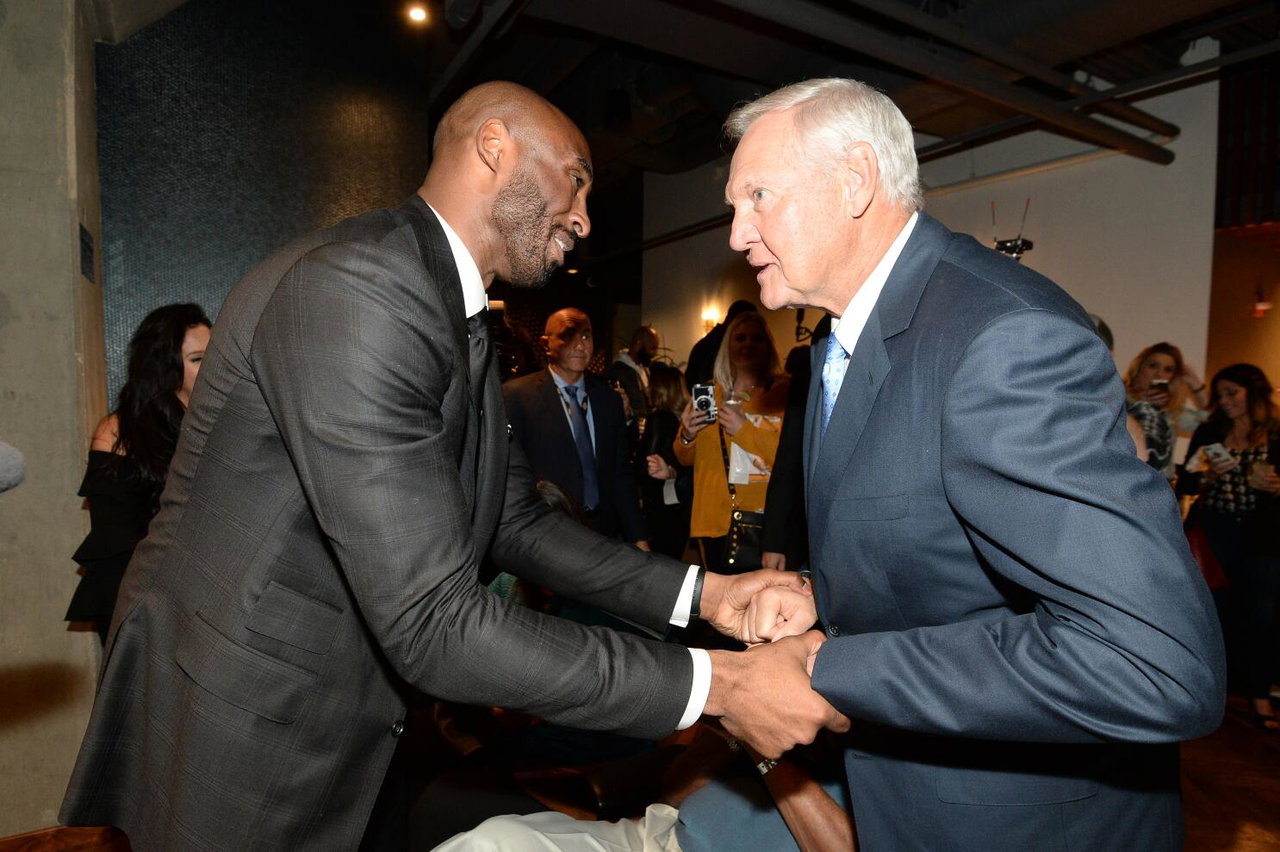
Getty
LOS ANGELES, CA – DECEMBER 18: Jerry West and Kobe Bryant greet before the game between the Golden State Warriors and the Los Angeles Lakers on December 18, 2017 at STAPLES Center in Los Angeles, California. NOTE TO USER: User expressly acknowledges and agrees that, by downloading and/or using this Photograph, user is consenting to the terms and conditions of the Getty Images License Agreement. Mandatory Copyright Notice: Copyright 2017 NBAE (Photo by Andrew D. Bernstein/NBAE via Getty Images)
Then the next part of it was definitely for [Jerry] the most difficult, physically. He actually ended up in the hospital after all the stuff with Shaq and going through that. He ended up in the hospital for a few days because of exhaustion. But getting those two transactions in one summer was impressive. Obviously, one was a known thing. At the time, Shaq was a multiple-time All-Star at that point even though he was still young. Kobe was a project. But one of the things about my Dad that has always stuck with me was his conviction. He was dead set on Kobe, and that he was going to be great. He thought that and saw that from day one. When somebody of his magnitude has that belief in somebody, whether it’s a player, coach or another executive, whatever it is, that’s a powerful thing. I think that bled into Kobe’s confidence that seeing this guy who had so much success as a player and as a GM has this confidence to be what he also thinks he can be. I think that played a huge part in Kobe’s trajectory along his career.”
Regarding the exhaustion that Jerry had before, during and after the Shaq acquisition, what do you recall about what Jerry was dealing with that led him to feel so exhausted that he needed to go to the hospital?
West: “It was a difficult thing. At the time, it was a pretty big free agent class that summer. Alonzo Mourning was a free agent. I want to say Dikembe Mutombo was, too. So there were some pretty significant centers coming into free agency. They had discussions with other players in case the Shaq thing fell through. But Shaq was clearly the priority. There were multiple stages to it. They had what they thought was enough money. Then Orlando came back, and now there wasn’t enough money. They had to make a few more trades to clear more cap space. Then they finally got to a point where they put an offer in front of Shaq. That was matching what Orlando had offered. It was a lot of sleepless nights being on the phone and trying to figure something out. They finally did. Shaq tells a certain version of the story in the documentary. But it was a sense of accomplishment and weight lifted off of my Dad’s shoulders. But there was a physical part of it too with not sleeping and not taking care of himself to try to get that done. That ultimately led to him having a few days in the hospital afterwards.”
You mentioned in the documentary that Jerry is often misunderstood. What examples come to mind?
West: “When I say ‘misunderstood,’ the people that know him on a personal level see who he really is. He was this insanely competitive person that at times was not very healthy. But it’s what made him as a player and what made him as a GM. But he had such a level of compassion and caring for people. The thing that he loved the most was helping people. That can mean taking time just talking to somebody, mentoring somebody or financially helping somebody. That was the thing that drove him. It was the mentoring side of him. He was incredibly generous with whatever it was. He just loved people. He loved connecting with people. It didn’t matter who it was. That’s how I feel he’s misunderstood. That side of him doesn’t really show through a lot. But if you talk to people that knew him, worked with him, it doesn’t even necessarily have to be people that worked in the NBA. The amount of people that would call him to discuss things about his life or his careers, he would talk to people from other sports. Other commissioners would call him to get his thoughts on things. Other top players from other leagues would call him. It was almost crazy to see the impact that he had, not just on basketball, but people in all walks of lives and professions.”
I recall during the Warriors beat writing days that we got together to tell your story and your career path. You had a really poignant quote about Jerry then. You said, “He gets uncomfortable being comfortable. He’s not happy unless he’s pissed off.” What are the notable examples that capture that?
West: “I think his life was so tumultuous, especially his childhood. There was a sense of being comfortable with being uncomfortable. That was even with his career, too. With the amount of times that he lost in his career, there was a sense of him almost being more comfortable in negative situations and finding his way out of it than being at the top and being the best. There was a sense of comfort in that with the grind of getting to the top versus being at the top.”
The documentary laid out pretty well the details about Jerry’s accomplishments during his playing career and his tough Finals history against the Celtics. But growing up, how often or little did he actually talk about those Finals experiences against Boston?
West: “With Ryan and me, it was different because we were both born pretty far removed from his playing career. But he definitely talked about the ’69 Finals the most. There were two Finals where he felt they had a better team than the Celtics. The ’69 year was one. I can’t remember the other year. He never specifically talked about what year. But he always talked about there were two times that he felt they were the better team. But the ’69 Finals is the one that was obviously most poignant in his life. There was a whole thing that happened pregame. There was a flyer saying, ‘When the Lakers win, the USC band is going to come out and play’. They had balloons in the ceiling [at the Forum]. Bill Russell actually found that flyer pregame and used it as motivation for the team beforehand. When my Dad saw it, he was pretty pissed off about it (laughs). He was trying to wrap his head around on why would anyone put this out into the ethos and make this a possible thing.
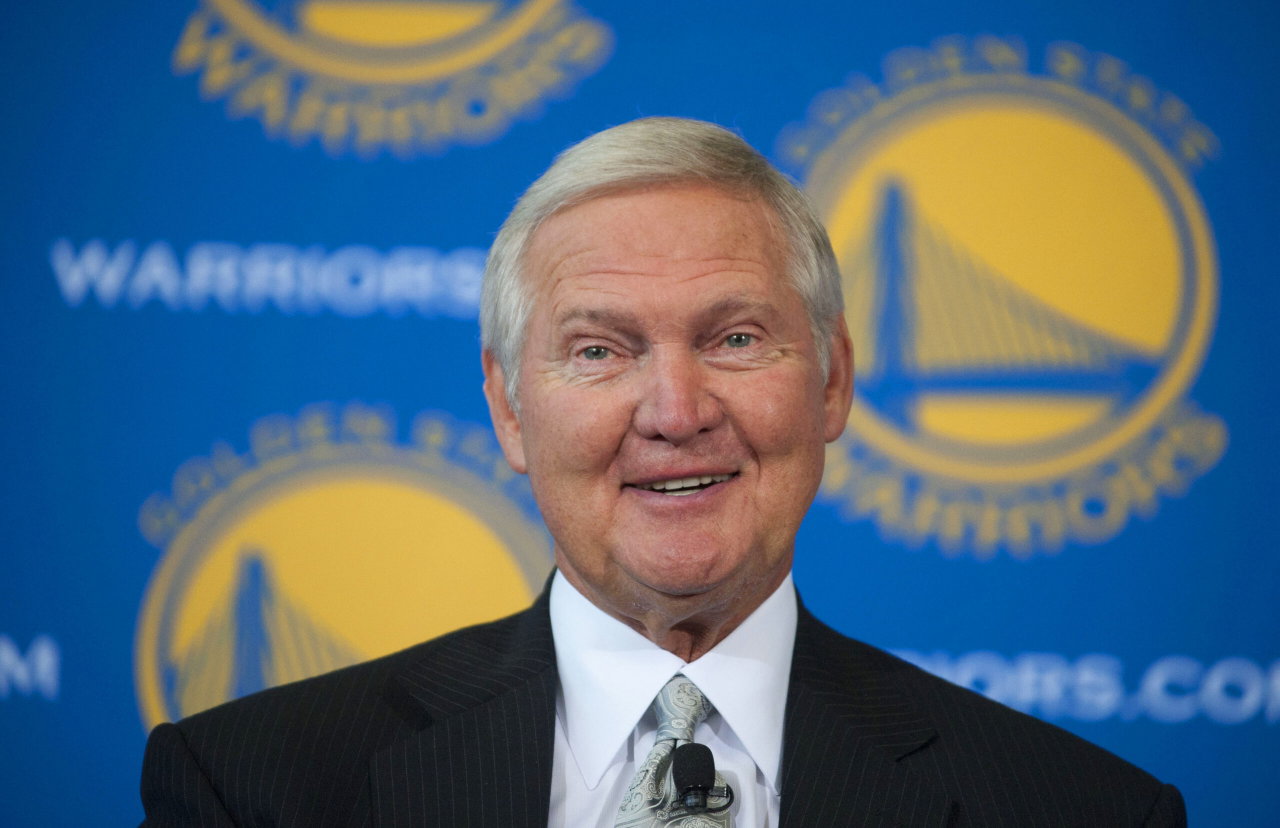
USA Today via Reuters
May 24, 2011; San Francisco, CA, USA; Jerry West addresses the media during a press conference after being introduced as a new executive board member for the Golden State Warriors at the St. Regis Hotel. Mandatory Credit: Kyle Terada-USA TODAY Sports
On top of that, he won Finals MVP while being on the losing side. Having to deal with that was something that ate at him. Up until that point in the Finals, he felt like he was constantly playing his best basketball. They just couldn’t get over the hump, especially that year. In Game 7, he had 42 points, 13 rebounds and 12 assists. How is this not enough to win? That’s something that drove him crazy.”
We all know that Jerry was competitive. Another window into his competitiveness is the golf course, especially since you’re a golfer yourself. Obviously, your wife, Michelle, is a golfer as well. What stories come to mind on what the golfing experience was like with Jerry?
West: (laughs). “Competitive, that’s for sure. Once the competitive side of basketball was done for him from a playing standpoint, golf became that outlet. Obviously being a GM was part of that for him. But I think with golf, you are in control of what happens. It’s you and only you. I think as a player, he got to that point in his career where he felt like he could determine the outcome of every game. But it’s obviously a team sport. There are other factors that go into it. But golf is the toughest mental challenge there is. It’s literally you and only you. You are playing against the course. That’s all there is. For him, that was incredibly tough. For somebody who got to the level that he did as a golfer, he was good enough to play on the PGA Tour. He was a very, very, very high-level golfer. But the competitive side of it and psychological side of it was something that drove him post-career. Playing golf with him and being his teammate or not being on his team in the gambling game was a lot of fun (laughs). There are a lot of stories that have come out of that. His competitive side was a lot of fun to play with and play against.”
What stories can you share about that both as a teammate and a competitor?
West: “There is one time in particular that stands out. He and I were playing golf at Riviera Country Club. We didn’t play a lot. Once I had gotten to the point where I’m a pretty good golfer, we didn’t play a ton together at that point. But we were playing together at Riviera. He was 3-under. This is when he worked for the Warriors. The reason why I know that is he was on one of the executive board calls during the round. He was 3-under through the first four holes. I had a really poor start, and we were teammates. So he started cussing me out. I can’t say all of the words. But essentially, he was saying, ‘If you don’t start playing well, we’re going to lose a lot of money.’ He’s 3-under through four holes. Then he has to jump on this call. Then he starts to play terribly. Then I start playing really well. We ended up losing money. But it was one of those things where he’s 3-under 4, but he can’t be happy in that sense. He was just an unbelievably competitive person, especially on the golf course.”
How about going against him? Were there moments that he won or that you won that sparked a certain memorable reaction?
West: “We were on a trip one time and had a couple of friends on the trip. We were all playing golf. We were playing this three-putt game. Every time somebody three-putted, money was added to the pot. We were on the last hole. We were playing against each other. He was the last person to three-putt. I was just off the green. But we were playing that if you putted from off the green, it counted as a putt. I was an inch off the green. He had a three-putt. I walked up to the green with a wedge. And he started cussing me out with not so kind words. I told him, ‘I’m not dumb. I’m not going to do something where I’m putting myself in a position not to three-putt.’ If I putt this, there’s a good chance that I could three-putt.’ I ended up chipping it, and got some words from him. He ended up having to pay everybody out (laughs).”
On another topic, the documentary makes some references to Jerry’s connection to the Lakers for his obvious accomplishments and some sources of contention. But Jeanie Buss also spoke for the documentary and shared some nice words about Jerry’s contributions to the organization. From your perspective, where did things go awry and where do things stand?
West: “It’s hard to say. I think the one thing that death does bring is that it brings some sense of healing, no matter where things kind of stood. So I would say the relationship is certainly better after his passing. But it’s hard to say. I think everybody in the situation was extremely competitive in wanting to win. Obviously, the Lakers had meant so much to my Dad. And he had just gotten to the point where he was tired. At that time, I don’t think he wanted something new. But I think in the back of his mind, that probably is where things were. He walked away after the 2000 championship kind of to everybody’s surprise. But I don’t know. I think it was, for him at the time, a necessary thing. But I think from everybody’s standpoint, there could have been a better end to the story than what it was. Not to get into details or anything like that. But again, I think the ending could have been better. But I think since his passing, there has been some healing on that front.”
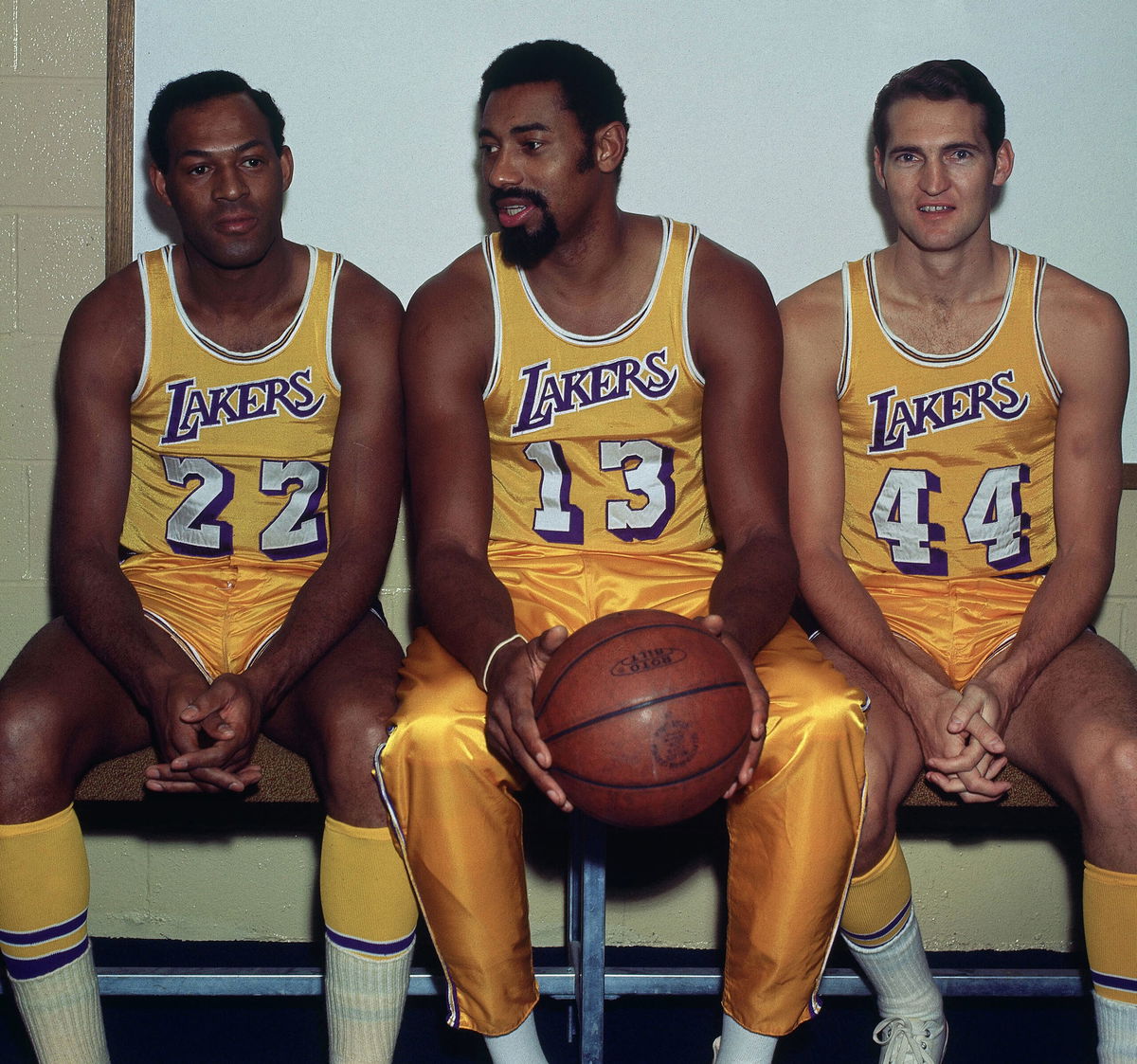
USA Today via Reuters
Unknown date; Los Angeles, CA, USA: FILE PHOTO; Los Angeles Lakers guard Jerry West (44), Wilt Chamberlain (13), and Elgin Baylor (22) in a portrait session at The Forum. Mandatory Credit: Darryl Norenberg-USA TODAY Sports
What do you think this documentary can do moving forward with his standing and how he’s going to be remembered with the Lakers organization and the NBA at large given his vast contributions?
West: “I think the documentary went from telling his story and career and life to in a way being a legacy piece and a tribute to him. Kenya has talked about that, too. The changing of the documentary after his passing, it just became much more than telling Jerry West’s story. Kenya was great about that. I think he realized that magnitude probably quicker than we even did, and what that actually meant for the documentary. I think, to me, going into the documentary and going through this whole process, I always felt that his story and what he went through in his life was so much more than just basketball. It was about coming where he came from in a town of 500 people in West Virginia, dealing with his brother and someone that he idolized dying at an early age and the relationship that he had with his father.
The documentary does a strong job showing that his story was about much more than basketball. It highlights a man who overcame difficult beginnings to build a meaningful life and impact countless people along the way. More than anything, it reinforces how far-reaching his influence was, not just within the NBA, but across all walks of life.
Mark Medina is an NBA insider for EssentiallySports. Follow him on X, Blue Sky, Instagram, Facebook and Threads.