
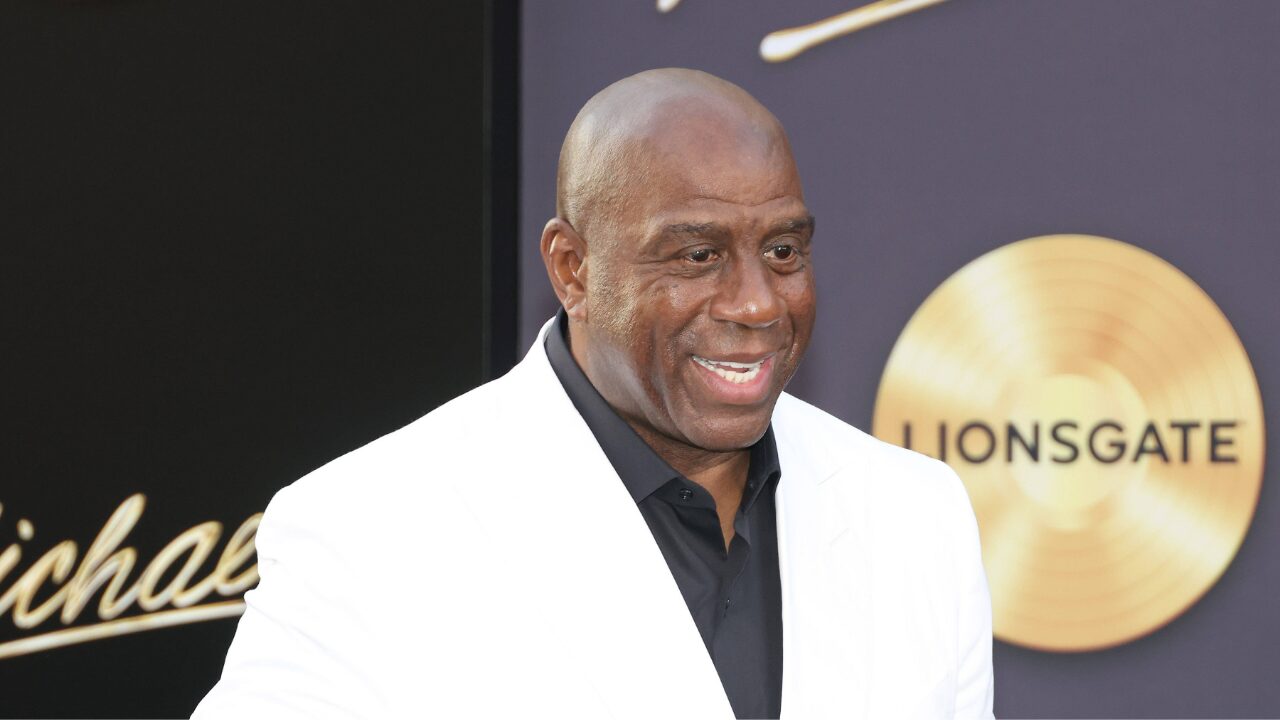
On November 7, 1991, the sports world came to a sudden, painful standstill. Earvin “Magic” Johnson, the charismatic pillar of the “Showtime” Los Angeles Lakers, held a press conference at The Forum in Inglewood to announce that he had contracted HIV and would be retiring from basketball effective immediately. At the time, public understanding of HIV/AIDS was shrouded in fear and misinformation, leaving fans and fellow players in deep anguish. Through Olden Polynice, we now know just how fellow players felt after the press conference.
Watch What’s Trending Now!
Appearing on the TFU podcast, 15-year NBA veteran center Olden Polynice offered a raw, firsthand account of the raw horror that rippled through Los Angeles that day. OP, who was playing down the street for the Los Angeles Clippers at the Sports Arena, recalled hearing rumors of a major announcement at The Forum. Expecting routine sports news, perhaps even a blockbuster trade to his favorite team, i.e., the Lakers, he rushed over, only to be hit by a reality that shattered the sporting landscape.
“He walks out there and he goes… ‘Because of the HIV virus I have attained, I would have to retire from the LA Lakers, effective immediately,'” Polynice remembered. “Everybody starts crying. We’re like, ‘Holy s—, it’s a death sentence.’ ‘Cause, you know, we didn’t know. It’s a death sentence. Oh my god, oh my god, oh my god, Magic’s going to die.”
Beyond the initial grief, Polynice candidly detailed the immediate wave of panic and paranoia that swept through players across the league as human nature took over.
“Then everybody, now here comes human nature, start doing the math,” Polynice explained. “Okay, wait up. He slept with her, who slept with… oh my god. Wait up. Did I sleep with her? We start doing that s— because it’s like, I got to… oh hell, everybody’s running to a doctor now. So that s– had everybody kind of like, woo, wee.”
While Polynice initially misremembered the exact year during the interview, referencing 1992 before recalling the late 1991 timeline, the emotional weight of that period remains crystal clear.
Just weeks after the devastating announcement, Polynice celebrated his birthday on November 21, 1991. To his astonishment, Johnson made a surprise appearance at the party to show support.
“I had a big party and he came. He showed up, which was really nice. You know, I thought, with everything that was going on, I never expected that, but he showed up, you know, to help me celebrate. That was dope as hell,” OP said.
He also said he tried not to make a big scene out of it, “When he came to the party, I hugged him. ‘Man, I’m so sorry, blah, blah, blah.’ But I didn’t want to make it a sad moment within my party. So, I just dapped him up, gave him a big hug, and that was it. It’s like, yo, we’re going to keep this thing moving.”
At the time, ignorance surrounding virus transmission was widespread throughout the NBA. Certain stars, like Karl Malone, openly voiced reservations about playing against Johnson during his subsequent comeback attempts and at the 1992 All-Star Game, fearing transmission via sweat or open cuts on the court.
Polynice acknowledged that many players had “knee-jerk reactions” due to a lack of education. However, he highlighted how rebound icon Dennis Rodman broke through the stigma by treating Magic like any other elite competitor on the hardwood.
“Dennis don’t give a da*n,” Polynice said. “‘I’m going to play you. You’re still Magic Johnson, right? You are still one of the greatest to ever touch a basketball, right? So, I’m not gonna, like, take it easy on you. I’m about to whoop your a*s some more with or without HIV.'”
Looking back decades later, Johnson’s announcement turned out not to be a death sentence, but a pivotal moment in public health history. Polynice celebrated Magic, defying the misconceptions and breaking the stigma.
Through groundbreaking antiretroviral therapies and tireless advocacy, Magic helped transform societal perceptions of HIV/AIDS while proving that life and elite athleticism could continue long after the diagnosis.