
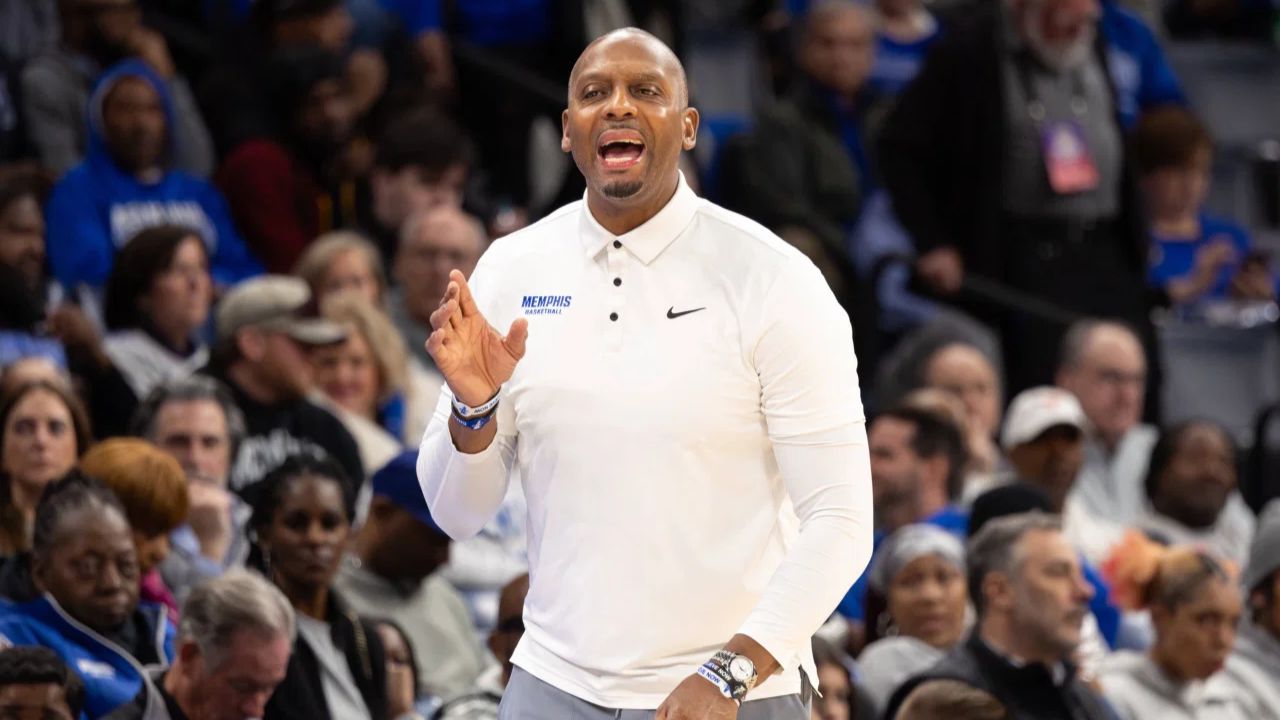
Orlando Magic icon Penny Hardaway has taken an unprecedented financial step as the Memphis Tigers head coach. In a very intense college athletics landscape, he’s taken extra measures to secure his team’s competitiveness. The NBA legend, who earned over $120 million in his playing career, revealed that he personally contributed $2.6 million of his own money into the program’s Name, Image, and Likeness (NIL) revenue-sharing pool.
Watch What’s Trending Now!
The 55-year-old former NBA All-Star opened up about his self-funded roster overhaul during American Athletic Conference (AAC) Media Day in Tampa. He simultaneously acknowledged that the seven-figure investment ups the already immense pressure surrounding his tenure following a heartbreaking 2025–26 campaign.
“We had $5 million, and then I had to put $2.6 million of my own money in to try and build the roster up to be able to be competitive enough to get to a Sweet 16,” Hardaway told Jason Munz of the Memphis Commercial Appeal.
His contribution pushed his program’s overall collective budget to $9 million.
After capturing the AAC regular season and tournament titles in 2025, the Tigers collapsed to a 13-19 record (8-10 in conference play) last season, marking the program’s first losing record since 2000 and causing them to miss the NCAA Tournament. Entering his ninth season as head coach at his alma mater with a 175-87 overall record, Hardaway admitted that back-to-back missed tournaments would jeopardize his standing with the program, framing the upcoming season as a high-stakes turning point.
“Because you still got to go through conference, win a conference championship. Even if you win some P4 games, if you lose one game in conference you drop 19 spots in our conference. It’s so different. And the old Memphis was before NIL where you could go out and recruit the top guys. I had two number one recruiting classes in the first four years, over Duke, over Kansas, over Kentucky. Now that the money value is there, it’s a big difference. But we’re still shooting for the same things.”
Hardaway clarified that university administrators did not force his hand, but rather laid out the financial realities required to compete in the current NIL ecosystem.
“They didn’t ask me to do it, they were saying if you want more money, you have to put your money in. So I did,” Hardaway explained. “I didn’t want to fail two years in a row, because I already know what that means for me. Because it’s already like the death sentence for me from so many different people, which is hilarious.”
Hardaway is under a six-year contract extension worth $16.5 million that runs through 2028. The base salary is about $200,000. His compensation could increase as high as $3 million if he meets benchmarks like Elite Eight or Finals. Which means, he’s virtually coaching this team for free (he still earns supplementary income through media appearances and speaking engagements).
Fans reacting to his contribution to the NIL are awed by the sacrifice and believe he’d bring back the Tigers’ winning culture with his commitment. However, fans who have been waiting for the Tigers’ turnaround are mostly counting on the NBA legend to pull a miracle.
Penny Hardaway sets the tone for Memphis Tigers’ resurgence
Penny Hardaway’s $2.6 million contribution, taken directly from his $2.9 million annual salary, reflects a growing trend in collegiate athletics. Several top football and basketball coaches restructure contracts or contribute personal funds to keep pace with revenue-sharing thresholds, permitted up to $21.3 million per school under the House v. NCAA settlement terms.
In his early tenure at Memphis, Hardaway relied on brand appeal and his ties to Nike to secure No. 1 national recruiting classes in 2019 (featuring James Wiseman and Precious Achiuwa) and 2021 (featuring Jalen Duren and Emoni Bates). However, the rapid expansion of NIL collectives shifted the recruiting landscape, favoring programs in power conferences with massive booster networks.
The influx of capital allowed Hardaway to completely reshape his team entering the 2026–27 campaign, bringing in 13 newcomers, including nine Division I transfers, and leaving just two holdovers from last year’s roster. Despite last season’s struggles, the AAC Preseason Coaches’ Poll picked Memphis to finish second in the conference. The confidence comes from the much-talked about transfer additions like senior guards Jayden Reid (Northwestern) and Tylik Weeks (Southern Miss), both of whom earned preseason All-AAC recognition.
While Memphis athletic director Ed Scott noted earlier this year that the program projected a $1.2 million shortfall in basketball ticket sales following last season’s slump, Hardaway’s personal investment has added renewed optimism into the fanbase. With a revamped roster and a $9 million NIL budget, the former Magic superstar enters his ninth season with clear expectations: return to the NCAA Tournament and prove that his self-funded roster model can deliver postseason success.