Imago
unlicensed images
Imago
unlicensed images
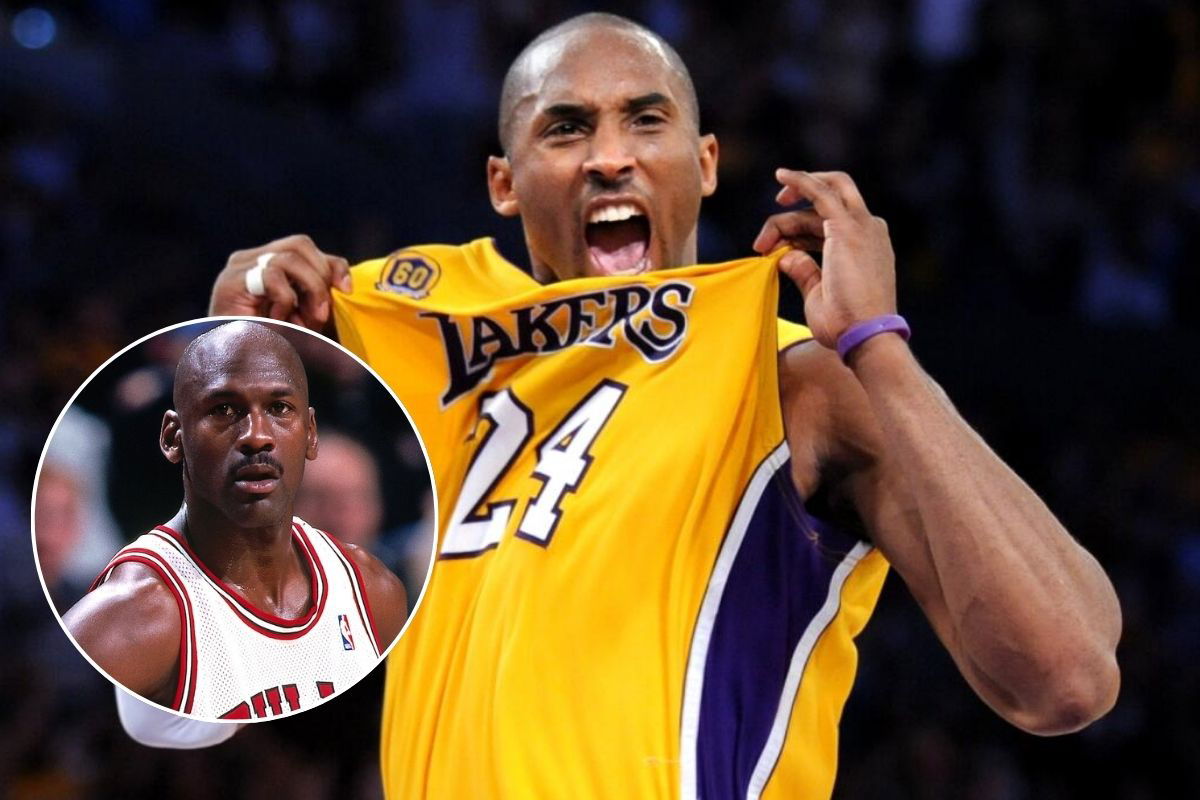
For years, one assumption followed Kobe Bryant’s most symbolic decision. When he switched from No. 8 to No. 24, the basketball world believed it was a message aimed directly at Michael Jordan. That theory has now been firmly shut down.


Speaking recently on Fast Break, Lakers legend Byron Scott confirmed that Bryant’s jersey change had nothing to do with Jordan. Instead, it reflected a deeper, more personal evolution that defined the second half of Kobe’s career.
Watch What’s Trending Now!
Bryant entered the NBA wearing No. 8, a number tied to his youth, raw ambition, and early rise with the Los Angeles Lakers. That chapter closed after the 2005–06 season, when he returned wearing No. 24.
According to Scott, the explanation came directly from Bryant himself. “I remember when I asked him about why you changing number from 8 to 24. He said, ‘Coach, 24 hours in a day. That means I got 24 hours to be better than I was the day before.’”
The reasoning stunned Scott, but it fit Bryant perfectly. The number was not about comparison. It was about accountability, growth, and resetting his standard every single day.
Scott praised Bryant’s obsessive preparation and creativity, noting that only Kobe would attach that level of meaning to something as simple as a jersey number. That mindset, Scott explained, was the foundation of the Mamba Mentality that teammates and fans came to revere.
USA Today via Reuters
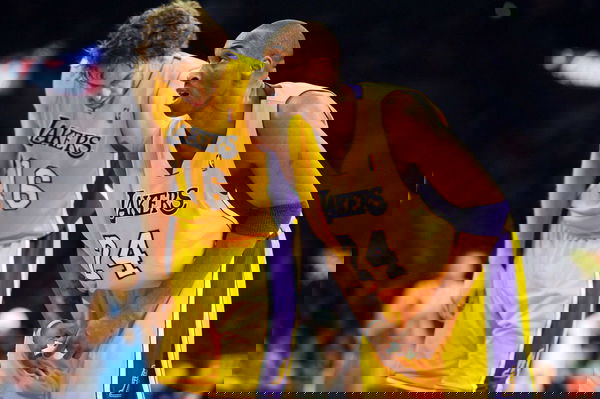
Jan 7, 2011; Los Angeles, CA, USA; Los Angeles Lakers forward Kobe Bryant (24) talks with center Pau Gasol (16) during the game against the New Orleans Hornets at the Staples Center. The Los Angeles Lakers defeated the New Orleans Hornets 101-97. Mandatory Credit: Mandatory Credit: Kelvin Kuo-USA TODAY Sports
The switch to No. 24 marked more than symbolism. It coincided with Bryant’s full transition into leadership.
Statistically, the difference was clear. Wearing No. 24, Bryant averaged 26.3 points, 5.3 rebounds, and 4.9 assists, surpassing his No. 8 production of 23.9 points, 5.1 rebounds, and 4.5 assists. While his efficiency metrics dipped slightly in advanced categories, his playoff output rose, including 29.3 points per game with improved efficiency in the postseason.
More importantly, the role changed. The No. 8 era featured Bryant alongside Shaquille O’Neal. The No. 24 era made Bryant the unquestioned leader, resulting in back-to-back championships and Finals MVPs.
That growth ultimately led to an unprecedented honor. The Lakers retired both No. 8 and No. 24, making Bryant the only player in franchise history with two numbers hanging in the rafters.
Why the Michael Jordan Theory Took Hold
Despite Scott’s explanation, the Jordan narrative persisted, largely because of comments from Celtics legend Kevin Garnett. Garnett believed Bryant’s choice was a deliberate statement. “People don’t even know what the 24 stands for. That was a sign to everybody that he was a step above 23, if y’all even got that.”
Garnett later doubled down, claiming the switch was a direct shot at Michael Jordan, whose iconic No. 23 defined an era.
The theory made sense on the surface. Bryant entered the league while Jordan dominated with the Chicago Bulls. He challenged Jordan openly, once telling him he could beat him one-on-one, a moment recalled by Phil Jackson. Bryant chased Jordan’s records relentlessly and patterned his game after him.
Still, Scott’s account reframes the moment entirely.
Imago
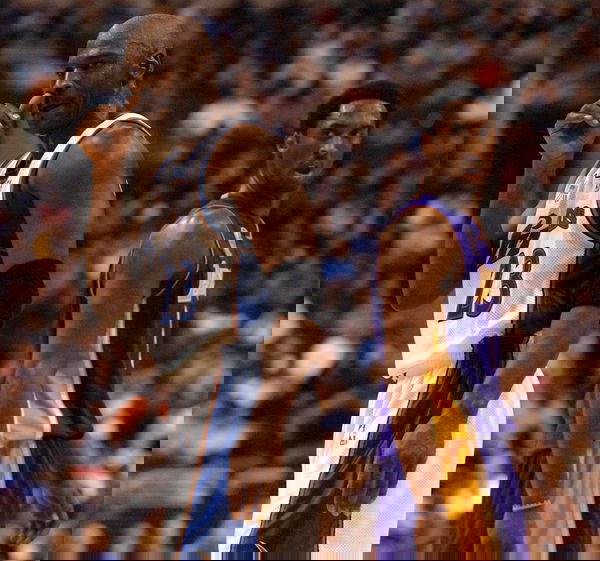
— Saturday, February 10, 2002, Philadelphia, PA — A sweaty and tired Michael Jordan, of the Wizards, wipes the sweat from his nose as Kobe Bryant, of the Lakers, walks behind him during the NBA Basketball Herren USA All-Star at Philadelphia s First Union Center. The Sacramento Bee /ZUMA Press Sacramento Bee Image Archive PUBLICATIONxINxGERxSUIxAUTxONLY – ZUMADAN. 20020922_aad_s76_113 Copyright: xHectorxAmezcuax
Unlike speculation from the outside, Scott’s explanation came from a private conversation with Bryant. It removes mythology and replaces it with intent. Bryant did want to be better. He did chase Jordan’s legacy. However, the jersey change itself was not a taunt or comparison. It was a declaration to himself.
Scott’s story aligns with everything Bryant became in the No. 24 era. More deliberate. More accountable. More focused on process than perception. The takeaway is simple. Kobe Bryant was not trying to be one number higher than Michael Jordan. He was trying to be better than the version of himself that existed the day before.
And that distinction explains why No. 24 meant everything to him.