
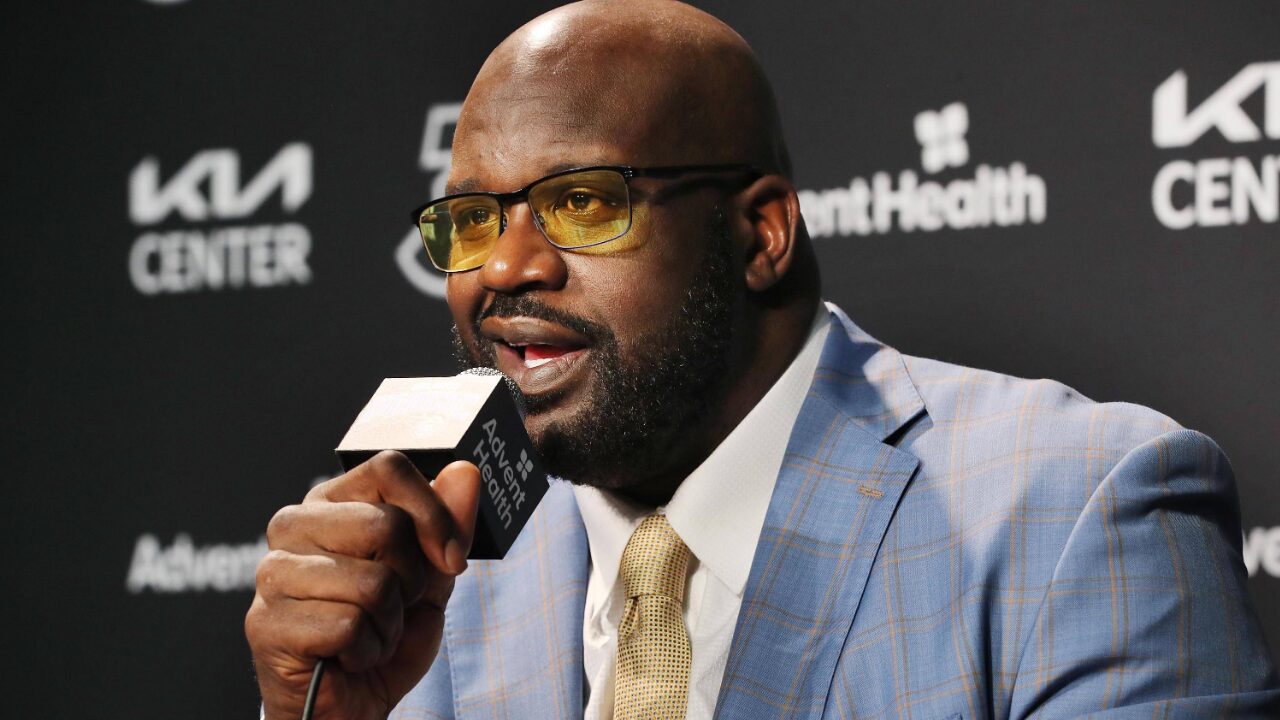
Shaquille O’Neal did not become multi-millionaire overnight. His relentless pursuit of greatness and the lessons he learned at home made him who he is today. The always-smiling Big Shamrock’s roots taught him to never repeat a mistake, and so learning automatically followed.
Watch What’s Trending Now!
O’Neal joined True Tamplin on his YouTube channel. The host asked Shaq how much his wealth came from formal education versus practical experience, entrepreneurship, investments, endorsements, and business opportunities. He also questioned whether Shaq’s education became part of his public persona and identity.
The Los Angeles Lakers legend replied, “The reason why I’m successful is my father programmed me not to make the same mistakes twice. I learn from failure. I love to learn, and I love to, you know, set good examples. You know, I’m doing this because this is personal for me.”
He added, “The second word I gave you is failure. I failed many times, but once you get to two, you go back to one. So, if I make a decision the first time and it doesn’t work, that gets deleted, right? And then I have to educate myself on how to make it work.”
Shaquille O’Neal’s stepfather figure, Phillip Arthur Harrison, played a major role in shaping his mindset. As an Army drill sergeant, Harrison raised Shaq with firm rules and high expectations. He stressed discipline and responsibility from an early age. His strict approach kept Shaq focused, built resilience, and helped develop the work ethic that later defined his career.
But discipline hardly ever teaches you about credit. “Nobody sat me down and explained credit, you know, on why a good credit score matters. When I was young, I first heard the word credit score when I tried to buy my first house,” O’Neal shared.
Initially, he believed his NBA contract and income would be enough. However, the lender focused on his credit score. Shaquille admitted he had never understood how credit worked. The experience forced him to learn about credit and realize that earning money alone was not enough.
“So, my success is all about failure. And the reason why I’m going back to school is I have to continue to educate myself,” he added. “I was having so much success and making so much money that I was like, you know what? Let me get a master’s in business and education, so I really know and understand.”
Making money alone wouldn’t have helped him survive, and Shaq understood that quickly. Therefore, Shaquille O’Neal has continued his education long after entering the NBA. He completed his bachelor’s degree in 2000 before earning an MBA in 2005. He later received a doctorate in education in 2012. In 2026, Shaq added another master’s degree in liberal arts, showing his long-standing commitment to learning.
But again, the truth remains that the 54-year-old has a massive $500 million empire. O’Neal earned nearly $300 million from his NBA salary. His endorsements brought in more than $200 million. He also built businesses and earned money through media work– these income streams continued after retirement. Moreover, his investments and business success helped him build a personal fortune estimated at around $500 million.
However, there is one thing that O’Neal wants to become in the long run. “I want to become a professional mentor, you know, for people in a position like me. I wanted to do sports psychology, but it was a little too much for me, and you have to take all these tests and go through this and go through that,” he shared with True Tamplin.
For Shaquille O’Neal, his education was not about becoming a sports psychologist alone. He wanted to use his experience to guide others. His goal was to share lessons from his own journey. Because he understands the pressure to perform and the frustration of feeling inadequate despite working hard. His experience helps him connect with people facing similar challenges.
And as he shared, he needed only three major ingredients to help him build his fortune. His father’s guidance, failures, and consistency in learning.