

A visibly crestfallen three-time MVP walked off the Target Center floor on Thursday night and, in the manner of someone who has absorbed this kind of disappointment before, took the blame himself. “I needed to play better. I must play better,” he told reporters after the game. It was a gracious thing to say, and, according to Gilbert Arenas, a completely unnecessary one. The NBA legend fired back at the media narratives forming around Nikola Jokic following Denver’s first-round exit, and his argument is hard to pick apart.
Watch What’s Trending Now!
Speaking on his podcast, Arenas came out swinging against the framing that has placed Jokic at the centre of Denver’s failures. “You know what I don’t like about narratives? Because the narrative is exactly the problem with sports because it’s presented as a team game until you want to run the narrative on how bad a player is doing or failing,” Arenas said. He identified the specific double standard at play: when Jokic performs poorly, it is Jokic who lost. When the team around him performs poorly, those players quietly disappear from the conversation. “If someone goes 4-17, we don’t pay attention to him. Jokic, you f***ed up. Jokic, you lost. Jokic, you can’t get over the hump,” Arenas said.

Gilbert Arenas on what he don’t like about narratives in basketball, especially the ones coming out about Nikola Jokic: “Because the narratives is exactly the problem with sports because it’s presented as a team game until you want to run the narrative on how bad a player is Show more
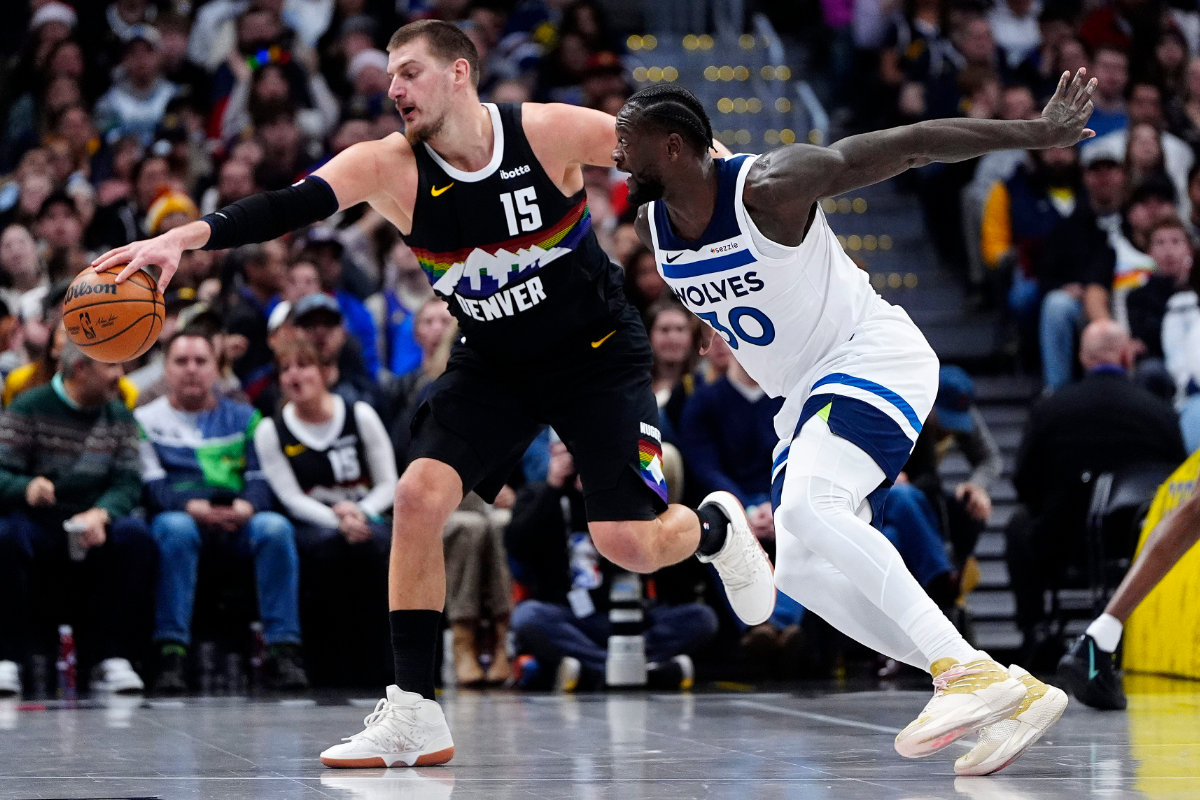
The Game 6 box score makes his case for him. Jokic finished with 28 points, nine rebounds, and ten assists on 11-of-19 shooting across 43 minutes, doing everything he could to carry Denver while the team around him crumbled. Jamal Murray, Denver’s second star and first-time All-Star this season, finished with 12 points on 4-of-17 shooting and a team-worst minus-18 rating in the closeout loss.
Arenas did not leave the numbers unnamed. “Did Jokic lose the game last night? Did Jokic not show up? Did he not have 28-9-10? Did he not do that? Someone played 35 minutes, eight points. Someone played 28 minutes, three points. I can point out a lot of people who didn’t show up. 40 minutes, 12 points. I mean, he’s an all-star, all-NBA player. 12 points in a closeout game,” Arenas said. The reference to an All-Star with 12 points in 40 minutes lands cleanly given what Murray produced in Game 6. Across the entire series, Murray shot 46-of-139 from the field, a dismal 33%, and was shut down in particular by Jaden McDaniels’ defense throughout. Arenas’ broader point is structural: the scrutiny applied to Jokic in defeat is never applied proportionally to the players who vanish beside him.
His argument also extended to the historical framing of Jokic’s legacy. The “he never beat a 50-win team” narrative, Arenas said, treats individual matchups as one man against a roster, a logic that is never reversed when things go well. “On the other end, you do get rewarded. You get rewarded in the win. This person won four or five championships. They do forget the team there too,” Arenas said. The series loss was only the second time in Jokic’s career that he has been eliminated in the first round, and it came against a Timberwolves side missing Anthony Edwards, Donte DiVincenzo, Ayo Dosunmu, and Kyle Anderson, while Denver was also without Aaron Gordon and Peyton Watson. That context, Arenas argued, is precisely the kind of thing the narrative machine discards.
The Numbers From the Series Tell Arenas’ Story for Him
What gives Arenas’ pushback its teeth is not just the Game 6 box score; it is what Nikola Jokic produced across all six games against a depleted Minnesota roster. He averaged consistent output throughout: 27 points, 12 rebounds, and 16 assists in the Game 5 win; 24 points, 15 rebounds, and nine assists in the Game 4 loss; 27 points, 15 rebounds, and three assists in Game 3. In a series where the Nuggets went down 2-1, then 3-1, then clawed back to force a Game 6, Jokic’s production never wavered. The team around him was the variable.
Imago
Credits: IMAGN
Minnesota outscored Denver 64-40 in the paint in the deciding game, a continuation of a series-long trend that saw the Wolves hammer the Nuggets 186-116 in the paint across Games 3, 4, and 6 combined. Denver finished the season ranked 21st in defensive rating, a structural weakness that pre-dated the series and was not resolved by the time the playoffs arrived. These are team-level failures, roster construction decisions, defensive scheme breakdowns, and role players who did not deliver, not the consequences of one man’s inadequacy. Arenas named the principle directly: “If my team isn’t equipped right, if my team failed to this team, it’s not that player outplayed me. It’s the team outplayed us. But there’s never ‘us.’ It’s always this player didn’t do his job.”
The harder truth embedded in Arenas’ take is that the same selective memory he is criticising also works in reverse. Jokic’s 2023 championship is talked about as his achievement. His 2026 elimination is being talked about as his failure. Neither framing accounts for the full picture. “I don’t like if the player showed up and he did everything he could do and they didn’t win and you just point him out like he did something wrong,” Arenas said. On the evidence of Game 6, and across the length of a series where Jokic was statistically dominant while two All-Stars, Murray and Edwards, were either absent or invisible at critical moments, the legend has a point worth sitting with.