
Essentials Inside The Story
- A Hall of Famer's plea may have exposed the Knicks' biggest defensive success.
- The hidden adjustment that changed everything for Victor Wembanyama in Game 3.
- Why one recurring postseason trend keeps appearing whenever Wembanyama dominates.
Twenty-six years before Victor Wembanyama stepped onto the Madison Square Garden floor for Game 3, Phil Jackson helped unlock the most dominant version of Shaquille O’Neal by keeping him closer to the basket. On Monday night, Wembanyama looked like the latest reminder of that old basketball lesson, erupting for 32 points, eight rebounds and six assists in the Spurs’ season-saving 115-111 victory over the Knicks.
Watch What’s Trending Now!
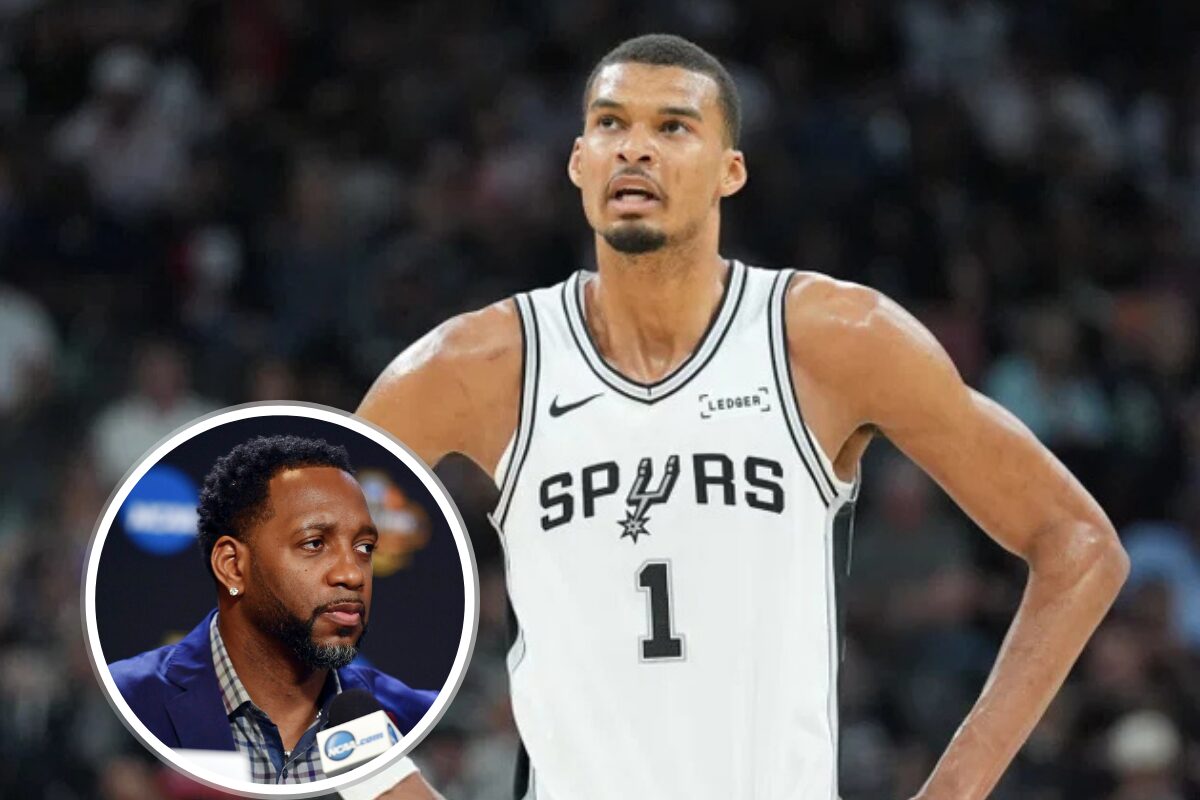
“And then for me, please man, please just try one game. I just want to see it. Just have Wemby around the basket. Just have him around the basket,” T-Mac explained to Vince Carter in the latest episode of the Cousins podcast, before Game 3. “Him around the basket draws so much attention. Him in the perimeter, he’s only going to see one guy. That’s it. I’m just saying it’ll make it easier for everybody on his team if he’s moving around the basket. Get Mitchell and KAT moving. And when he gets the ball while they’re moving and he catches it now, they’re at your mercy. This is a very, very smart basketball organization. They got to get him moving around the basket; on the perimeter is not going to do it.”
The Knicks’ 2-0 series lead was built largely on keeping Wembanyama away from his most dangerous areas. Karl-Anthony Towns and Mitchell Robinson consistently fought for position before he could establish deep seals, while New York’s help defenders crowded driving lanes whenever he caught the ball above the free-throw line. The result was exactly what the Knicks wanted: Wembanyama’s average shot distance climbed to 17.3 feet in Game 1 and 13.2 feet in Game 2, forcing the Spurs star into tougher perimeter looks instead of easy finishes around the rim.
Spurs coach Mitch Johnson acknowledged the issue after the early losses, stressing that San Antonio needed more “pressure on the rim and force in the paint” if it hoped to get back into the series.
Game 3 looked completely different. Rather than allowing the Knicks to dictate his positioning, the Spurs ran Wembanyama into early seals, used him more aggressively as a roll man and repeatedly looked for him near the basket before New York’s defense could get set. His average shot distance dropped to just 10.6 feet, and 22 of his 32 points came either at the rim or at the free-throw line. The adjustment didn’t just help Wembanyama. His interior gravity opened lanes for teammates and helped power San Antonio’s best offensive performance of the series.
After the win, Wembanyama explained why attacking the paint remains the foundation of the Spurs’ offense.
Imago
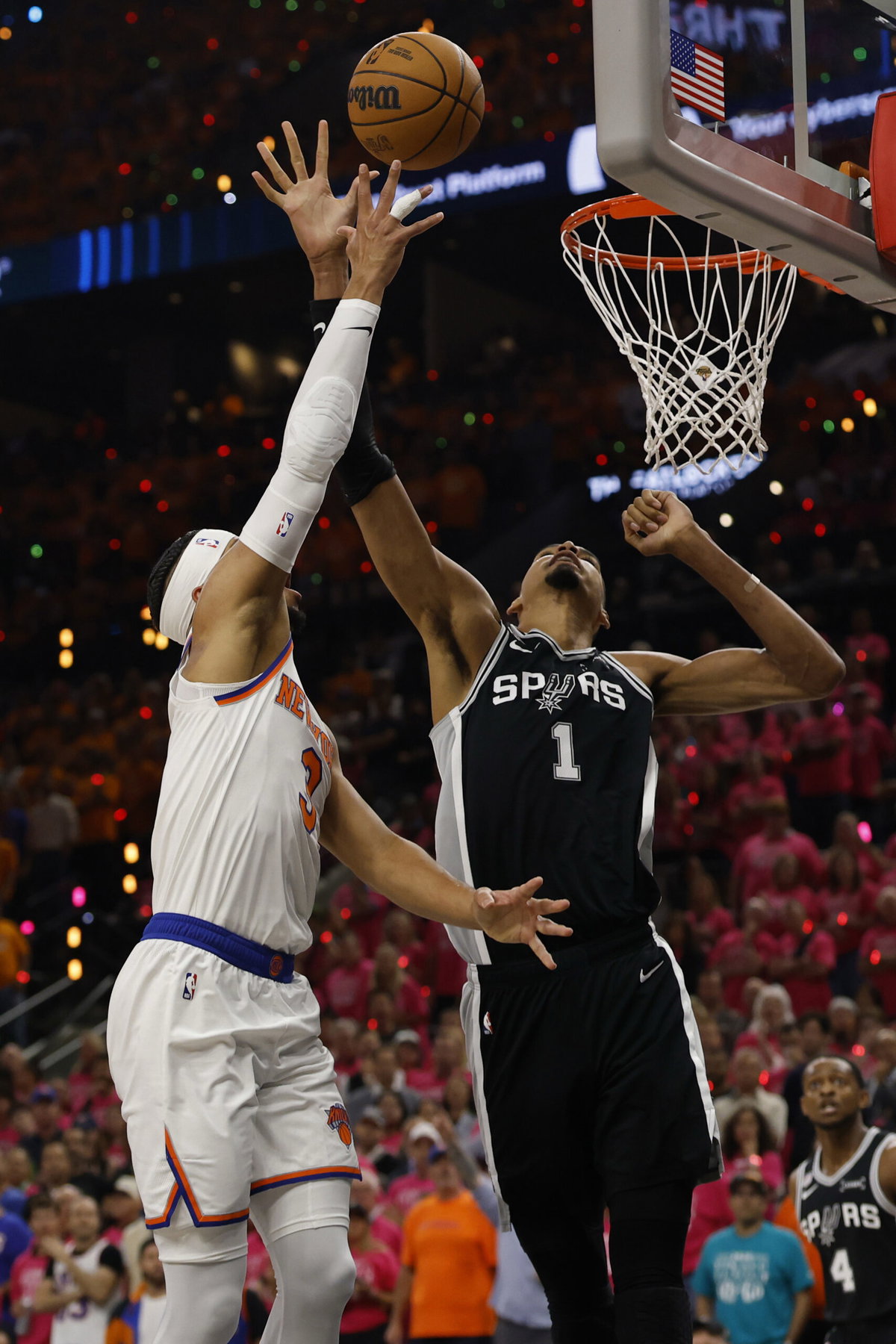
Jun 3, 2026; San Antonio, Texas, USA; San Antonio Spurs forward Victor Wembanyama (1) blocks the shot of New York Knicks guard Josh Hart (3) during game one of the 2026 NBA Finals at Frost Bank Center. Mandatory Credit: Geoff Burke-Imagn Images
Speaking to reporters after the victory, Wembanyama made it clear that the Spurs’ inside-first approach was intentional. “Yeah. I said the goal is always to go inside. You know, the best shot in the game is an alleyoop is the most efficient shot, but teams don’t just let you do that. But I think what we’ve built with this team is that we’ve got an identity that makes everybody dangerous. And sometimes it’ll pay off, and over a season or a playoff series, we’re going to get easy buckets and inside buckets like I did last night.”
That explanation also echoed McGrady’s broader point. The Hall of Famer was never arguing that Wembanyama should abandon his perimeter skills altogether. Instead, his criticism centered on offensive sequencing. McGrady believed the Spurs needed to establish Wembanyama near the basket first, forcing the Knicks’ defense to collapse before unlocking the rest of his offensive arsenal.
The Finals are not the first time this pattern has appeared. During the Western Conference Finals against Oklahoma City, Wembanyama produced one of the greatest performances of his young career when he scored 41 points and grabbed 24 rebounds in Game 1 while operating almost exclusively near the basket. As the series progressed and his average shot distance increased, his scoring efficiency dipped. The contrast has become a recurring theme throughout the postseason: the closer Wembanyama plays to the rim, the more difficult he becomes to defend.
Whether the Spurs stick with the formula remains to be seen. But after spending two games trying to solve the Knicks from the perimeter, Game 3 suggested the answer may have been sitting in the paint all along.