
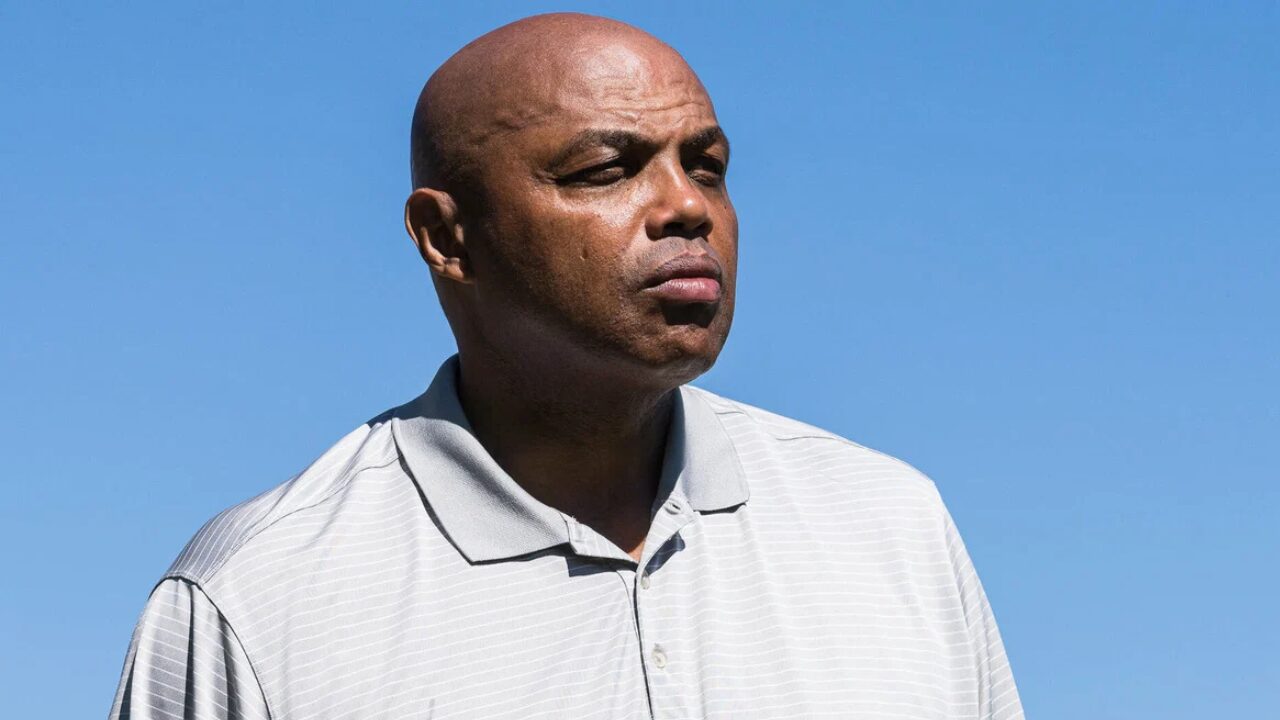
Spokane wildfires, a desperate shortage of water in Puerto Rico, and a drought war in Arizona and Colorado are issues that rarely come up during a basketball discussion. However, Charles Barkley found a way to link the three this week, in the aftermath of Sophie Cunningham’s remarks on transgender players.
Watch What’s Trending Now!
While being interviewed on The Andy Beshear Podcast, Barkley showed his support for Sophie Cunningham.
“I know the economy is not great, but if we let these cities run out of water, you got the fires in Spokane, you got the water situation in Puerto Rico. I’m like, ‘Let’s fix these things. Let’s don’t sit here.’ See, we got these fools. They’re sitting there arguing over Sophie Cunningham,” Barkley said. “I’m not going to argue about it; I don’t want to hear no. What I said, and if we disagree, we disagree. And I really don’t even understand why that would be. Like, I feel so bad for people today. You can’t say anything. I’m like, that shouldn’t even be controversial, that we should say a man should play a sport against a woman.”
This list of issues is no exaggeration on Barkley’s part. In Washington state, there have been wildfires that have devastated almost a thousand homes; Puerto Rico still experiences water problems after natural disasters and blackouts in its power grid, while Arizona and Colorado suffer from unprecedented water shortages in the Colorado River.
Barkley did not stop at criticizing media priorities either. He drew a firm line between his personal values and his position on competitive fairness in women’s sports.
“I love gay people. I love transgender people. I’ve been outspoken for years on that subject,” Barkley said. “But under no circumstances do I think men should play against women.”
That claim holds up against his own track record. During the American Century Championship in Lake Tahoe back in July 2022, Barkley grabbed a microphone at a local venue and addressed the crowd directly.
“If you’re gay or transgender, I love you,” Barkley stated, saying that if anyone caused them problems, they would get an answer straight from him.
For this reason, it can be seen that Barkley’s backing of Cunningham is actually consistent rather than being inconsistent. Few athletes have advocated for the LGBTQ+ community for so long publicly; therefore, his unwillingness to move an inch in this case carries even more weight than usual.
Sophie Cunningham, who is an Indiana Fever player, first raised the issue in her interview with ESPN. She said she felt a duty to protect young girls in locker rooms and competitions from facing biological men.
Cunningham has stood firmly behind those comments since. “I said what I said,” Cunningham told reporters. “I think it’s kind of common sense. I think I’ll always believe in that.”
The statements made by Cunningham prompted rallies in support of her views and protests against her views during Fever games over the coming weeks. It is uncommon for such protests on the court to occur in a league that is developing a national fanbase.
The WNBA’s response has done little to calm things down, which is exactly the indecisiveness Barkley appears to be pointing at. A task force made up of team presidents and general managers met specifically to address transgender athlete policy, yet the league confirmed no eligibility rules came out of it.
“There are no immediate eligibility matters affecting the WNBA, and we strongly denounce the bad-faith efforts to use these topics to demean or marginalize others,” the league said in its statement.
This ambiguity is at the very core of the whole dispute. The existing CBA only states that only women are allowed to play but does not provide any precise definition of that statement, thus providing the ambiguous gray area Barkley talks about.
Former NBA players Enes Kanter Freedom and Royce White took advantage of this vagueness by announcing their eligibility for the WNBA draft as women. This forced the league to finally face a policy issue it had been ignoring for months now.
There is no sign that the controversy will be ending anytime soon. Both Barkley and Cunningham hold onto their stance, whereas the WNBA refuses to create the policy that fans require.