
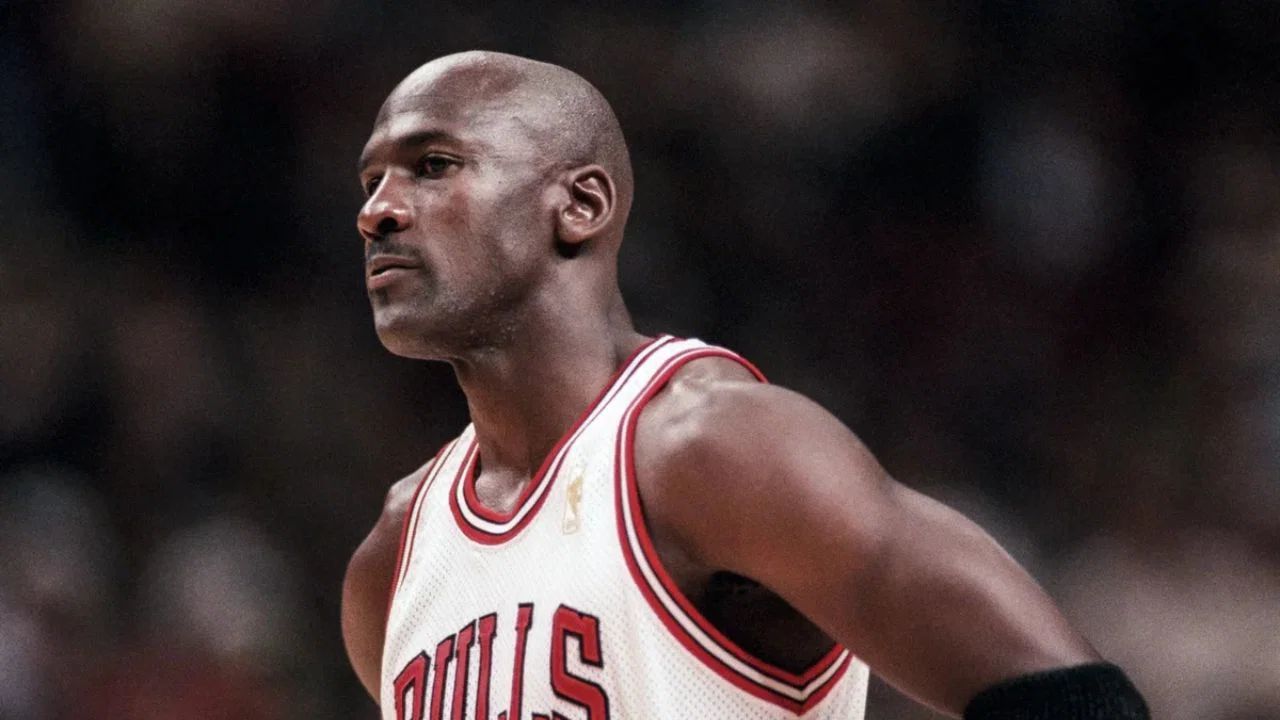
Michael Jordan had already established himself as the NBA’s most feared scorer. But the Chicago Bulls still had no championships to show for his individual brilliance. By the summer of 1989, the Pistons had knocked the Bulls out of the playoffs in consecutive seasons, exposing how difficult it was for a team to rely so heavily on one player.
Watch What’s Trending Now!
It was the era of the famous Jordan Rules.
Coach Phil Jackson’s solution was not to find Jordan more shots. It was to ask him to take fewer. And also trust a different approach could finally take the Bulls further.
Appearing on The Way of Champions Podcast, Jackson recalled his conversation with the man himself:
“You know, you’ve averaged 37, 38, 36 points a game the last three years. You know, you’ve been the scoring champion, but if you look back at the history of the NBA, there hasn’t been a scoring champion for almost 15 years who’s won the championship. They don’t go together.”
The coach wanted Chicago’s offense to become less predictable. “We need to take the focus off you.”
Opponents were directing their defensive attention toward Michael Jordan, leaving the Bulls’ other players with fewer chances to influence games. “He stopped me, and he said, ‘Are you going to run an equal-opportunity offense like Tex Winter’s been talking about?’ I said, ‘Yeah, I guess you could call it an equal-opportunity offense, but I’m not going to be calling the plays from the sideline.”
Michael Jordan had his solution.
He told Phil Jackson he could average 32 points a game and still win the scoring title. The coach had something else in mind. He wanted Jordan to involve his teammates early and save his biggest scoring runs for the last quarter. Especially when the Bulls needed him to close out games.
“Rather than scoring eight points a quarter, why don’t you save that for the fourth quarter and score 14 points in the fourth quarter and take us home?” Jackson told him. And you can do what you want to do during the early part of the game and then put the onus and the nail in the coffin in the fourth quarter to seal the deal.’”
The idea was not to remove Michael Jordan from the offense. It was to make his scoring more damaging at the moments when the game needed to be decided.
Jackson’s approach drew on the Triangle Offense, the system assistant coach Tex Winter had been advocating. It’s a simple scheme: Read the defense, recognize openings, and move the ball to the best available option.
In MJ’s case, with Jordan Rules already in place, he already had dominant defenders crowding him. He just needed to drive to the paint and dish it out to his teammates.
The transition took time.
Jackson recalled, “I think we lost two or three of our first games that we played in my first year coaching, and everybody had to kind of figure out how to do it.” The adjustment was about more than reducing Michael Jordan’s shot attempts; it asked the whole team to make decisions together instead of waiting for instructions.
MJ’s shot attempts did drop from 27.8 (1986-87) to 24.0 (1989-90) in the first year of Jackson’s takeover.
There was also no immediate championship reward.
The Bulls lost to the Pistons in the 1990 Eastern Conference Finals, falling in seven games. But the groundwork held. Michael Jordan still won the scoring title in 1989-90 and again in 1990-91, showing that Jackson’s point was not that individual honors had to disappear.
The goal was to make Chicago’s defense less dependent on one player creating everything. MJ could remain the closer without making every possession revolve around him.
By 1991, the Bulls had developed into a team capable of beating the Pistons and won the first championship.