
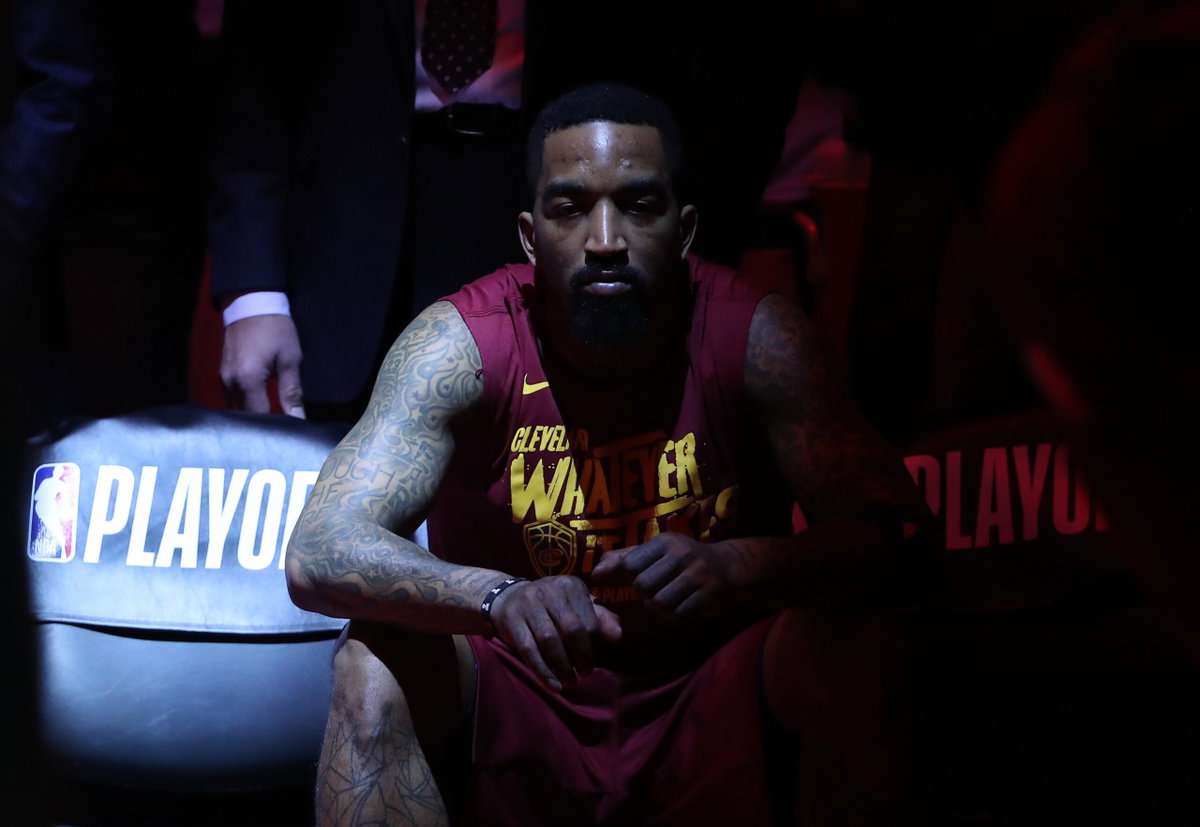
In January 2015, a player was pulled aside in a Memphis locker room by a Knicks executive and was told three words that would end his four years in New York: “We traded you.” He told Carmelo Anthony afterward that he cried. “I ain’t going to lie bro, I cried,” he said. At that moment, a salary dump dressed up as a transaction looked like a footnote. More than a decade later, J.R. Smith is told the full story behind it.
Watch What’s Trending Now!
Speaking on The Pivot podcast, the two-time NBA champion opened up on the mental health battle he says consumed the majority of his professional life.
“I feel like I played 16 years, I probably played 70% of my career depressed,” Smith said. “Like, that’s crazy to think about. That’s nuts. And to still be able to have a, I would say, a good career. It wasn’t great. It was a good career. But I literally think about this all the time, where my potential was so high in that aspect of it. I do live with regret in that. It keeps me up at night. I can’t lie.”
Smith’s account of what drove that pointed directly at the Knicks organization. After tearing his meniscus with New York, Smith asserted that he was rushed back while still in pain, leading to a dependency on painkillers that the team was aware of and did nothing to address.
“I get addicted to pain pills,” J.R. Smith said on the podcast. “They know it. Pain, going out, doing all that. But no, you don’t come to me and say, ‘Yo man, you good? What can we do to help you?’ Nah. He’s terrible. He’s this, he’s that. Shipping him to Cleveland. He’s a throw-in for the trade. Like, I’m dealing with a lot of shit. Y’all don’t care. You literally don’t care at all. You just throw more dirt on my name and then just move me.”
The knee surgery on record aligned with his account: Smith underwent patella tendon surgery and arthroscopy on his left knee in the summer of 2013, with the team confirming a tear in the lateral meniscus that had “gradually worsened.” That same offseason, he was suspended for five games for violating the NBA’s anti-drug policy before the season even began.
The Knicks traded J.R. Smith and Iman Shumpert to Cleveland in January 2015 in a three-team deal. New York received two future second-round picks, trade exceptions, and two players they immediately waived.
Furthermore, the transaction moved Smith’s $6 million player option off the books and, from the organization’s perspective, was cap management.
“You deal with them. We don’t.”
Smith then invoked Kevin Love, his future teammate in Cleveland, as the model for what NBA players actually need from the people around them:
“That’s why I love K-Love because he talks about it all the time. The mental aspect of it. The emotional. The depression. All that.”
Love famously published an essay in 2018, where he detailed his own panic attacks and the silence that surrounded mental health in professional sports locker rooms.
“My Potential Was So High,” What Depression Costs Smith, Which the Box Score Never Captures
The most striking part of Smith’s account on The Pivot wasn’t the accusation directed at the Knicks.
“I still live with regret,” he said. “It keeps me up at night.”
He was not describing a failed career. Smith won the 2013 Sixth Man of the Year award, averaging 18.1 points over 80 games off the bench, which was the best statistical season of his career and one of the finest sixth-man campaigns in Knicks history.
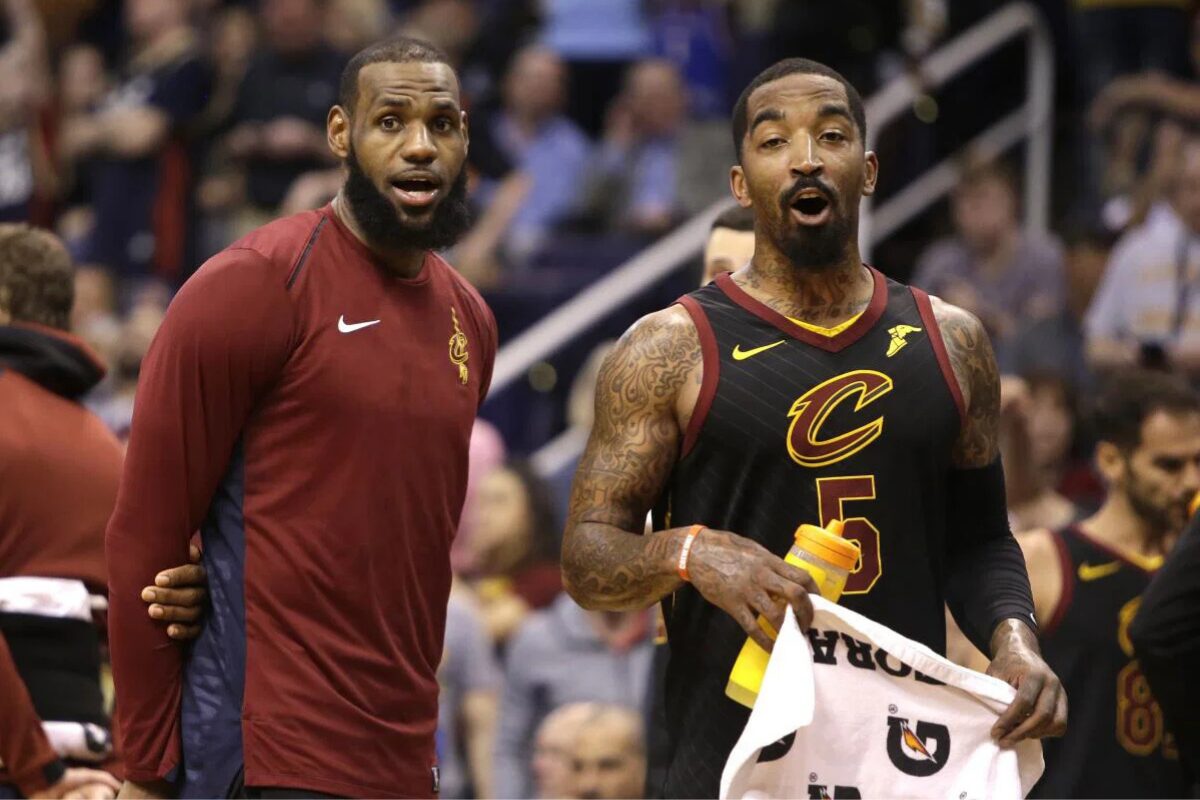
Imago
Credit: IMAGN
Although he went on to win two championships. The regret he described is the distance between what he achieved and what he believed he could have had, if only he had been met with something as simple as a conversation.
His golf analogy, a newfound hobby, clarified the stakes:
“Playing golf depressed is impossible. You’re going to go shoot 90. If you’re a good golfer playing in good tournaments, you’re not going to make the cut. You’re not going to make the money. Whatever you want to call it, it ain’t happening.”
J.R. Smith was a major contributor on Cleveland’s 2016 championship team, hitting two critical three-pointers early in the second half of Game 7 as the Cavaliers erased a 3-1 deficit against Golden State.
The player who delivered in that moment was “thrown” out of New York while battling addiction and depression in silence. Two rings later, the silence is broken.