
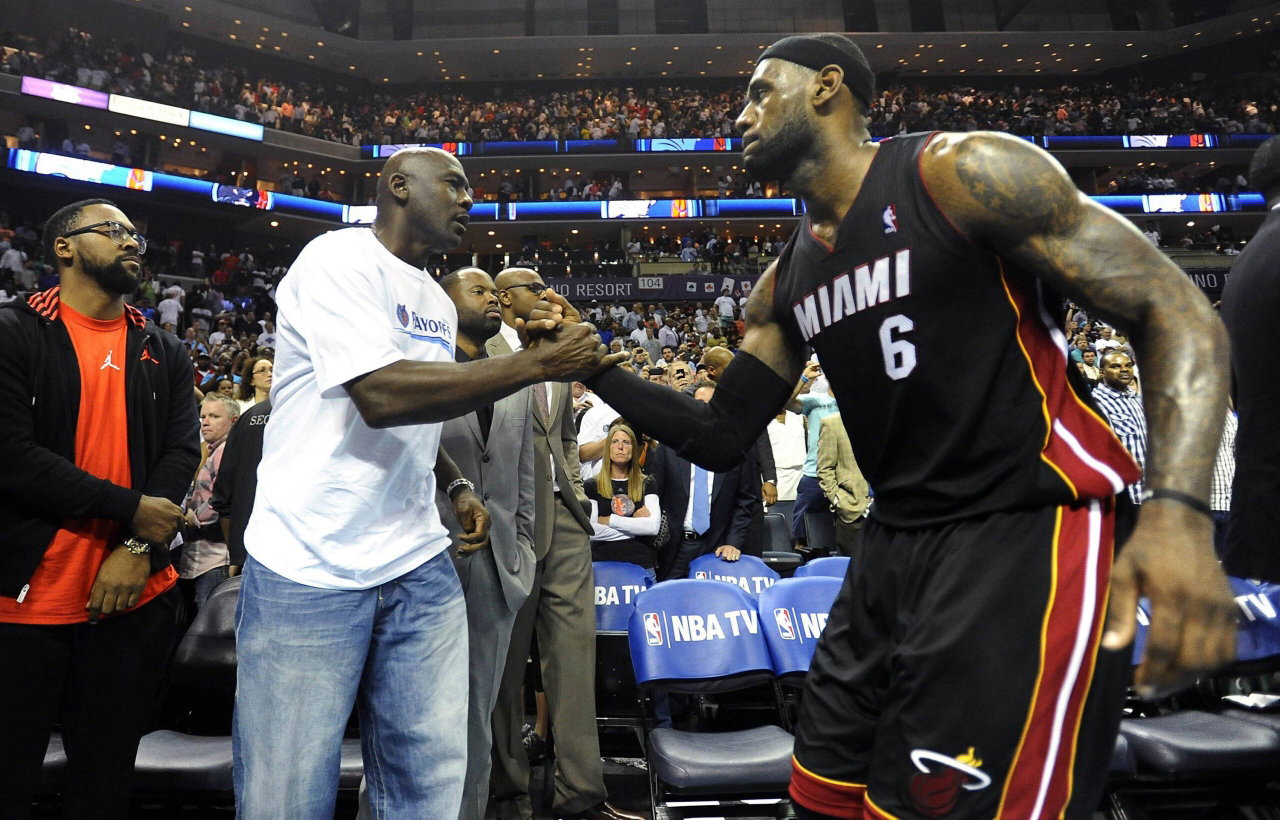
Former NBA referee Derek Richardson believes the debate over superstar treatment overlooks a key part of basketball: understanding the rules. Discussing Michael Jordan, Kobe Bryant and LeBron James, Richardson rejected the idea that officials deliberately favor the league’s biggest names, arguing that their knowledge of the game helps explain why they can draw certain calls.
Watch What’s Trending Now!
Speaking on Byron Scott’s Fast Break podcast, Richardson was asked whether NBA superstars receive special treatment from referees. In Yahoo Sports’ coverage of Richardson’s comments, the former official explained that referees are evaluated on their performances and can miss postseason assignments if their grades are too low.
“No, because number one, every play gets reviewed, and if I’m in the bottom-third, they are not even considering me for the playoffs,” Richardson said. “So people think that we give Mike, Kobe, LeBron these preferential treatments instead of just one simple thing: they know how to play.”
Richardson officiated 1,540 NBA games over a 28-year career before retiring in 2025. His argument is that elite players understand how officials interpret contact and know how to use the rules to their advantage, rather than relying on their reputations to receive favorable calls.
Richardson used the Showtime Lakers to illustrate how understanding small details can influence a team’s success. During the conversation, he discussed Kurt Rambis and his role in helping Los Angeles launch its fast breaks.
“When Byron played with the Lakers, right? What was Kurt Rambis’s job? To beat the [expletive] out of everybody,” Richardson said.
He then explained how Rambis would retrieve the ball after a made basket and get it to Magic Johnson quickly. Coach Pat Riley wanted the Lakers to score within four seconds, making the speed of that transition an important part of their offense.
For Richardson, those details demonstrate how basketball intelligence can make a difference. He connected the Lakers’ approach to Johnson’s ability to recognize contact and react during a play, explaining that understanding how the rules worked was part of the point guard’s skill set.
“How many times did Magic go this way, and they had to change the rules? He gets hit, what does he do? Throw it up,” Richardson said. “So now you gonna get mad at me because he knows the rules?”
The former referee’s argument is that knowing how officials interpret a play is part of being an elite player. Recognizing contact and understanding when a shooting foul might be called can give a player an advantage without necessarily indicating that the official is showing favoritism.
When the host asked whether a player’s reputation could influence a close, 50-50 decision, Richardson said he had never personally seen preferential treatment being given in that way. He also discussed the scrutiny officials face when they make mistakes, including calls that might be perceived as favoring one player over another.
Richardson’s experience offers insight into how a veteran official views the issue, but his comments do not establish that officiating bias never occurs. The wider debate continues because individual calls can be interpreted differently by players, coaches and observers.
For Richardson, however, the explanation is straightforward: Jordan, Bryant and James understood the game and knew how to respond to the rules. Whether that settles the superstar-treatment debate is another question, but his comments highlight how anticipation, awareness and experience can influence a player’s ability to draw fouls.