
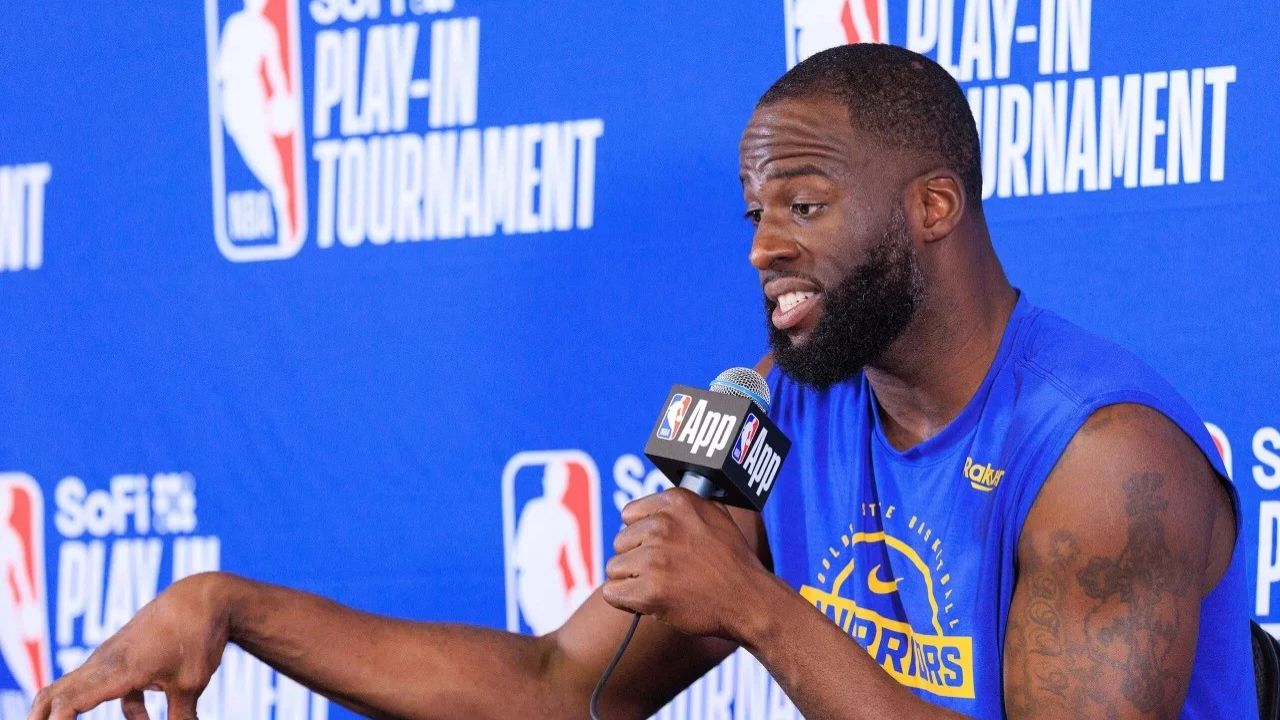
The fault lines separating vintage NBA legends and modern professional athletes have cracked wide open once again. While the Golden State Warriors rookie reignited old tensions between Draymond Green and Eddie A. Johnson, the Warriors veteran’s recent ejection fueled a fiery war of words that has spanned podcast studios, radio airwaves, and social media feeds. At the epicenter of this generational clash is the former 17-year NBA veteran and broadcaster Eddie A. Johnson, whose blunt critiques have routinely challenged the entitlement and conduct of today’s young stars.
Watch What’s Trending Now!
In an exclusive interview with Essentially Sports, Johnson pulled back the curtain on why he believes modern players are uniquely closed off to constructive criticism, pointing directly to recent incidents from the Bay Area.
The friction intensified following a lopsided Los Angeles Lakers win over the Golden State Warriors. A game where Warriors rookie Yaxel Lendeborg found himself in a fiery on-court tussle with Luka Doncic.
Rather than keeping his head down after a blowout defeat, Lendeborg used his inaugural postgame press conference to launch verbal jabs at Doncic, declaring he had “lost all respect” for the superstar’s style of play. Johnson took immediate exception to the rookie’s public posturing, igniting a bitter public feud with Warriors enforcer Draymond Green, who vehemently defended his teammate.
Reflecting on the broader cultural shift among young athletes during his exclusive conversation with Essentially Sports, Johnson didn’t mince words regarding why modern players frequently reject veteran counsel.
“I don’t think it’s just athletes. I think it’s just young people in general. They tend to think that they’re smarter than their parents and their uncles. In a lot of ways, yes, they have gotten some education on things that we missed out on. But just in life in general, how to lead, how to talk to people, how to treat people, there’s no newness to that. It doesn’t matter what kind of education you have. You treat people with respect. You say the right things. You try to lead people and all that.”
Johnson elaborated on how traditional locker-room hierarchies have eroded over time, contrasting today’s landscape with the strict unwritten codes enforced during his playing career.
“Yaxel Lendeborg said some things about Luka [Doncic]. He said some things about the NBA that I didn’t think it was his place to do it. That was his first game, his first press conference. He’s a rookie. No, rookies are meant to be seen, not heard. And I grew up with that. Veteran players taught me that. ‘Eddie, pay attention to us. We’ll help you. We’ll help you do the right things.’ And they did.”
Supportive veterans helped Johnson find a place to stay and invest in a good car, along with teaching him how to save money. Draymond Green is a different breed of supportive vet.
After Johnson responded to Yaxel’s comments on Doncic with a pointed warning, “Rooks are not allowed to speak, especially one that says he never watched the NBA growing up,” on X, Green took exception.
He fired back on The Draymond Green Show, labeling Johnson a “Clown” for his expectations and backing Lendeborg. The war of words quickly escalated on SiriusXM NBA Radio, where Johnson unleashed a blistering retort. He criticized Green for riding the coattails of Stephen Curry’s success while bringing up the infamous Jordan Poole incident.
The public feud brought in Johnson’s former teammate, Charles Barkley, who publicly sided with Johnson and argued that Green should have stepped in to guide the rookie rather than encouraging public disrespect.
Beyond player etiquette and podium decorum, Johnson’s critique also touched upon the injury paradox plaguing today’s NBA. Despite modern athletes having access to advanced medical technology, specialized nutritionists, and state-of-the-art training regimens, Johnson noted a puzzling surge in soft-tissue injuries and missed games across the league.
He argued that modern players often misinterpret the physical rigor of past eras while easing up on strict regimens.
“I think they have misunderstood the fact that they’re not that far advanced than we are,” Johnson explained to EssentiallySports. “As JJ Redick once said, we’re firemen and plumbers, because we had to—not me in general, but the generation before me had to work a side job, even though they were playing in the NBA. And so, in saying that, you’re saying those guys were slow, which is not true. The pace back then in the ’60s was faster than this pace right here.”
The intense public scrutiny surrounding player behavior also mirrors the high-stakes drama of competitive entertainment circles, much like the electrifying environments analyzed on expert platforms such as Casino Groups.
As the 2026–27 NBA season progresses, the friction between old-school legends and outspoken modern stars shows no signs of cooling down. Whether through heated postgame press conferences or online, the clash of eras serves as a permanent reminder that while the game evolves, the battle for respect remains uncompromisable.