
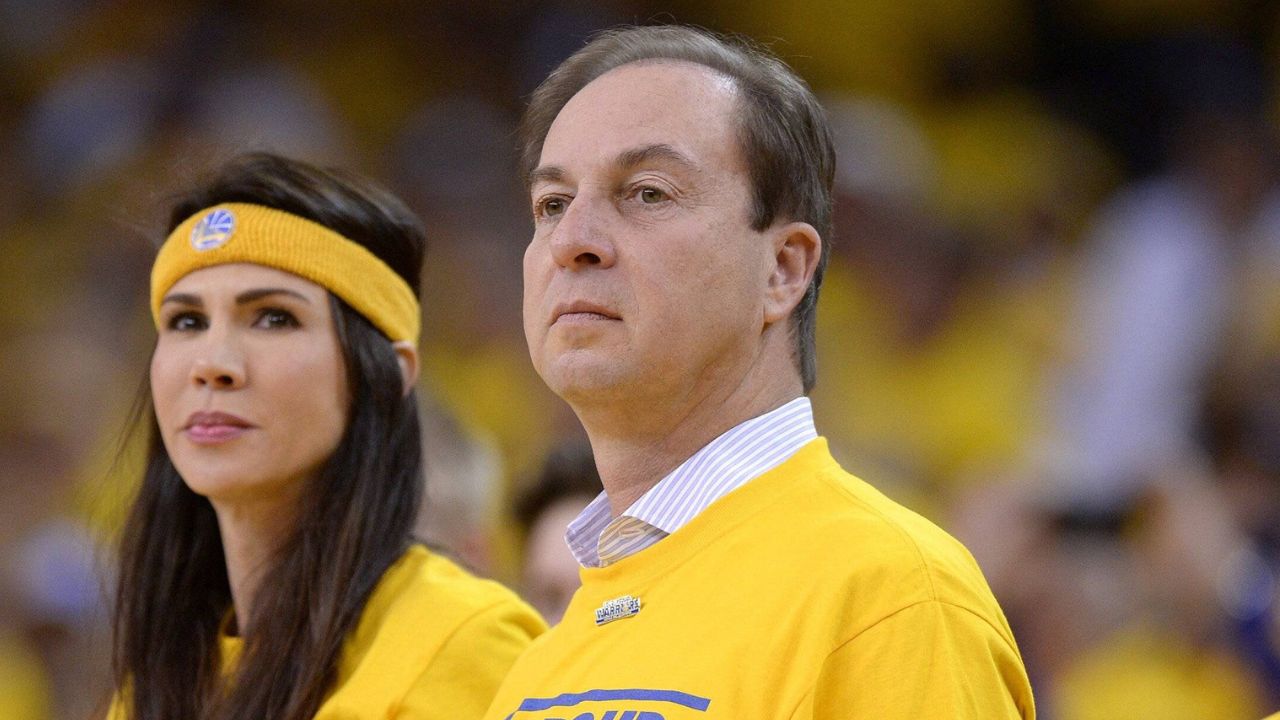
Oakland’s relationship with professional sports has taken a painful turn over the past several years. The city lost the Golden State Warriors, Raiders, and Athletics, leaving behind financial obligations and a community stripped of three major sporting institutions. Yet among the owners who walked away, Joe Lacob remained largely away from criticism.
Watch What’s Trending Now!
Former NBA star Blake Griffin examined how billionaire sports owners handle the financial responsibilities attached to their franchises.
He turned his attention to Lacob, first playing a clip of the Warriors owner discussing how he financed San Francisco’s Chase Center without public money.
“Every time they privately suggested maybe a little public money we can get from this or that, I said no. Zero. Nothing. And I wanted to be able to say that we could. I didn’t take away one dollar from police, fire, all the things, essential activities,” Lacob said in the interview.
Griffin, replaying the clip on his show, The Stepback with Blake Griffin, initially praised the stance sarcastically: “Okay, very noble. Of course, as a billionaire, you’re not supposed to take away money from those things. You’re supposed to put money into them. That’s how they work.”
Following that, he brought up the Warriors’ departure from Oakland in 2019.
“When the Warriors moved in 2019, guess who decided he didn’t have to pay off the Oakland bond as required by his lease? That’s right, Mr. I don’t want to take a penny from the firefighters, Joe Lacob. He fought Oakland all the way to the state Supreme Court, where thankfully he lost. But he will always be the guy who tried to screw over a struggling town for $45 million.”
The dispute dates back to 1996, when Oakland and Alameda County issued public bonds to fund renovations at Oracle Arena.
Under the Warriors’ lease agreement, the franchise was responsible for annual payments toward that debt. When the team moved across the bay to San Francisco, Lacob and the Warriors challenged their obligation to cover the remaining balance, which stood at approximately $45 million.
The legal fight went through multiple appeals before reaching the California Supreme Court. The Warriors ultimately lost, leaving the franchise responsible for the payments.
For Griffin, that history undermined the image of an owner who had refused to use public resources to build his new arena.
The Warriors were only the beginning. Raiders moved to Las Vegas in 2020, while the Athletics departed Oakland in 2024, eventually relocating to Sacramento before their planned move to Las Vegas. Each departure involved its own stadium dispute.
But the combined effect was devastating for a city that had built a significant part of its identity around those teams.
Stephen Curry has previously spoken about what the Warriors’ departure meant to Oakland. His farewell to Oracle Arena in 2019 was emotional, and he has continued investing in the community through the Eat. Learn. Play. Foundation with his wife, Ayesha. When the Athletics played their final game in Oakland in 2024, Curry also acknowledged the significance of losing all three teams, saying it “stings deep” for the city’s spirit and unity.
That perspective matters because the Warriors’ move was not just another franchise changing its home address. Curry and the organization had spent years building a connection with Oakland, particularly during the team’s championship run.
The departure left fans with memories of the Oracle Arena atmosphere. But little control over the financial and political decisions that followed.
Lacob’s private financing of Chase Center remains a significant achievement. Refusing public money for a new arena in San Francisco does not erase the separate obligation the Warriors had under their Oakland lease.
The two issues can coexist, and the legal outcome made that distinction clear. Griffin’s criticism ultimately puts the focus back on the city left behind.