
When the WNBA launched in 1996, its long-term survival was far from guaranteed. Nearly three decades later, with the league posting record TV numbers and expansion plans on the table, a very different kind of warning is making the rounds.
Watch What’s Trending Now!
Chris Broussard of Fox Sports gave his take on the trans-athlete controversy surrounding the WNBA following Enes Kanter Freedom’s viral satirical declaration that he’s eligible for the 2027 WNBA Draft.
“The WNBA, just as it’s beginning to pop, will soon be the G-League unless these women start using common sense,” Broussard wrote on X. “Do what’s right & protect girls & women in sports!”
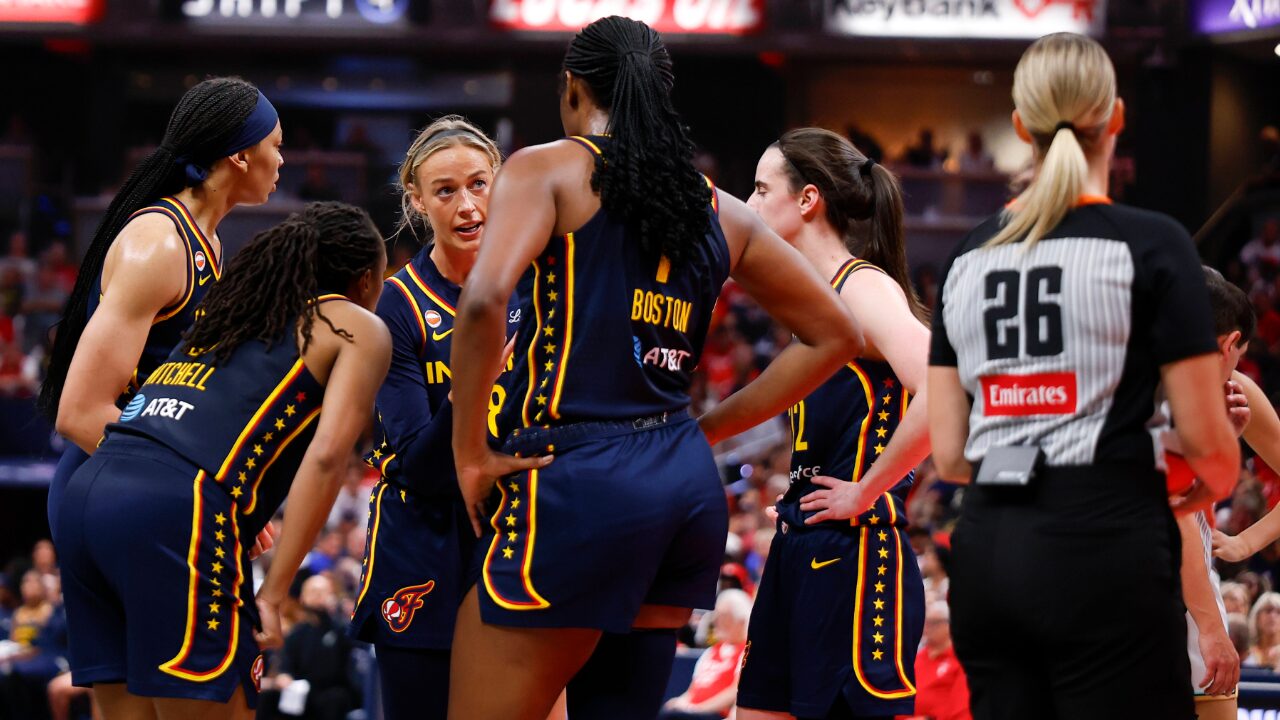
It all started when Indiana Fever guard Sophie Cunningham said she wants to “protect young girls in the locker room” and argued that players “shouldn’t have to play against biological men.” Her remarks split the league.
Valkyries forward Gabby Williams said she “would welcome a trans athlete on my team or against my team any time,” and Lynx coach Cheryl Reeve wore a “Trans kids belong” shirt in a game against Cunningham’s Fever.
The former NBA center posted a video declaring himself eligible for the 2027 draft, citing what he described as the league’s self-identification and inclusion guidelines.
“My team and I have carefully examined the WNBA’s eligibility criteria and governing framework… Based on the current guidelines, I can and am officially declaring my eligibility for the upcoming WNBA Draft,” Kanter said.
Republican Senate candidate and former NBA player Royce White made a similar announcement shortly after. And now Broussard’s warning that the WNBA’s growth is at risk “unless these women start using common sense” reflects one side of a debate that shows no signs of ending.
On the same day as Freedom’s remarks, WNBA commissioner Cathy Engelbert reportedly sent a memo to teams addressing the topic. Meanwhile, the WNBPA released its own statement.
“We embrace justice, equity, diversity, and inclusion… Hate, abuse, and demonization of any person or group of people, including transgender people, only fuel fear, division, and harm. We will continue to have hard conversations.”
That said, the league’s collective bargaining agreement is blunt on one point: only women are eligible to play in the WNBA. Past that, the language gets murky fast. The CBA carries anti-discrimination language, but it never says a player declaring their own eligibility is enough to settle the matter. And there’s no actual policy spelling out criteria for transgender athletes, no checklist, no process.
Filing for the draft isn’t the same as clearing the eligibility bar. It doesn’t guarantee a training camp invite, and it definitely doesn’t guarantee a roster spot. Kanter Freedom’s case rests entirely on his own read of the league’s inclusion principles and statements made by players, coaches, and the players’ union. The CBA doesn’t confirm that reading or contradict it. It just doesn’t address the question at all.
The WNBA hence finds itself managing a national political story alongside one of the most successful periods of growth in its history.