
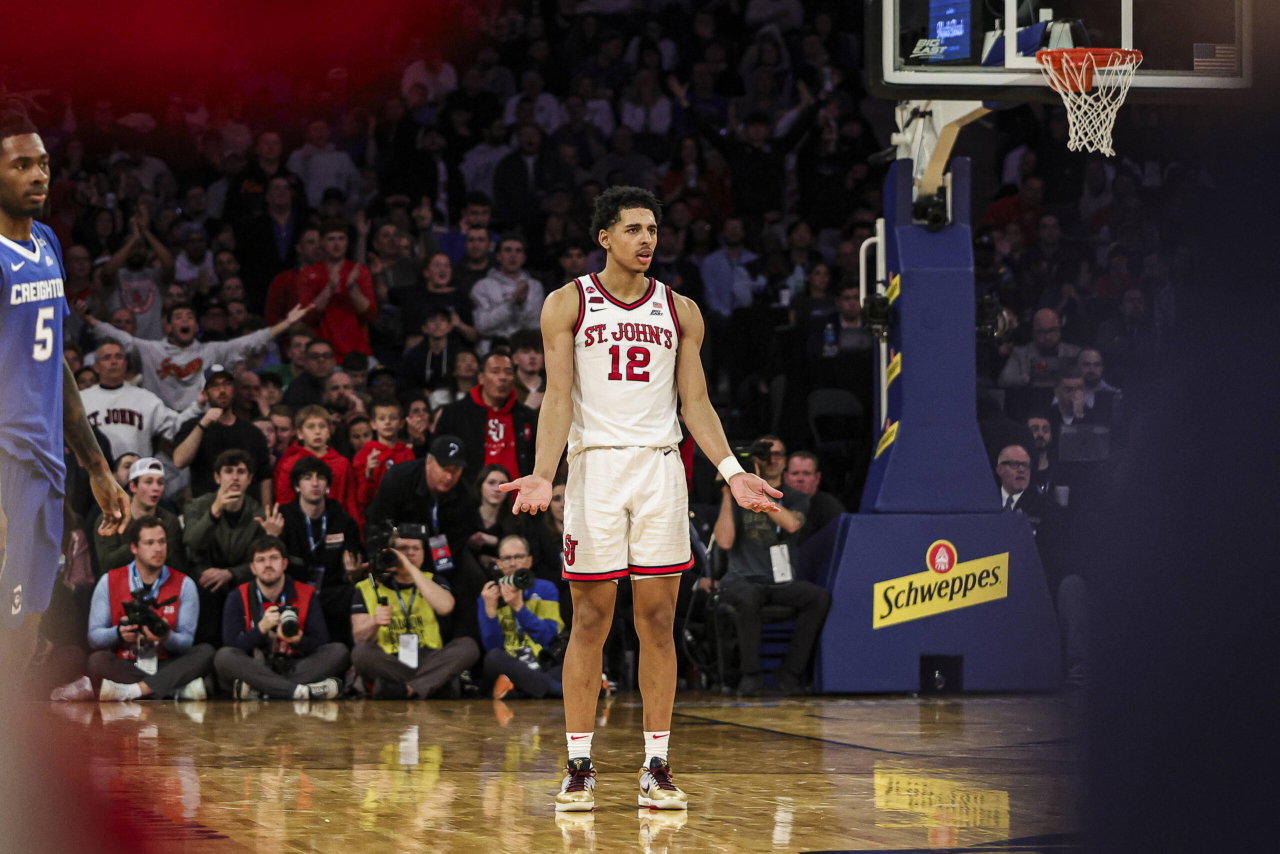
RJ Luis Jr.’s return to college basketball lasted just 15 minutes before his future at LSU took an unexpected turn. The former St. John’s star had finally earned his chance to play again after months of eligibility battles. The situation changed dramatically the following day, when LSU president Wade Rousse instructed head coach Will Wade not to play Luis again. But Luis has now taken the matter to court, dragging the SEC boss into it.
Watch What’s Trending Now!
The 23-year-old guard is suing the SEC and Commissioner Greg Sankey, claiming they threatened LSU’s conference membership to keep him off the basketball court. The former St. John’s star alleges the conference pressured the university despite a court order protecting his eligibility. Now, he is fighting back in court and seeking financial compensation for the season he claims he lost.
Luis filed an amended lawsuit on November 25 in East Baton Rouge Parish, adding Sankey as a defendant in his personal capacity alongside the SEC. He is seeking unspecified damages and a jury trial. His attorneys allege that the conference and its commissioner deliberately interfered with his relationship with LSU and cost him opportunities to continue his basketball career.
The amended complaint seeks compensation for past and future name, image, and likeness (NIL) income; professional opportunities; endorsements; future earnings; and damage to Luis’s reputation. It also lists mental anguish, emotional distress, humiliation, and loss of enjoyment of life. His lawyers are seeking legal fees and expenses, along with potentially triple damages under Louisiana’s unfair trade practices law. The filing does not specify a dollar amount.
Luis’s attorney, Tony Clayton, told ESPN that the damages would be “a large number.” He also plans to depose SEC presidents over an alleged coordinated effort to pressure LSU.
CAN BROOK LOPEZ BE THE ANSWER TO THE LAKERS' WEMBANYAMA PROBLEM?
The lawsuit argues that Luis is losing the 2026-27 season, which it describes as his final year of college eligibility. His attorneys maintain that he did not voluntarily leave the team and remains ready and willing to play.
The dispute escalated after a Louisiana court granted Luis a preliminary injunction on November 13. The order allowed him to play another season and barred the SEC from treating him as ineligible or penalizing LSU for rostering him. The conference’s counsel subsequently communicated that it would not impose fines or penalties on LSU for adding him to the team.
Luis made his LSU debut against Louisiana-Monroe on November 18. He played 15 minutes, scoring 11 points and grabbing nine rebounds. However, his return lasted just one game.
According to the amended complaint, Sankey told LSU president Wade Rousse on November 19 that the university’s SEC membership would be terminated if Luis continued playing. Rousse subsequently instructed head coach Will Wade not to play him again.
“The conference was the only reason LSU kept Mr. Luis off the floor,” the filing states.
But why did the court order not keep Luis on the floor? The SEC could not simply overrule a Louisiana court order. Instead, the alleged threat involved a separate question: the conference’s authority to govern its membership and potentially terminate LSU’s place in the league. That is distinct from declaring Luis ineligible or imposing a direct penalty for playing him.
LSU’s president then instructed the coach to bench Luis. Whether the alleged threat violated the injunction remains a matter for the court, and Luis’s contempt proceedings are still pending. The SEC’s position did not automatically cancel the court’s order.
Luis’s situation has a notable comparison in former Alabama center Charles Bediako, who also attempted to return to college basketball after signing professional contracts and playing in the NBA G League.
The SEC opposed Bediako’s return, with Sankey submitting an affidavit in court supporting the conference’s eligibility restrictions. Bediako initially received temporary court relief and played five games for Alabama. However, a judge later denied his request for a preliminary injunction, ending his return to college basketball.
Luis’s lawyers argue that the SEC has applied its rules inconsistently. The amended petition says athletes at 14 of the conference’s 16 institutions have competed under court orders this season. It also alleges that eight SEC schools have rostered men’s basketball players whose eligibility was secured through such orders.
The two cases do not establish a binding legal precedent for one another. They involved different court proceedings and outcomes. However, both highlight the growing conflict over whether athletes with professional experience can return to college competition and how consistently eligibility restrictions are enforced.
What Happens Next in Luis’ Lawsuit?
The SEC maintains that it has the authority to enforce rules voluntarily adopted by its member universities. Its separate federal lawsuit against LSU began after the university explored adding former professional football players Dae’Quan Wright and Zxavian Harris to its roster. The conference argues that LSU’s actions challenge its ability to govern itself and enforce membership standards.
The SEC has scheduled a December 3 meeting for its presidents and chancellors to consider terminating LSU’s membership. On November 25, a federal judge denied the conference’s request for a temporary restraining order that would have protected it against potential legal challenges to an expulsion vote.
The decision allows the meeting to proceed but does not prevent LSU or Louisiana from challenging a future expulsion. Louisiana Attorney General Liz Murrill has also indicated that the state would sue if LSU is removed.
The SEC had not publicly responded specifically to Luis’s amended damages claim as of November 26. Meanwhile, a hearing on his motion seeking to hold the conference and Sankey in contempt is scheduled for January 11, 2027. The December 3 membership meeting could also shape the wider dispute.
Luis’s case now goes beyond his eligibility. He is seeking compensation for the season and career opportunities he believes he lost, with Sankey’s personal involvement becoming a central issue in the legal fight.