
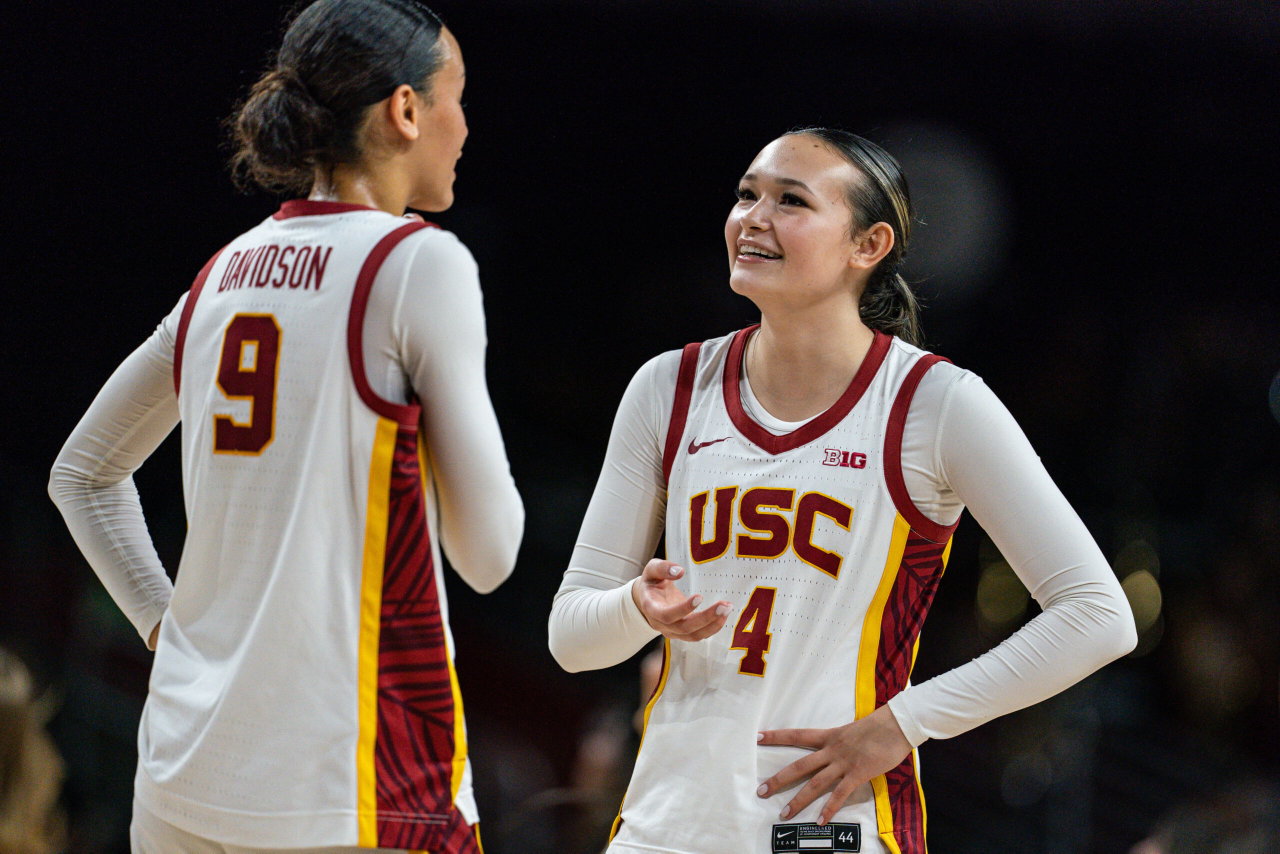
Is the WNBA’s draft eligibility rule due for an upgrade? For USC’s Jazzy Davidson, it definitely is, especially when it comes to giving college athletes the freedom to turn professional earlier. And she wasn’t afraid to spell it out.
“I definitely think that the eligibility rule right now is maybe a little bit outdated,” she said in an interview with Front Office Sports.
Of course, there may well be a case for some change. But for WNBA legend Candace Parker and Indiana Fever star Aliyah Boston, it feels a little too early to be calling for something so drastic, especially with the league barely one year into its new CBA.
“Jazzy, hold on. You just started making money this year. Everybody calm down,” Parker said on episode 54 of her Post Moves podcast with Boston. “Jazzy, love you. I think you could be one of those players that could play in the WNBA. However, hold your horses. It’s only been a year of this new CBA, and, yeah, super excited about the possibility of being able to declare early.”
Reacting to Davidson’s position, Boston also appeared to share Parker’s reservations about changing the eligibility requirements so soon.
“Slow down, though. Slow down,” she said.
Under the WNBA’s current eligibility rules, American players must turn 22 during the calendar year of the draft, graduate from a four-year college within three months of the draft, or be at least four years removed from high school to qualify. That is in stark contrast with the NBA, which allows American players to enter the draft once they turn 19 during the draft year or have spent at least one year out of high school.
For Aliyah Boston, this difference is quite surprising. She believes the WNBA’s existing requirements still serve an important purpose.
“19 years old is so crazy,” she said. “Honestly, I don’t think our rules are bad. I couldn’t imagine coming out after my sophomore year of college and being ready for the W. I just don’t think I would have been ready. Like, the physicality, the speed, everything. Even coming out after four years, it was like, ‘Okay, hold on. Give me a second. Let me get it.’ So, I don’t hate the rules. I really don’t.”
It is, however, quite understandable where Davidson is coming from. The WNBA’s existing eligibility requirements made absolute sense when they were introduced, particularly given the financial realities of playing professional basketball at the time. With relatively low salaries in the league, having a college degree offered players an important safety net and an alternative source of long-term career stability beyond basketball.
That landscape has, however, changed dramatically under the new CBA. The team salary cap in the WNBA has jumped from roughly $1.5 million to $7 million. The league’s average salary is now around $583,000. And the minimum salary for any active roster spot sits between $270,000 and $300,000, up from just $66,000. Even top rookie draft picks are now seeing rookie scale contracts worth up to $500,000.
And of course, the financial reality in college basketball is also soaring thanks to NIL. For Davidson, though, this does not seem to be about money. As Parker put it, it is about “the opportunity to decide what you want to do.”
And yes, without the restriction, some college athletes would almost certainly have declared earlier, and some clearly had the skill to cope in the league, as Boston acknowledged.
“Obviously, you know, there’ll be some hoopers that are just cold, and they’re like, ‘I can come out now and get buckets.’ I get that. But I don’t think it hurts to be able to just keep building,” Boston said.
However, the WNBA’s current trajectory does appear to point toward a future in which its draft eligibility requirements could eventually change. And while Parker is not necessarily opposed to the possibility of a change, she believes three years of college basketball could be a reasonable middle ground, rather than the current four-year requirement. What do you think?