Imago
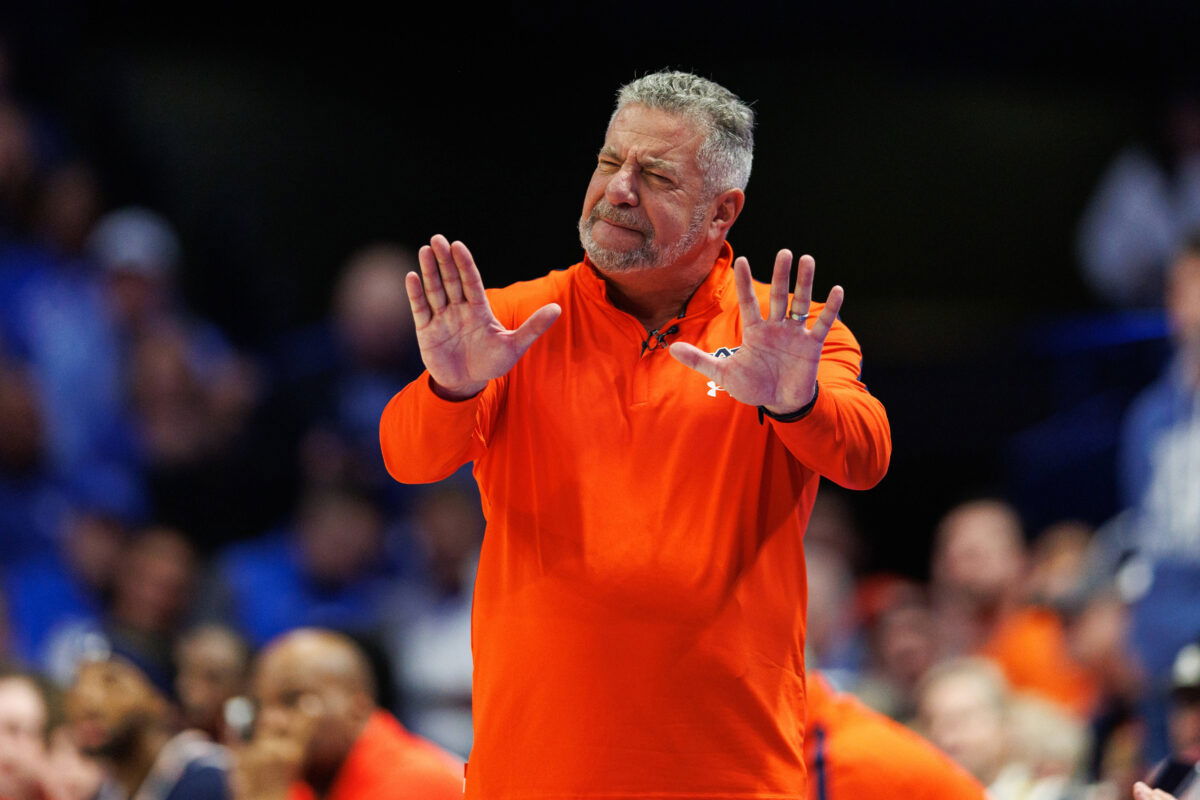
NCAA, College League, USA Basketball: Auburn at Kentucky Mar 1, 2025 Lexington, Kentucky, USA Auburn Tigers head coach Bruce Pearl reacts after a missed free throw during the first half against the Kentucky Wildcats at Rupp Arena at Central Bank Center. Lexington Rupp Arena at Central Bank Center Kentucky USA, EDITORIAL USE ONLY PUBLICATIONxINxGERxSUIxAUTxONLY Copyright: xJordanxPratherx 20250301_cec_li0_082
Imago
NCAA, College League, USA Basketball: Auburn at Kentucky Mar 1, 2025 Lexington, Kentucky, USA Auburn Tigers head coach Bruce Pearl reacts after a missed free throw during the first half against the Kentucky Wildcats at Rupp Arena at Central Bank Center. Lexington Rupp Arena at Central Bank Center Kentucky USA, EDITORIAL USE ONLY PUBLICATIONxINxGERxSUIxAUTxONLY Copyright: xJordanxPratherx 20250301_cec_li0_082
Imago
NCAA, College League, USA Basketball: Auburn at Kentucky Mar 1, 2025 Lexington, Kentucky, USA Auburn Tigers head coach Bruce Pearl reacts after a missed free throw during the first half against the Kentucky Wildcats at Rupp Arena at Central Bank Center. Lexington Rupp Arena at Central Bank Center Kentucky USA, EDITORIAL USE ONLY PUBLICATIONxINxGERxSUIxAUTxONLY Copyright: xJordanxPratherx 20250301_cec_li0_082
Imago
NCAA, College League, USA Basketball: Auburn at Kentucky Mar 1, 2025 Lexington, Kentucky, USA Auburn Tigers head coach Bruce Pearl reacts after a missed free throw during the first half against the Kentucky Wildcats at Rupp Arena at Central Bank Center. Lexington Rupp Arena at Central Bank Center Kentucky USA, EDITORIAL USE ONLY PUBLICATIONxINxGERxSUIxAUTxONLY Copyright: xJordanxPratherx 20250301_cec_li0_082
The NCAA is staring down a breaking point, and some of college basketball’s most powerful voices are no longer mincing words. As the debate over NIL-era eligibility loopholes intensifies, Auburn legend Bruce Pearl has stepped forward with a blunt proposal that could fundamentally reshape how college sports operate.
Watch What’s Trending Now!
The NCAA, particularly college basketball, has come under fire as eligibility loopholes continue to emerge in the NIL era. The latest blow came when James Nnaji, the 31st overall pick in the 2023 NBA Draft, was linked to the Baylor Bears. The situation is further complicated by the fact that his NBA draft rights were tied to the trade that sent Karl-Anthony Towns to the New York Knicks.
The situation has forced college basketball to confront an uncomfortable question: has the NCAA lost the ability to meaningfully govern its own sport?
Arkansas Razorbacks head coach John Calipari did not hold back during a fiery press conference. Riley Gaines agreed with what Calipari said while suggesting that Congress consider granting the NCAA antitrust protection similar to existing professional sports frameworks. This, she argued, would allow college sports to pursue more unified, league-style media rights negotiations, similar to professional leagues.
I agree so either Congress give NCAA Antitrust protection or each sport should form its own assoc to set common sense rules by bargaining with players, and maximize revenue by selling media rights on a unified basis, just like every other major sporthttps://t.co/DZu7qjrJf8
— Bruce Pearl (@coachbrucepearl) January 1, 2026
College basketball icon Bruce Pearl has echoed Riley Gaines’ sentiments. According to Bruce, the NCAA should be given Antitrust Protection to address what he views as growing exploitation of NIL-era loopholes. In case that isn’t possible, each sport under the NCAA program should make its own separate sports body and act similarly to how the NBA and the NFL work for Pro Basketball and Pro Football, respectively.

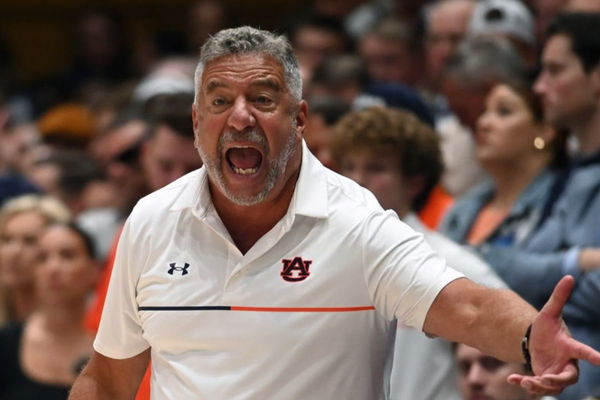
Bruce Pearl was actively part of the NCAA program, coaching the Auburn Tigers for 11 seasons before stepping down in September 2025. Pearl is now a college basketball analyst for TNT and CBS. Pearl’s alignment with Gaines reflects a broader push for structural reform. Allowing the NCAA to either deal in media rights directly or create separate sports bodies that can do that will allow collective revenue generation and could reshape how college basketball attempts to rein in eligibility loopholes without eliminating athlete compensation.
Critics, however, argue that granting antitrust protection or breaking the NCAA into sport-specific bodies could further accelerate the unchecked professionalization of college athletics.
Why Has NIL Become Such a Controversial Issue in College Basketball?
NIL, or Name, Image, and Likeness, refers to the image rights of a player and allows the players to commercially profit from it. While the NCAA adopted an interim NIL policy in 2021 to allow athletes to monetize their name, image, and likeness, things have taken quite an ugly turn.
Fast forward to the present, and we have seen an unprecedented amount of interest from College Basketball programs in recruiting professional athletes under the current eligibility framework. Nastja Claessens joined the Kansas State Wildcats program despite being drafted in the WNBA.
By 2025, college basketball programs began showing increased interest in recruiting players with international league experience into their programs, with the likes of Luka Bogavac, Mihailo Petrovic, and Kirill Elatontsev notable examples. The Nnaji–Baylor situation, however, became a flashpoint across college basketball. A major college program recruiting a drafted NBA player who has been part of teams and training at the highest level for multiple years, with four years of remaining NCAA eligibility, raised serious competitive and developmental concerns and quickly set off alarm bells across the sport.
It is precisely this type of scenario that Pearl believes the NCAA is currently unequipped to regulate under its existing structure.
Imago
Credit: Rob Kinnan-Imagn Images
These deals are not only setting dangerous precedents but also threatening the core mission of College Programs. The 2015 Naismith Basketball Hall of Fame inductee, John Calipari, stated that this will discourage coaches from recruiting high school graduates to college programs, with more programs prioritizing Nnaji-type opportunities over traditional recruiting.
NBA legend Charles Barkley added another perspective to the debate in a widely circulated clip. The 2006 Hall of Famer stated that this could damage the education aspect of the whole program as well, with many high school players relying on college recruitment to access higher education.
Calipari later went on a seven-minute rant against the NCAA after the Arkansas Razorbacks’ 103-74 win against the James Madison Dukes. Calipari demanded the body do “the right thing” lest the whole system break down. The Razorbacks coach gave multiple suggestions, from a drafted player not being able to go back to college basketball programs to not allowing players to join college basketball programs mid-season.
Still, Pearl’s proposal stands out as one of the few ideas that attempt to impose structure without reversing the financial progress players have made.
However, even he knows that doing all this will require major moves from the NCAA, which has shown little appetite for sweeping reform. With so many icons calling for changes and joining the debate, the NCAA may no longer be able to afford inaction. Bruce Pearl and Riley Gaines’ suggestion helps the NCAA stop the NIL abuse while not restricting the commercial aspect of it, and could herald a new era for college basketball and college sports more broadly.