Imago
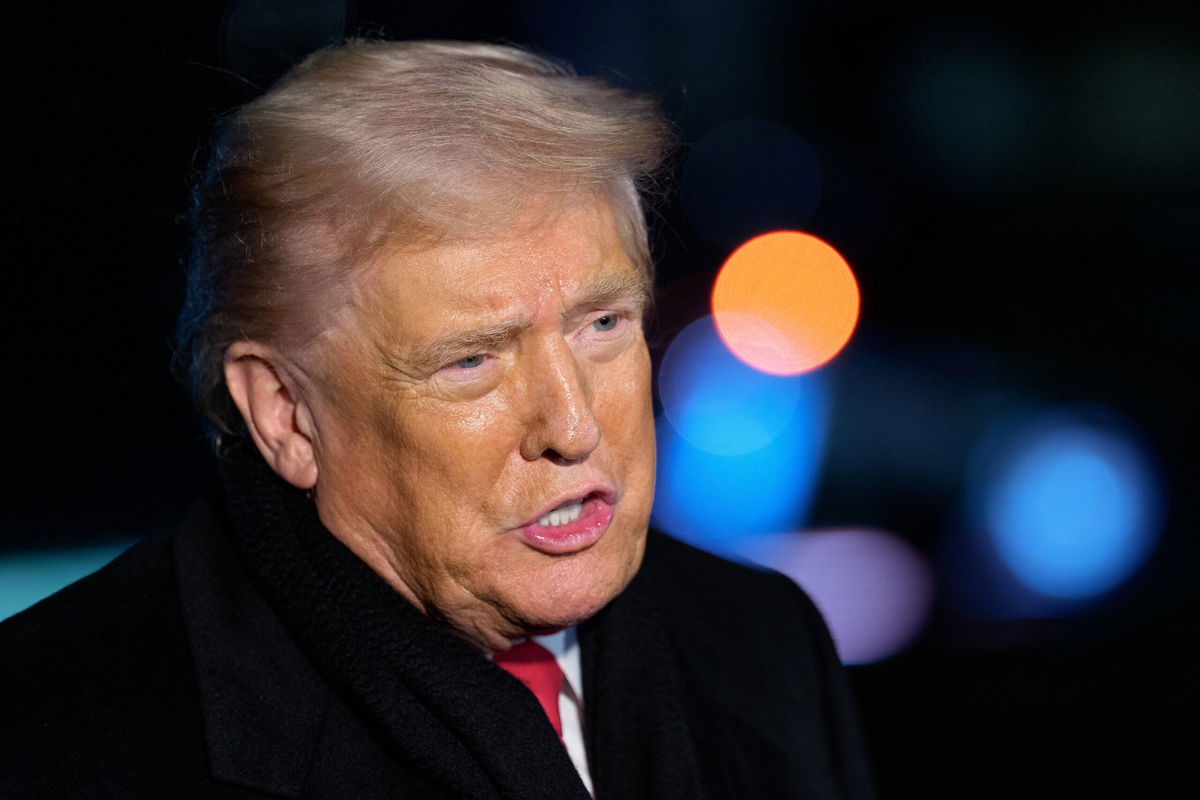
United States President Donald J Trump speaks to the media on the South Lawn of the White House in Washington, DC, USA, on Tuesday, January 20, 2026. President Trump is heading to Davos, Switzerland to attend the World Economic Forum. Copyright: xAaronxSchwartzx/xPoolxviaxCNPx/MediaPunchx
Imago
United States President Donald J Trump speaks to the media on the South Lawn of the White House in Washington, DC, USA, on Tuesday, January 20, 2026. President Trump is heading to Davos, Switzerland to attend the World Economic Forum. Copyright: xAaronxSchwartzx/xPoolxviaxCNPx/MediaPunchx
What started as a simple effort to give athletes basic personal branding rights and professional flexibility has today evolved into a high-stakes, unregulated free agency. And for years, it has been a constant struggle for the NCAA to control this chaos that NIL and the transfer portal have become. Now, as it appears, it may take the presidency, Donald Trump himself, to restore some level of parity.
Watch What’s Trending Now!
According to sources, college leaders are now anticipating a sweeping executive order from President Donald Trump. The proposed order is expected to establish some guardrails around athlete compensation. It would also cap eligibility, police NIL collectives, and potentially limit transfer movement. The order could also spark legal action, as the president himself noted at the “Saving College Sports” roundtable held at the White House. And in fact, that was the meeting that birthed this executive order.
On the eve of the Final Four, college leaders are preparing for the release today of Donald Trump’s executive order, sources tell @YahooSports.
The EO – expected to spark legal action – intends to limit transfers, cap eligibility & police NIL collectiveshttps://t.co/E8KAxpuza9
— Ross Dellenger (@RossDellenger) April 3, 2026
Held at the White House on Friday, March 6, 2026, the “Saving College Sports” roundtable brought together key stakeholders from across the collegiate landscape. These included conference commissioners, university leaders, media executives, and former coaches. Notably, NCAA president Charlie Baker attended the meeting. American sportscasters and former football coaches, Nick Saban and Urban Meyer, were also in attendance. And they all addressed the growing instability within college athletics.
The meeting centered on establishing a more regulated framework for college sports while preserving opportunities for student-athletes. Several speakers emphasized the need for federal intervention. And discussions also touched on potential legislative support, including efforts like the SCORE Act.
Ultimately, the discussions culminated in President Donald Trump’s pledge to issue a sweeping executive order within a week, aimed at addressing the wide range of concerns raised. “I will have an executive order within one week, and it will be very all-encompassing,” Trump said. “We’re going to get sued…, but I’ll have an executive order, which will solve every problem in this room.”
The college basketball world now expects that proposed order as it prepares for the NCAA Tournament Final Four. There is also a real possibility that it could impact the coming transfer portal, which will open shortly after the championship games on April 6 and 7, respectively.
What Is the SCORE Act, and How Does It Fit Into the Push for NCAA Reform
The Student Compensation and Opportunity through Rights and Endorsements (SCORE) Act is a proposed federal bill. It is designed to establish a single, nationwide framework for college sports.
The act was first introduced in July 2025. However, it aligns perfectly with the reform President Donald Trump aimed to achieve with the proposed executive order. But while an executive order can guide federal agencies, it cannot create permanent law. This is why the SCORE Act is essential for enshrining any long-term changes that the president or the NCAA aims to make in the system.
Specifically, the SCORE Act bill aims to eliminate the current patchwork of state-level NIL laws. It will do this by introducing a unified federal standard, which would override the varying regulations across more than 30 states. Also, the act does not recognize student-athletes as employees of their schools. And so it prevents any form of unionization or collective bargaining efforts. Among other provisions, the bill would also grant the NCAA and conferences limited antitrust protection. That is, it will allow them to enforce rules around eligibility, transfers, and NIL without constant legal challenges.
As of April 2026, the bill has backing from NCAA leadership and the Donald Trump administration. However, its path through Congress remains uncertain. It would require 60 votes in the Senate to pass. But opposition, particularly from lawmakers who argue that it could roll back the rights that athletes have recently gained through court decisions, has been a stumbling block.
Written by

Edited by

Pranav Venkatesh