Imago
IMAGO
Imago
IMAGO
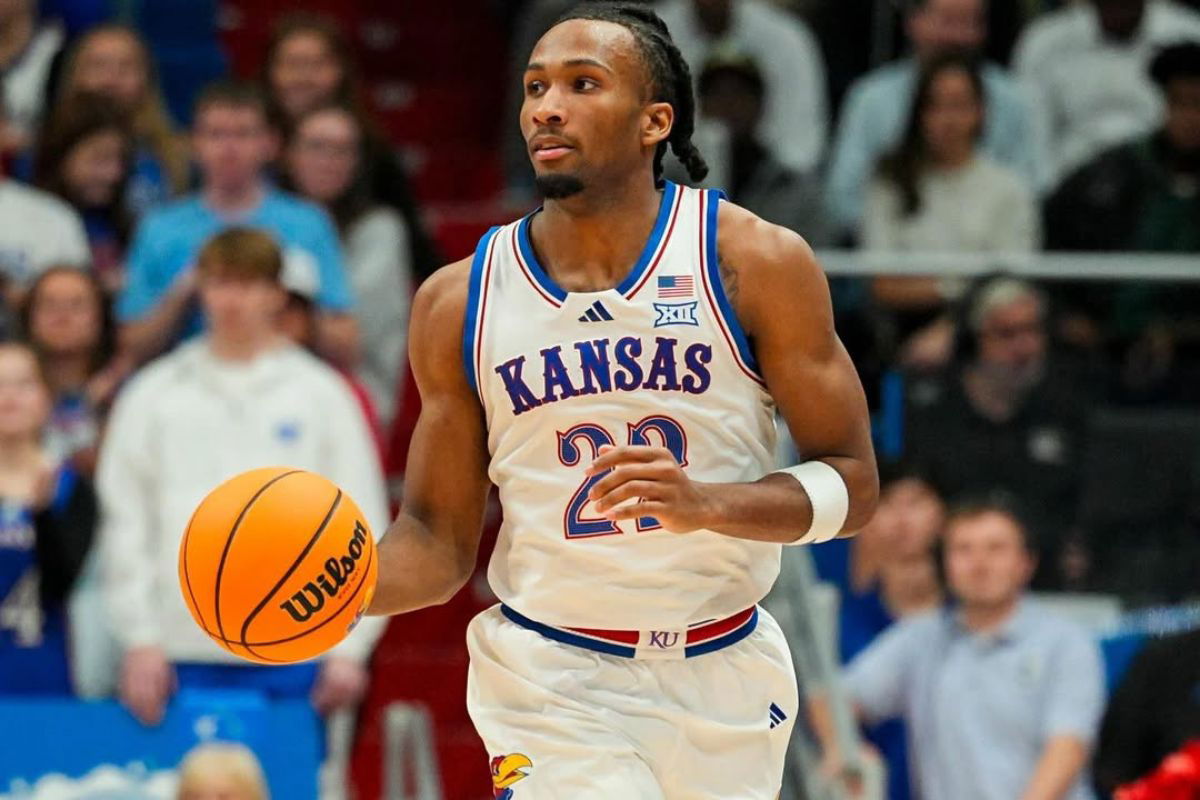
When the Kansas Jayhawks secured Darryn Peterson’s commitment in 2024, the expectations from the five-star recruit were sky-high. Why wouldn’t they be? They were getting the No. 1-ranked shooting guard in the country, who was also ranked No. 3 overall in ESPN’s 100 for 2025. Peterson was projected to be a future top-five NBA pick who could change games single-handedly. While his talent has never been in question, a recent batch of video clips shows how things have unfolded for him in the 2025-26 NCAA season, with his availability a constant issue.
Watch What’s Trending Now!
In the recent Cincinnati Bearcats game, Peterson logged 32 minutes (three minutes shy of his season high), finishing with 17 points on 7 of 17 shooting. On paper, that stat line looks okay, but the game film tells a different story.
Senior writer Sam Vecenie of The Athletic shared side-by-side clips comparing Peterson’s high school dominance at Prolific Prep to his recent performance against Cincinnati, and the contrast was striking.
Top Stories






In one clip from the recent game, Peterson attempted a jumper but barely elevated from the floor. The slow lift allowed his defender to recover after he went past him with a pump fake. Though the shot wasn’t blocked, he still missed it as the explosiveness simply wasn’t there. But just last year, he was rising from the floor so effortlessly on highly contested jumpers, creating separation with a quick lift. Yet that wasn’t all.
For anyone questioning Darryn Peterson, I’d implore you to go back and watch him play in high school.
For instance, look at the elevation on this jumper today in the second half, then one from last year at Prolific vs. Columbus. He can’t even elevate into his shot right now. pic.twitter.com/VUvFD0WcJx
— Sam Vecenie (@Sam_Vecenie) February 21, 2026
In his second post, Vecenie shared a clip of Peterson driving to the rim through a crowded lane, and what fans saw wasn’t the player who is widely considered a must-watch athlete. What everyone saw was a slow player who couldn’t replicate the scoring burst at the rim. It simply wasn’t there.
The takeaway from all this isn’t that Peterson can’t score, but it is that he doesn’t look like the same athlete anymore.
Experts and Insiders Weigh In on Darryn Peterson’s Physical Condition
High-performance consultant Phil Beckner, who works with elite athletes, recently stated that Darryn Peterson requires IV treatment the night before gamedays while reviewing opponent film. So it does raise a bigger question: is he battling something more persistent than simple cramps?
The concerns don’t stop there.
Kansas beat writer Michael Swain, in his recent conversation with Adam Finkelstein, revealed that the physical drop-off is noticeable during games.
“If you watch the actual game itself, you can tell the cramps are coming on because he stops moving, he is not as explosive, and you can even look at the jump shots, go look at the first shot he makes in the game from the corner,” Swain said. “He elevates and shoots over a guy. Go look at that three-pointer right before he takes himself out of the game. Gets what six inches off the ground, so you can tell this is a physical thing.”
If the in-game film shows the present, the season-long timeline tells the bigger story, because this has been defined by interruptions for the young star.
November 11-December 7: Persistent hamstring strain, sidelining him for more than six games, including losses to Duke and UConn.
December 16-January 3: Quadriceps cramping that interrupted his return.
January 20: Sprained ankle at Colorado, forcing him to miss the Kansas State matchup.
January 31 & February 18: More cramping episodes against BYU and Oklahoma State.
February 9: Flu-like illness during a marquee win over Arizona.
Though the pattern is undeniable, it’s also true that Peterson has continued to produce when he’s on the floor, and that’s why Kansas has remained firmly in the Big 12 conversation.
Darryn Peterson and Kansas Remain a Major Threat Heading Into March
For all the concern surrounding Peterson’s health, one thing hasn’t changed: his ability to flip a game in a matter of possessions. Unlike many athletes who would need time to get back into rhythm, he doesn’t need a three-game stretch or a perfect offensive flow to take over. As shown in his 23-point burst in just 18 minutes against Oklahoma State, Peterson can walk into a game cold and still impact the scoreboard. That kind of instant offense is rare, especially from a freshman navigating the physical grind of the Big 12.
Through 27 games that the Jayhawks have played so far, Peterson has appeared in just 16. In those outings, he has averaged 20 points per game, and Kansas has gone 11-5. But their recent 84-68 home loss to the Bearcats didn’t just hurt their seed; it reignited serious questions about Peterson’s physical condition.
According to ESPN, the Bearcats’ 16-point win marks the largest home loss by Kansas to an unranked opponent since Iowa State won by 24 at Allen Fieldhouse in 1973. The loss also snapped Kansas’ 425-game streak of not losing by double digits at home to an unranked team.
Interestingly, Kansas has quietly become more dangerous due to adversity.
Bill Self’s group has spent much of the season learning to function without Peterson. Players like Tre White and Melvin Council Jr. have absorbed larger roles, and the Jayhawks proved they can win marquee games, including a statement victory over No. 1 Arizona, where Peterson wasn’t available.
All that will matter in March.
Imago
Credit: Bob Donnan-Imagn Images
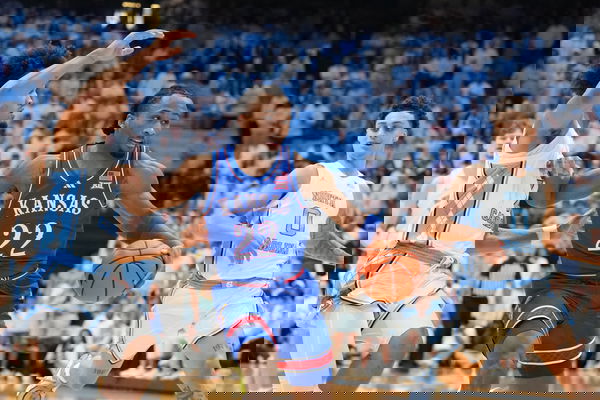
If Peterson is still not at his 100%, the Jayhawks have already shown they can survive, but if he regains even close to full explosiveness at the right time, Kansas will be one of the most dangerous teams in the nation. That’s what makes them a problem heading into March.
Still, it will take them some time to recover from their recent loss to the Bearcats.
“I didn’t think anybody played well today,” Self said when he was asked about Peterson’s performance. “We can chop it up however much we want to, but the defensive intensity from everybody was lacking. Sometimes we look at guys to see how effective they are based on their offensive numbers. I didn’t think that we did anything to cause any type of rhythm adjustments, or anything like that, that ever made them feel uncomfortable.”
However, the bad news is that they won’t have long to regroup.
The Jayhawks will face the No. 2 Houston Cougars in their next matchup on February 23. Though it’s an opportunity to reset the narrative, Kansas will need its urgency back as it faces one of the nation’s most physical and disciplined teams. The tension won’t end there, because they’ll then have to face Arizona again.
If the Jayhawks respond the way championship teams typically do, the Cincinnati loss may ultimately be remembered as a wake-up call rather than a warning sign.
Written by

Edited by

Daniel D'Cruz