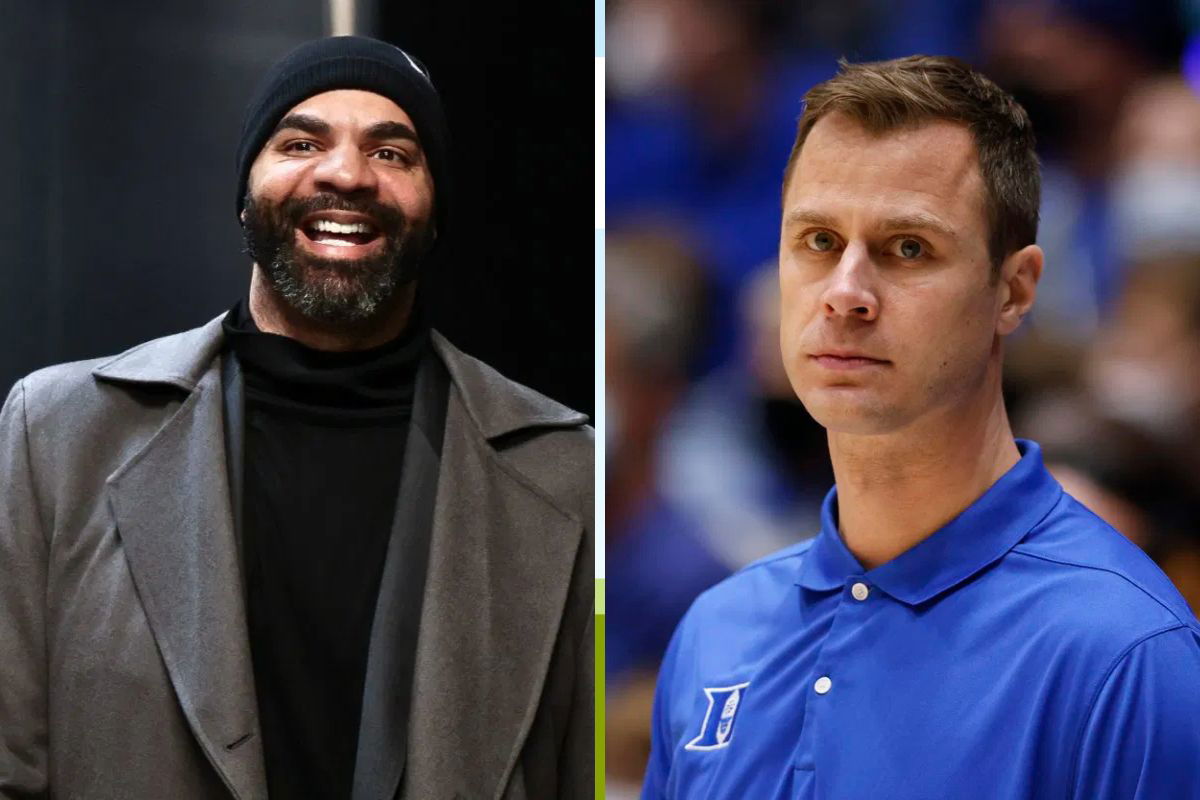
The expectations didn’t disappear when Duke’s roster did. They just shifted. A Final Four-level team emptied into the NBA, and yet the standard inside Cameron Indoor Stadium never changed. That put Jon Scheyer in a familiar but dangerous position for a blue-blood program: starting over while still being judged like a contender.
Watch What’s Trending Now!
Speaking on the Hoops HQ podcast, Scheyer explained the reality of the transition while discussing his new roster built around incoming freshmen including Cameron and Cayden Boozer.
“Well, it doesn’t feel seamless to me. I think it’s when we knew we were losing a lot of firepower, obviously, after last season, and I was determined to figure out a way to get back here. We knew we had some special guys coming in. I thought the decision we made, most importantly, to focus on retention.”
The comment was not about family dynamics or legacy pressure. Instead, it revealed the actual challenge: replacing elite NBA talent without tearing down the program’s identity.
Duke lost major contributors after the 2024-25 season, including Cooper Flagg, Kon Knueppel, Khaman Maluach and Sion James. A typical response across college basketball would be heavy transfer portal turnover.


Scheyer chose continuity instead. He kept returning players such as Darren Harris and Caleb Foster while adding freshmen Cameron Boozer, Cayden Boozer and Dame Sarr to supplement the core rather than replace it.
“You bring in the freshman who I think has great competitive spirit, like really good stuff about him. We add Dame Sarr late. And then again, you have to remind yourself you have to start all over again. I think this group was unfairly being compared to last year’s team.”
That comparison problem mattered. Last year’s roster was veteran-heavy and NBA-ready. This group required development. Because of that, the Boozer twins weren’t asked to recreate the past. They were asked to establish a different identity.
The Boozer Legacy Exists, But the Role Is New
Cameron Boozer quickly became Duke’s centerpiece, while Cayden Boozer carved out a rotation role off the bench. Their presence naturally connects to their father Carlos Boozer, a 2001 national champion at Duke and the program’s all-time field-goal percentage leader at 63.1%.
However, Scheyer’s comments frame the situation as structural rather than emotional. The program is not managing a legacy storyline. It is managing roster evolution. Instead of building around established upperclassmen like the previous season, Duke now operates around developmental upside and retained chemistry.
That difference explains why Scheyer emphasized patience and reset expectations rather than immediate dominance. The team’s trajectory depends on growth, not replication.

USA Today via Reuters
Duke Blue Devils recruits Cayden (left) and Cameron Boozer attend a game between Duke and the Arizona Wildcats at Cameron Indoor Stadium. Mandatory Credit: Rob Kinnan-USA TODAY Sports
Duke’s rebuild therefore isn’t about replacing stars overnight. It is about constructing the next competitive window. The Boozer twins represent the beginning of that phase, not a continuation of the last one. As the season progresses, the evaluation shifts from “Are they as good as last year?” to a more meaningful question: how quickly can this roster become the next Duke contender.