
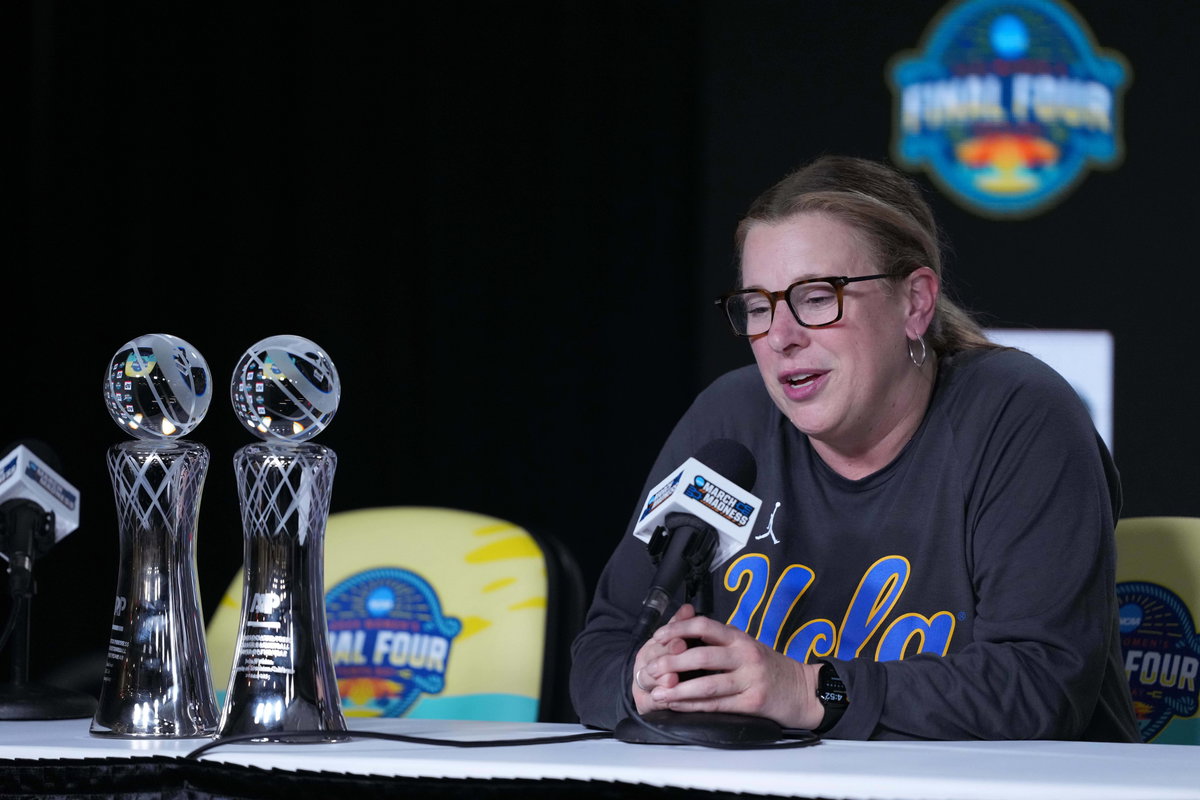
The WNBA’s 30th season has brought record audiences, packed arenas, and growing interest nationwide. But as the league continues to grow, its biggest moments also demand better planning. The controversy surrounding the Finals’ afternoon tip-off has raised questions about that planning, and UCLA coach Cori Close believes the situation exposed a gap between the league’s growth and its off-court operations.
Watch What’s Trending Now!
Speaking to the media, Close questioned whether the WNBA’s ownership groups and team administrations were keeping pace with the league’s growth, as per an Instagram post shared by California Post Sports.
“I hope that as the incredible work of the WNBA, attendance, corporate sponsorship, (and) viewership continues to soar, that the ownership groups and the planning in advance will match that soar,” the coach said. “And I think it got exposed that it didn’t match this time. And I’m not in those rooms. I don’t know whether they didn’t believe their team would actually get there; I don’t know if it was like, well, are we afraid that they won’t sell out? I don’t know what led to that. But obviously, there wasn’t strategic planning in advance, and anticipating the trends that we’re seeing in our great game.”
“And so, you know, it’s hard. Everybody’s strapped for funds right now. Everybody is in difficult spots. So I’m not saying that that’s just a snap-your-fingers easy thing,” Cori Close added. “But I hope that as we see the excitement, as we see the craft grow, as we see the interest, the engagement across social media, across national TV spots in terms of advertising, that the ownership groups and the marketing of the WNBA teams, the PR firms are growing at the same rate as their team on the floor.”
During its 2026 regular season, the WNBA reached more than 90 million unique viewers across national networks and drew a record 3.8 million fans across 330 games. Average attendance climbed to 11,474 per game, up 21% from the previous record set in 2025. The league also recorded 212 sellouts, while its social media channels generated four billion views. And that growth has made the recent Finals scheduling controversy particularly frustrating.
With the Golden State Valkyries 3-2 against the Atlanta Dream in the seven-game series, Game 6 can be the potential championship match. Yet it was scheduled for 12:30 p.m. ET on a Thursday, giving the Valkyries a chance to clinch their first championship in front of fans who would have to work around a weekday afternoon start.
The timing is also a problem for West Coast viewers, who would have to tune in at 9:30 a.m. PT. And to add to that, the Atlanta Hawks will host a game against the Cleveland Cavaliers later that evening at State Farm Arena, which means if Golden State puts an end to this season, fans and the team will have only limited time to celebrate as the arena staff will need to turn the court over in time for the NBA game.
So while the scheduling issue may be too late to fix, Cori Close also pointed to another issue that drew attention throughout the season and during the Finals: officiating.
“I feel the same way about the officiating too. I think everybody in this all wants the same thing. But I think for us to take advantage of the incredible movement we’re seeing in our game, the officiating has got to rise with it. The planning and strategic planning of the ownership groups and the administrative side has to grow with it, because we’re in a really sweet time,” she further added.
With the WNBA continuing to attract more viewers and fill arenas, the league cannot afford to let its off-court operations fall behind. The Game 6 scheduling controversy has put that challenge in the spotlight, while the ongoing debate over officiating adds to the pressure for improvement. The WNBA has made significant progress on the court, but as Cori Close pointed out, its planning and administration must grow alongside the game.