
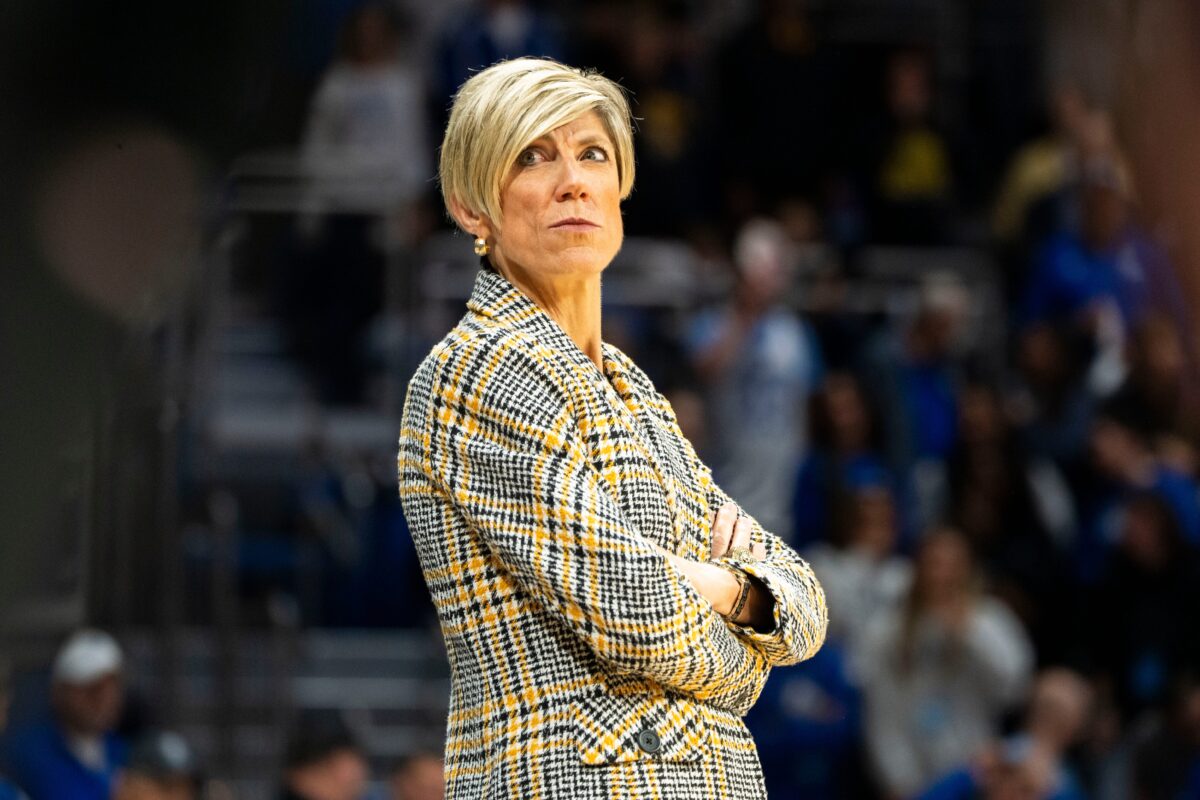
College sports are changing faster than ever. Players have the option to switch schools, NIL has reshaped recruiting battles, and eligibility rules seem to be under constant review. So for coaches, adapting is no longer optional. That’s why, when the NCAA approved its new 5-for-5 eligibility model this week, Iowa head coach Jan Jensen wasn’t thinking only about the rule itself.
Watch What’s Trending Now!
“Traditionally, it’s hard to get your mind around all those records,” she said in her conversation with Chelsie Brown. “Four years in high school, from freshman to senior. But now in our state, we’re gonna let 8th graders play varsity. So I think you just have to be nimble if you’re gonna hold on to like – this is how we should do it, and that doesn’t make sense. You’re going to – I don’t think last very long.”
Jensen’s comments comes shortly after the NCAA Division I Board approved a new age-based eligibility model, commonly referred to as the “5-for-5” rule.
In recent years, several athletes have taken to courts to challenge eligibility in college sports, which has just placed additional scrutiny on the existing system. So the association came up with this new model to simplify eligibility rules.

Not knowing what would transpire today, I asked Jan Jensen her thoughts on the proposed five-year eligibility model. She also mentioned adjusting the rules on the transfer portal.
Under the new system, a student-athlete’s five-year eligibility clock will begin either when they enroll full-time in college or at the start of the academic year following their 19th birthday, whichever comes first. Now, while this will give players a chance to compete for five seasons, it will also eliminate traditional redshirts and many of the waiver processes that have become common in recent years. But that doesn’t mean there won’t be exceptions.
In circumstances such as military service, pregnancy, and religious missions, student-athletes can still receive eligibility relief and additional time to compete.
“While previous NCAA rules have served college sports well for a long time, we also heard loud and clear from NCAA members and student-athletes that eligibility rules should be easier to understand, ” NCAA President Charlie Baker said in a statement released by the athletic association. “This change to an age-based model eliminates aspects of the rules that have proven difficult to administer in the current litigious environment”
Now, whether coaches agree with this change or not, adapting has become part of their job. And that’s exactly the point Jan Jensen was making when she was asked about the new NCAA model.
The Hawkeyes coach pointed to a recent change, where schools in Iowa will have the option to allow eighth graders to compete in varsity sports beginning with the 2026-27 school year.
So for her, this latest change in the college sports landscape is just another example of how quickly long-standing traditions are evolving. But while acknowledging that reality, she also pointed to one trend she believes needs to change.
“Part of me wants to keep it traditionally,” Jan Jensen further added. “But the thing we’re tying into it, hopefully, with that would be a one-year transfer. And I think that’s what we really need to focus on. The ability to transfer unlimited – that’s what’s really eroding a lot of what we all love about college sports.”
However, while Jan Jensen focused on the realities coaches must adapt to, others have raised concerns about what the new model could mean for athletes themselves.
Why Critics Are Pushing Back on the 5-for-5 Model
The idea behind the new system is to simplify the college sports timeline and create more predictability across programs. But for many, these changes come with a major blind spot – what happens when an athlete’s career is interrupted, not by choice, but by injury?
One of the biggest concerns raised around the rule is its lack of flexibility for medical situations. Under the previous system, players who suffered serious injuries such as a torn ACL could apply for a medical hardship waiver to reclaim a lost season. But under the new structure, that safety net is largely removed. So if a player has to sit out due to an injury, he might lose a season. And because of that, Ramogi Huma, executive director of the National College Players Association, has been among the most vocal critics of this shift.
Imago
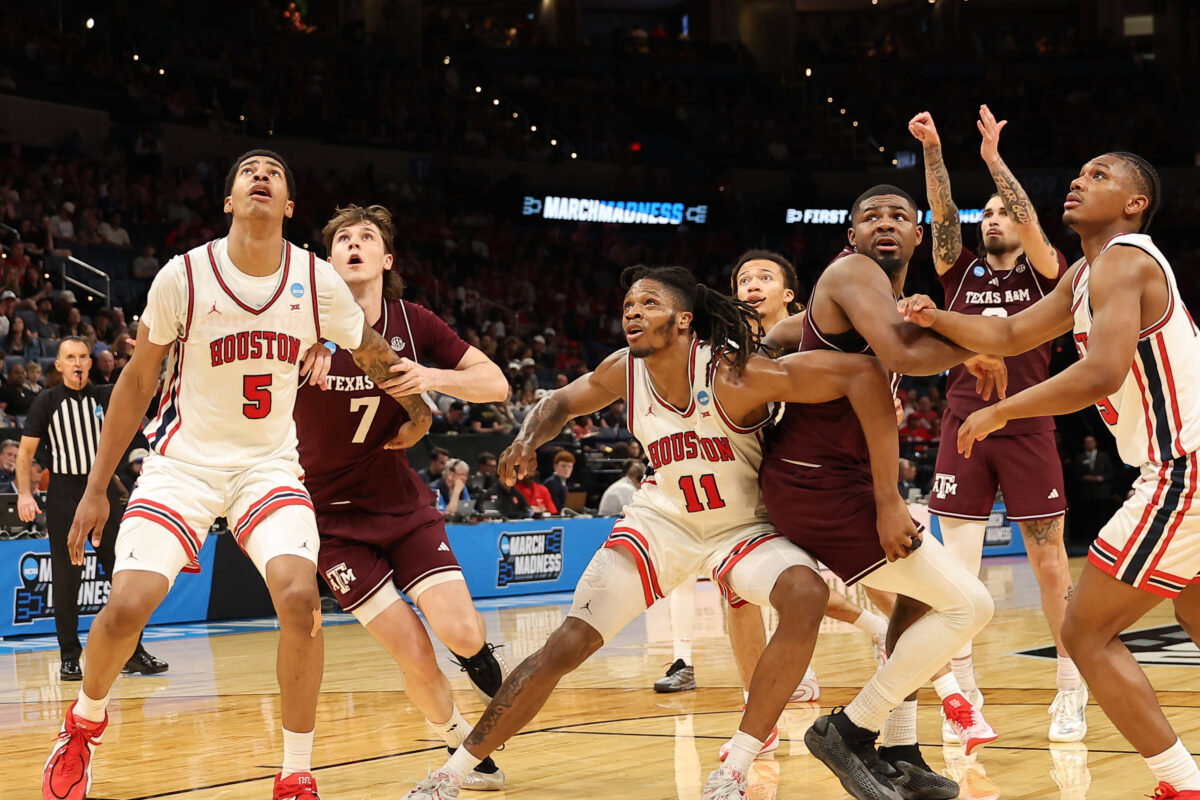
March 21, 2026: Houston and Texas A&M players position for a rebound during an NCAA, College League, USA Division I men s basketball tournament Second Round game between the Texas A&M Aggies and the Houston Cougars at Paycom Center in Oklahoma City, OK. /CSM Oklahoma City United States of America – ZUMAc04_ 20260321_zma_c04_473 Copyright: xGrayxSiegelx
“It’s important for athletes to have an opportunity to seek hardship waivers,” he wrote in a text to The Associated Press.
Even beyond injury concerns, legal experts are also warning that the rule could open the door to fresh disputes because the NCAA has made the 5-for-5 model non-retroactive. That means current seniors who were expecting eligibility extensions may now find themselves cut off at four seasons, despite previously competing under different waiver structures.
“These athletes are still within their five-year eligibility window and spent their entire college careers competing against fifth- and sixth-year players due to the COVID waiver,” Attorney Ryan Downton, who has previously challenged NCAA eligibility restrictions in court, wrote in an Email to AP. “We hope the courts will correct the unfairness of the NCAA’s ruling and allow class of 2022 players to play their fifth season in 2026-27.”
In the end, the NCAA’s new model is expected to streamline how eligibility works on paper, but how it actually reshapes careers, rosters, and fairness across college sports will only become clear once athletes start living under it.