
USA Today via Reuters
Mar 18, 2023; Sacramento, CA, USA; March Madness and Final Four signage is seen prior to a game between the Princeton Tigers and the Missouri Tigers at Golden 1 Center. Mandatory Credit: Kelley L Cox-USA TODAY Sports
USA Today via Reuters
Mar 18, 2023; Sacramento, CA, USA; March Madness and Final Four signage is seen prior to a game between the Princeton Tigers and the Missouri Tigers at Golden 1 Center. Mandatory Credit: Kelley L Cox-USA TODAY Sports
This year’s March Madness isn’t just about basketball—it’s about scale, strategy, and something the sport has never seen before.


For the first time in history, one city will crown four national champions in the same weekend, with the Division I champions set to be crowned at Lucas Oil Stadium, while Division II, Division III, and the NIT champions also converge on Indianapolis.
It is the ninth time that the Circle City will host the Men’s Final Four, and its first since 2021. But the 2026 edition isn’t business as usual—it’s something entirely different.
Imago
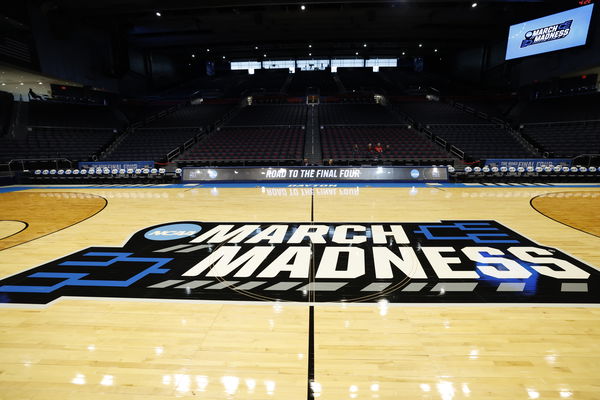
Mar 16, 2026; Dayton, OH, USA; Detailed viewed of March Madness logo on the court during a practice session ahead of the first four of the men’s 2026 NCAA Tournament at University of Dayton Arena. Mandatory Credit: Rick Osentoski-Imagn Images
With an estimated $400 million economic impact, Indianapolis is doing far more than just hosting March Madness. It’s redefining how modern sports events are built—and the ripple effects extend well beyond basketball. Every city chasing a Super Bowl or Final Four will be watching closely, because what’s being built here is a blueprint for turning a sports weekend into a full-scale economic ecosystem.
The Big Idea: From Event Hosting to City-Wide Ecosystem
Throughout the history of hosting big sports events, cities have traditionally treated them as one-off opportunities. They drop in the games, collect the tourist dollars and wave goodbye until the next opportunity arises. A short-term spike might be achieved, but long-term sustainability is lost. Indianapolis started asking the right questions about how to make the entire city the event after it was announced in 2024 that it would be center stage for college basketball this year. Selling expensive tickets and having a sold-out arena for a few hours is fine, but figuring out how to maximize attention in the days leading up to and after the event is a different challenge.
Indianapolis wants to engineer a seamless, walkable, immersive ecosystem where every block within a one-mile downtown footprint becomes part of the show. Arts, music, food, kids’ activities and the rest are all synced to basketball. That is the Indianapolis model in a nutshell, and the goal is to deliver long-term returns.
The Indianapolis Model: How They Keep Winning the Bid Game
Credit where it’s due, the Indiana Sports Corp, the country’s first of its kind, is the architect and brain behind this new sports hosting ecosystem. Led by Patrick Talty as the President and Sarah Myer as Chief of Staff & Strategy, they have turned Indiana into a repeat host city. This will be the ninth Final Four the city will host in addition to multiple Big Ten tournaments, NBA All-Star games and other major events that have given it a strong track record. By 2020, the corporation had played host to over 450 national and international sports events.
They do this by building relationships with sports bodies such as the NCAA that go beyond one bid cycle. They invest in infrastructure that serves multiple sports, such as the multipurpose Lucas Oil Stadium, which opened in 2008. The arena can host football, basketball and soccer events among other sports. Most cities can’t replicate this because they lack the centralized sports commission influence.
The Historic Convergence
From the outside looking in, it may seem simple for one city to host the title games in one weekend. However, it is historic because no city has ever pulled off crowning DI, DII, DIII and NIT champions simultaneously. It may seem small, but it adds visibility and credibility to the lower divisions by placing them in the same spotlight as the top division. NIT teams will have their moment just like the Final Four teams, and it creates an incredible cross-pollination of fans, from die-hard followers to casual viewers and families. It is the ultimate basketball immersion.
Turning the City Into the Event
Fans and basketball enthusiasts who will be in Indianapolis for the sports weekend will walk around feeling like they are in an immersive sports universe. Murals are going up around the city, and interactive installations are everywhere. Five Indiana art students will design original commemorative postcards and posters inspired by the Final Four, which are printed free and handed out to visitors as souvenirs.
There is also an incredible visual planned for Sunday, April 5, which will involve up to 3,000 kids aged 18 and under, each being handed their own Wilson basketball and custom t-shirt to dribble a one-mile course through downtown. This will turn the street into a moving tribute to Indiana’s rich basketball heritage and give those kids a once-in-a-lifetime moment.
For entertainment, more than 175 local artists via the SWISH Arts & Culture Festival with Indy Arts Council have taken over a one-mile square footprint. The fan fest promises to be a major attraction as it delivers interactive exhibits, games and programming for every age group, creating an accessible and electric atmosphere. The Music Festival will bring notable performances such as Twenty One Pilots, Zac Brown Band and Megan Moroney headlining across three days.
The JW Marriott Bracket
One thing anyone who will be in Indiana for the weekend cannot miss, literally, is the world’s largest March Madness bracket. It is plastered across the JW Marriott hotel front, measuring 286 feet wide by 202 feet tall (58,000 sq ft, 288 tiles), with a spine measuring another 66 by 202 feet (14,000 sq ft). It totals 72,000 square feet, the size of 12 full basketball courts. It took 14 days and 10 installers with over 22 rolls of 1,000-foot material, and it will be updated 131 times as teams advance, plus a final championship-night drop with the winner’s logo.
Sports graphics haven’t gotten much bigger than this, and everyone in the area can keep up with the basketball action leading up to the Final Four and championship game.
The Event Beyond Basketball
The primary event is basketball. However, Indianapolis is not casting its net only toward basketball fans. They want to reach every demographic, from kids and families to art, music, and food lovers, as well as tourists and wildlife enthusiasts. Foodies will get the Epicurean Market as part of SWISH, plus the MOKAO Chocolate & Coffee Festival.
For animal and wildlife lovers, the world’s largest children’s museum will feature dinosaurs decorated with giant basketballs and whistles. At the Indianapolis Zoo, there will be the Uproar Conservation Challenge, which is a full 64-species bracket where fans vote for their favorite at-risk animal, plant or fungus. The winning cause will receive major support, including a $10,000 boost to the top conservation effort.
Why This Model Works
Everything that is being planned for the sports weekend in Indianapolis is within a one-mile walkable radius. Not many cities can boast that level of infrastructural closeness. The city has already eliminated many of the accommodation and transport headaches associated with large-scale sporting events. Everything is taking place within close proximity, and there are hotels built for situations like this because this isn’t Indianapolis’ first rodeo.
It keeps the energy contained and the dollars circulating locally while visitors enjoy the full experience. The traditional “build it and they’ll come” model is dead and not sustainable. That is why most cities will likely take a page from the Indianapolis model in the future.
A New Era of March Madness
This will be the first time that four major college championship events will take place in one city, and its success will help shape how future hosting is approached. Cities will now aim to host all four events, but they will need the infrastructure and planning to make it worthwhile.
The Indianapolis model didn’t start recently, and while it may be difficult to replicate, it is not impossible. The blueprint they are leaving behind with this 2026 edition is clear. Treat the city as the main event, not just the sport, and one weekend can reshape a city’s sports identity for years to come.
There is more than just college basketball to look forward to in this year’s Final Four, and Indianapolis’ ecosystem will make it the most memorable sports weekend in the history of college sports.
Written by

Edited by

Ved Vaze