
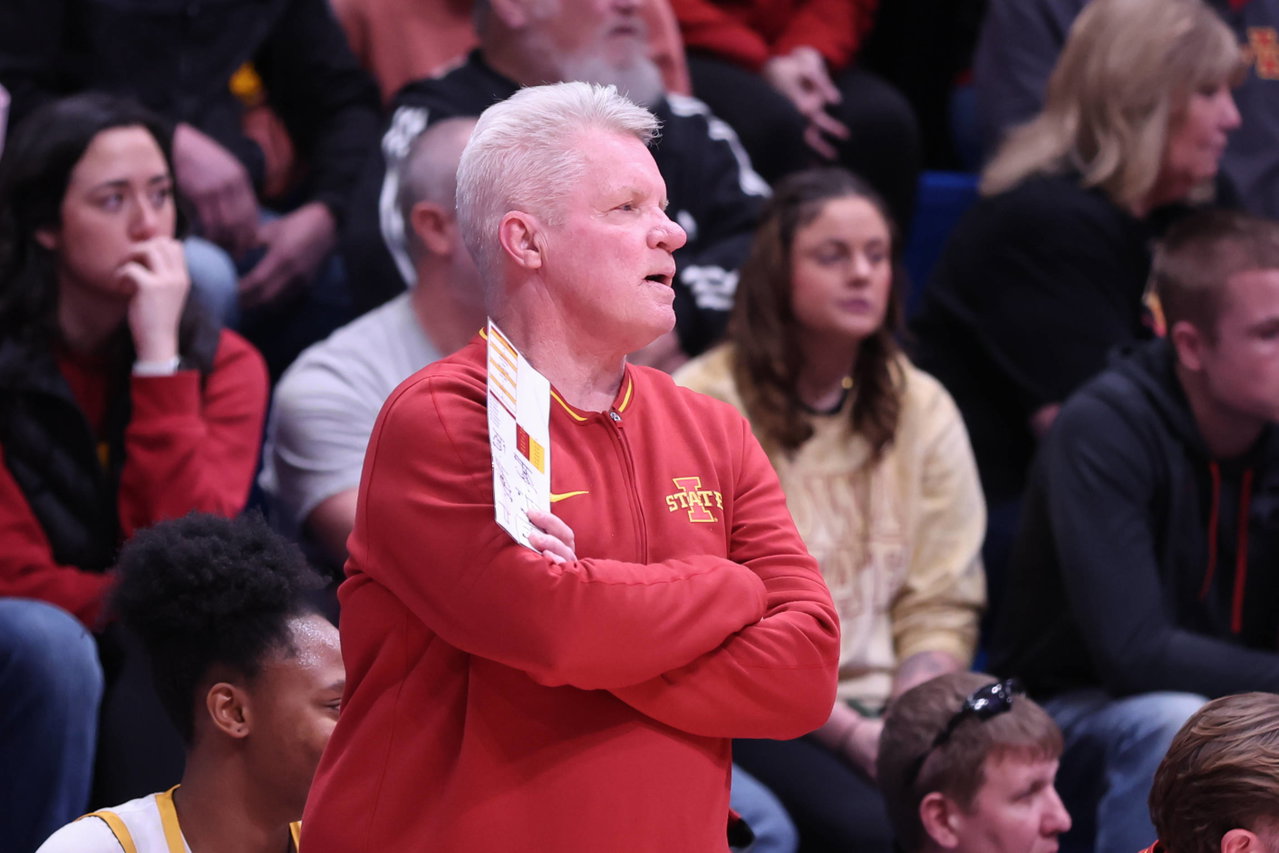
Iowa State has faced growing scrutiny over the past week regarding its women’s basketball program, and the situation only got more complicated after six former players accused head coach Bill Fennelly of “verbal, emotional, and psychological abuse.” While the university has disciplined him over this period, the former players’ letter has now led to a new response from Iowa State, revealing new measures they have undertaken.
Watch What’s Trending Now!
“Iowa State University cares deeply about the health and well-being of our student-athletes and takes seriously any claims of conduct contrary to our values and standards,” a statement from the university read. “The university has appropriate policies and procedures in place to address allegations of misconduct.
“Iowa State has reached out to the attorney representing the former women’s basketball student-athletes to try and ascertain details of their general claims. In the meantime, to best live up to our mission and to support our student-athletes as well as Coach Fennelly and his coaching staff, we have instituted enhanced monitoring of the women’s basketball program.”
The statement was posted to X by reporter Keith Murphy.
To understand how we got here, we need to look at the incident from a week ago: the Cyclones’ 69-64 win against UIC. During a late timeout, Iowa State players huddled together, and cameras caught Bill Fennelly scolding guard Sienna Harvey before pushing her head with his hand.
After the game, Bill Fennelly was suspended for one game for making “inappropriate contact” with Harvey and publicly apologized for his behavior. He served his suspension during the team’s November 18 game against Northern Iowa. After the Cyclones won the game, Harvey defended her head coach, adding that she had a great relationship with him.
“I can see how it was perceived on the Internet, but he loves us and cares about us more than anyone. And I like being coached hard, so I think it was perceived differently than what it was.”
Then, a statement from six former Iowa State women’s basketball players was released, explaining that Bill Fennelly’s behavior in the UIC game had “renewed” a focus on his “pattern” of inappropriate conduct.
“As former members of the Iowa State Women’s Basketball team, we experienced or witnessed conduct we considered to be verbal, emotional, and psychological abuse from coach Fennelly,” the statement read. “We reported this and what we believed was inappropriate physical contact to members of the coaching staff and Iowa State athletic administration, but we do not believe our concerns were taken seriously. Our individual experiences may differ, but we are united in our concerns about an environment where intimidation, humiliation, and fear became normalized.
“We accepted the demands of hard work, discipline, and competitive excellence. But demanding excellence is fundamentally different from undermining an athlete’s dignity, well-being, and sense of safety. For some of us, the consequences did not end with our playing careers. We continue to deal with anxiety, depression, diminished self-worth, and lasting distress that we associate with our time in the program.
“We also believe the systems and supports meant to protect student-athletes repeatedly failed. Some of us felt dismissed, discouraged from speaking openly, or afraid of the consequences of raising concerns.”
Of the six former players, two have identified themselves publicly: Maggie Espenmiller-McGraw and Izabella Zingaro. They are represented by attorney Lori Bullock and have called for an independent review, a confidential process for athletes to share their experiences, protection for those who come forward, access to mental and physical health resources, and reforms to improve player welfare.
For now, Iowa State has confirmed communication with the former players’ attorney and introduced enhanced monitoring for the women’s basketball program. Iowa State’s next steps will determine whether its response moves to a broader review and accountability measure that the former players have demanded.