
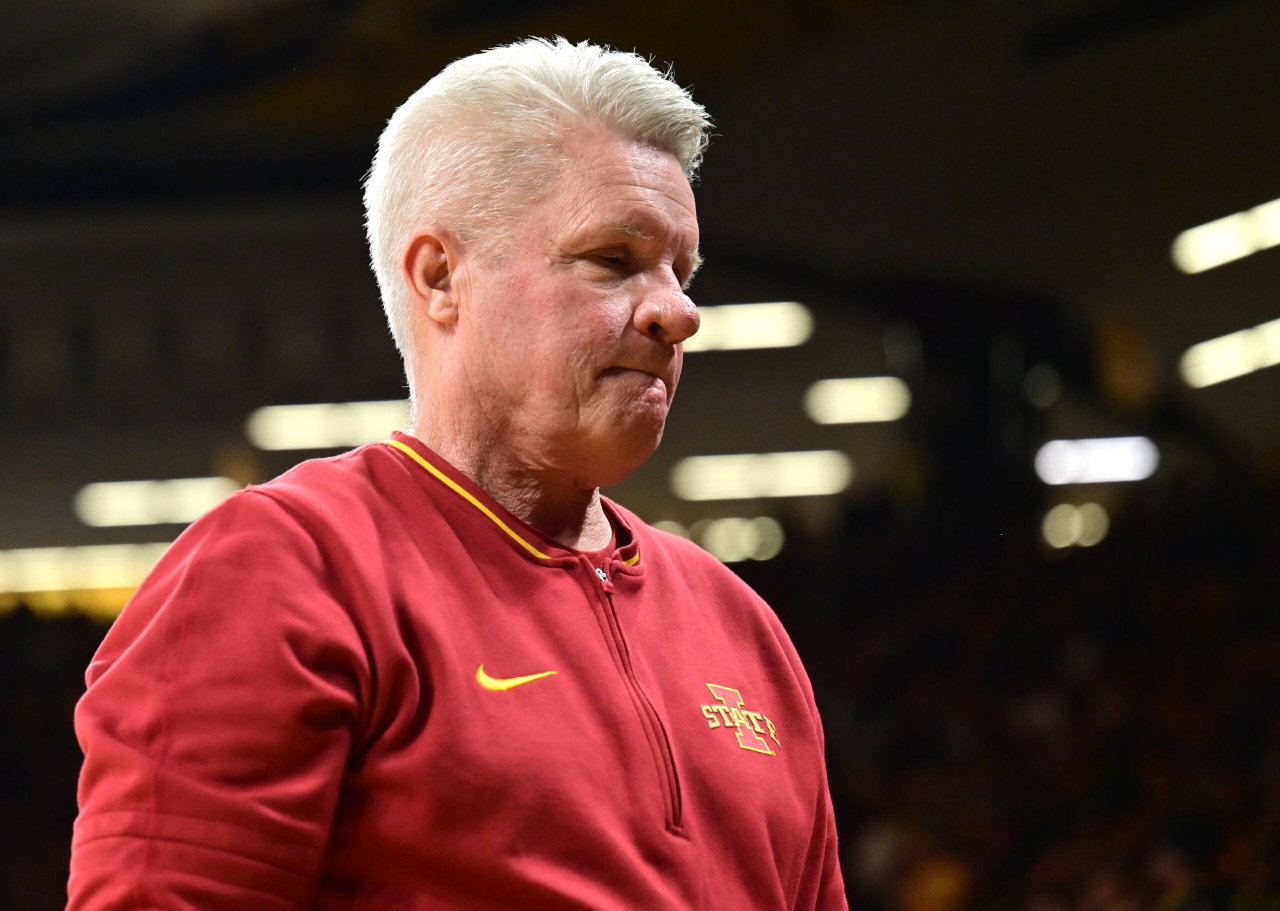
When Fennelly arrived in Iowa in 1995, the attendance at his first game was just 310. He kept a framed box score from that early period in his office as a reminder of where the program began. In his own account, the idea was never to find a magic formula for attracting fans; it was to build support one person at a time. Iowa State’s women’s basketball attendance eventually ranked among the nation’s top 10 for more than 25 consecutive seasons, as he became the winningest coach in the program. Now, that era is coming to an end.
Watch What’s Trending Now!
On October 12, Fennelly announced through the Cyclones’ website that the upcoming 2026-27 collegiate season will be his final year at the helm at Iowa State, and that he will formally retire, concluding a 39-year head coaching career — seven with Toledo, and the rest with Iowa.
“It has been the greatest honor of my professional life to coach at Iowa State for the past 32 years,” he wrote.
“While I still love coaching and am working as hard as ever, I understand that this job has an expiration date. After talking with my family, I have made the decision that the 2026-27 season will be my last. Announcing my intention now is what is best for everyone in our program and provides the new athletics director clarity on my future and allows them to make plans for the program moving forward.”
Fennelly enters his final season with 822 career wins, including 656 at Iowa State, placing him 15th all-time for most wins from an NCAA Division 1 women’s basketball coach. He has guided Iowa State to 24 appearances in the NCAA Tournament and 26 total postseason appearances. That success began early.
Can Elizabeth Williams Match the Same Kind of Impact Nneka Ogwumike Had As WNBPA President?
Fennelly arrived at Iowa State after the program had posted no winning seasons in six consecutive years. Then, in the 1995-96 season, the team won 17 games in their first season under him and reached the NCAA Tournament the next year, beginning a run of six consecutive tournament appearances. They also had several signature moments.
The 1998-99 Cyclones were the first example of Fennelly building a team that could challenge the country’s best. That season, they beat Connecticut, the #1 seed, in the tournament to advance to the first Elite Eight appearance in program history.
And facing Connecticut, Fennelly was so nervous before the game that he could barely breathe as the team came out of the locker room. A security guard offered him a simple encouragement: “Hey coach, if loose means you got a chance, I think you got a chance.”
Interestingly, he also considered quitting after that first Elite Eight run.
“I will never forget going home after we lost to Georgia in the next game and I told Deb (Fennelly) I should quit because it’s never going to get any better than that,” Fennelly recalled in 2009. “It’s not just that we went to the Elite Eight and we won, but the whole year and the process of recruiting those kids and how they all came together was so special. It’s one of those things where you want to do it again, but you honestly feel blessed that you got to do it once. “
Well, he ended up doing it again, in similarly remarkable fashion.
The 2008–09 Cyclones trailed No. 9 seed Michigan State 68–61 with 1:26 remaining, and looked to be heading out of the tournament. But Nicky Wieben sparked the rally with a putback, and a steal by Kelsey Bolte set up Heather Ezell’s banked-in three-pointer to cut the deficit to two. Another Michigan State turnover gave the Cyclones a final chance, and after a scramble for the ball, Alison Lacey drained a go-ahead three-pointer with 27.5 seconds left. Iowa State scored the game’s final eight points to escape with a 69–68 victory, reaching the Elite Eight for the second time in program history.
Fennelly has also shown his impact on the growth of the fanbase as well. Before he came to Ames, attendance at Iowa State games was poor, sitting under 1,000 fans per game on average. Through what the Cyclones describe as a “grassroots effort” led by Fennelly and his wife Deb, attendance quickly rose, and over the last 27 seasons, they have ranked in the top 10 in attendance nationwide, excluding the 2020-21 season. They even peaked at second in 2013, 2014, 2019 and 2022.
“We’ve done some marketing, but it’s really been one day at a time, one person at a time,” Fennelly said, as reported by Sports Business Journal. “Watching my father run for office, he took the approach that every single vote counted. To me, every single fan counts.”
That said, what makes the timing of Fennelly’s exit notable is how it affects the Iowa State athletic program. Jamie Pollard, the team’s longest-tenured athletic director, has also announced his retirement. Pollard had initially planned to retire by June 30, 2027, or when his successor was appointed, whichever came first. But by late September, he had confirmed that his final day in the office would be October 3, although he would continue working remotely while Iowa State’s search for his replacement proceeded.
He called Fennelly “a legend” in the women’s college basketball sphere in a statement released on the latter’s retirement.
“Bill’s impact on the young women in our program, the staff in our department, the thousands of fans that attended every home game, and the residents in our community, is second to none,” he said.
“He transformed our women’s basketball program into a nationally respected and competitive program, and his imprint on our department will never be forgotten. I look forward to seeing a banner hung in the Hilton Coliseum rafters permanently memorializing his lasting impact on Iowa State University.”
For now, Fennelly has made it clear that he wants the attention and focus to remain on the players and the upcoming season, with the 2026-27 campaign giving him one final chance to lead Iowa State. As the university prepares for its next era under a new coach, it will need to find more than just a replacement as it looks to preserve the sustained success that Fennelly spent decades building.