Imago
via Imagn
Imago
via Imagn
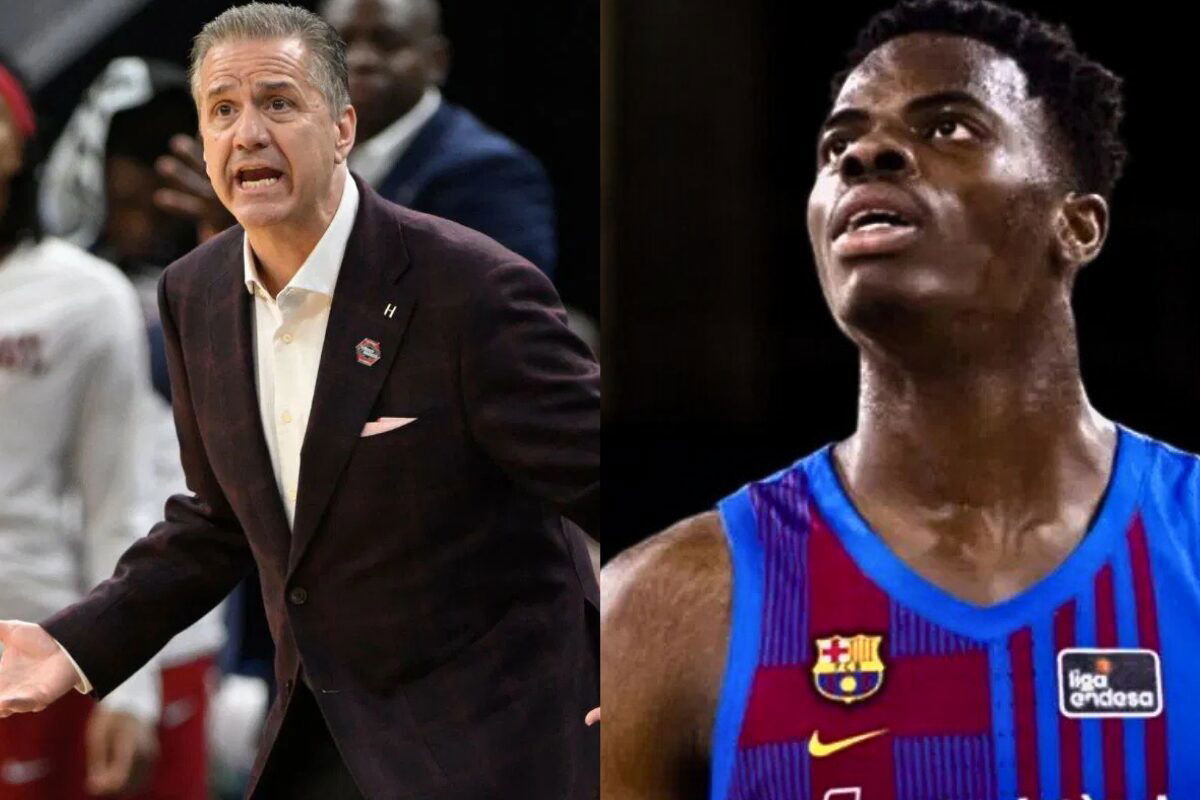
The Detroit Pistons selected James Nnaji with the 31st overall pick in the 2023 NBA draft. Two years later, he signed on for Baylor to play college basketball. Safe to say it sent a tsunami through college basketball. Tom Izzo went off and jokingly threatened to bring back Magic Johnson and Gary Harris. Now, the Arkansas Razorbacks coach, John Calipari, has criticised the NCAA on their rules, or the lack of them.
Watch What’s Trending Now!
In September, the NCAA allowed Thierry Darlan to play college ball despite having signed with the NBA G League Ignite out of high school. Former G League teammate London Johnson followed his lead in October. While that still agitated many, the fires died down since. However, an NBA draftee who was involved in one of the biggest trades in the NBA (Karl-Anthony Towns to the New York Knicks) was the final straw for Calipari.
“I don’t blame coaches. I’ve got friends who are playing with 27-year-olds, and they feel bad. I said, don’t feel bad,” Calipari started after a win over the James Madison Dukes, “We don’t have any rules. Why should you feel bad? But let me give you this real simple: The rules bees the rules.”
Technically, the teams can and should exploit any loophole that exists to maximise their results. In the end, this is about winning. Baylor was missing size and strength in the post, and they got someone to cover that. The loophole should not exist in the first place. “So if you put your name in the draft, I don’t care if you’re from Russia, and you stay in the draft, you can’t play college basketball,” Calipari said. “ Well, that’s only for American kids. What? If your name is in that draft and you got drafted, you can’t play cup because that’s our rule. Yeah, but that’s only for American kids. Okay. Now, here’s the next lawsuit.”
The legal minutia is getting blurry day by day. The NCAA has no intrinsic authority over people who have not yet entered its regulatory ecosystem. The amateurism rules held up this dam until O’Bannon v. NCAA and NCAA v. Alston weakened it. O’Bannon v. NCAA cracked the foundation of the NCAA’s compensation model, and NCAA v. Alston removed the legal shield that had long protected it.
The courts basically said that the NCAA cannot hide behind its amateurism to escape the antitrust law. US Antitrust law does not apply to international commerce unless there is a direct, substantial, and reasonably foreseeable effect on U.S. commerce. If Nnaji was rejected by the NCAA, he could sue while arguing that his international decisions affected his entry into the US domestic market.
Imago
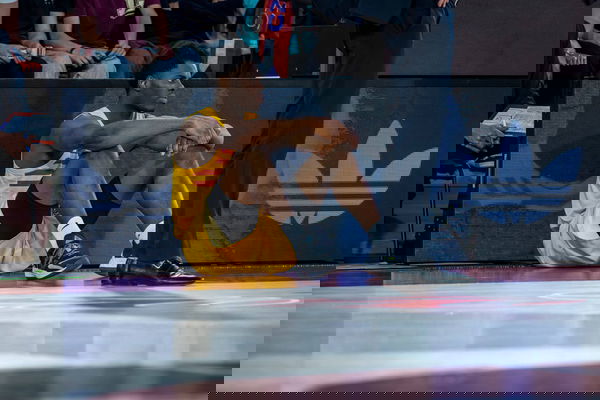
Turkish Airlines EuroLeague: AS Monaco Vs Barcelona in Monaco – 29 Dec 2023 Barcelona player 23 James Nnaji seen during the 17th round of the Turkish Airlines EuroLeague match between AS Monaco and FC Barcelona, Barca at the Salle Gaston-Medecin. Final score AS Monaco 91:71 Barcelona. Monaco Monaco Copyright: xLaurentxCoustx/xSOPAxImagesx lcoust-mona-barca-3- 22
That would prevent the NCAA from claiming the dispute involves foreign injury, turning it instead into a domestic antitrust case under the Sherman Act. However, in the same logic, Calipari argues that high school students won’t come under the NCAA purview as well. “Well, we don’t have a say over European players. You do if they’re playing in college basketball. So, that means you don’t have a say over high school kids,” John Calipari disputed.”So whatever a high school kid does before he comes here, don’t you do one thing because there’s a suit. Because what you’re saying is if he’s in Europe, we don’t have the same rules.”
High school kids are, in fact, similar to international prospects. They are treated the same way. However, since they are in the domestic ecosystem, they are easy to control. The NCAA governs the US colleges, coaches, and the boosters around them, and applies strict rules on how recruiting should go. They can punish coaches and institutions for violating the rules. However, they can’t do the same with international clubs. The information regarding domestic talent is also very easy to verify, whereas international contracts could be like a cobweb.
Now that Nnaji has been granted eligibility, high school students can theoretically sue the NCAA in the future. That will be in case they lose their admission due to an older former pro, and they can prove the causation between the two. In fact, Diego Pavia and 26 other football players have cited the NCAA’s decision to allow an NBA draft pick to return to college basketball.
“The NCAA argues to this court that high school seniors are harmed if a 22- or 23-year-old former junior college player plays one more year of college football,” the filing says. So, the inconsistencies are clear. The definition of amateurism is evolving, and the NCAA should evolve with it. Possibly, they could explore the idea of a CBA suggested by Baylor coach Scott Drew. While the Nnaji case highlighted the NCAA’s inconsistent rulebook, Calipari argues that NIL has magnified those flaws by turning short-term opportunity into long-term instability.
John Calipari Warns NIL Is Creating ‘Mercenaries’ From Students
The NIL has changed college basketball from its core. Players are earning NBA-level money, and some are deferring from being drafted because of it. However, the NCAA can extend one’s eligibility for only so much. The players will eventually go out in the world, and most will not get NBA contracts or even contracts in international leagues. According to John Calipari, the current system is essentially harming players’ lives in the long term.
Calipari explained that NIL offerings should be delayed by a year because they are creating a pay-and-play structure. “So we’ll get more kids staying. How about this? It’ll be great for them academically. They’ll probably make more money, but they’ll be academic,” He said. “We’re not going to have kids leave after transferring four times.”
That will make their student lives stable within a familiar ecosystem for a longer time. Giving them time to catch up with their academics and not worry about what the next team they are playing for will be. Or what city they are moving to next. Transferring means possibly losing credits and delaying your graduation.
“What’s the percentage of kids that make the NBA unless you play for me? It’s like 1% or less. That means 99% of the college players who are getting money, it’s fugazi,” John Calipari said. “It’s Fugazi because they’re getting 400, 500, 800, a million, and they’re not pros. So now they have to go get a job after four stops, no college degree. No loyalty from the state, the program, or anybody. You were a mercenary. Okay, now you’ve got to go get a job.”
There are no guarantees of going pro for any player. Even if you are good enough for the NBA, some uncertainties can strike. A player can get a career-ending injury or even a minor injury that is recurring. NBA or even European recruitment looks beyond talent. They focus on role fit and long-term upside rather than the current numbers. In case basketball doesn’t work out, the degree is a good backup for every athlete.
