
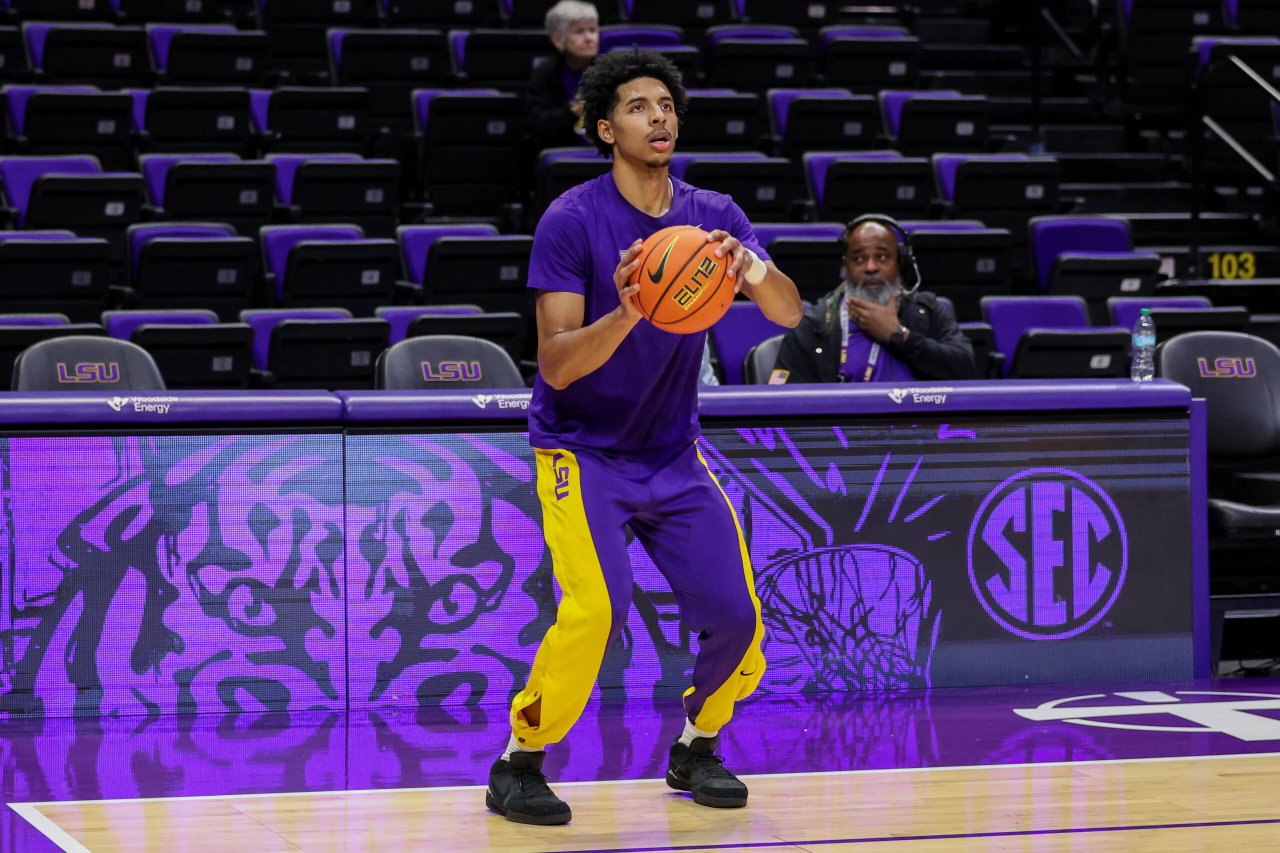
LSU won the legal battle to play RJ Luis. Now the conference is threatening the university’s membership. What initially appeared like a legal victory for the Tigers in a heavily disputed eligibility battle has now spiraled, and the confrontation with the SEC seems bigger than ever, with the conference refusing to back down.
“The Southeastern Conference on Monday filed an amended complaint and motion for a temporary restraining order in its federal lawsuit against Louisiana State University stating that the presidents and chancellors of the SEC will meet on Thursday, December 3, to deliberate LSU’s ongoing membership in the Conference,” the SEC explained in a statement released on November 23.
“The lawsuit seeks to protect the Conference’s ability to govern itself and to enforce the rules and policies its member universities have voluntarily adopted. The Conference maintains its right to associate only with institutions that meet its established standards and expectations of membership and that demonstrate appropriate institutional control of their athletics programs. Monday’s filing advances the Conference’s obligation to defend its governance framework and the shared interests of its member universities.”
Two preliminary injunctions barred both the NCAA and SEC from blocking Luis’s eligibility, giving LSU legal authority to roster and play him. Notably, the SEC has not indicated whether the December 3 meeting could result in sanctions, fines, or membership action.
The conflict began with LSU’s efforts to bring back Luis to college basketball following a brief stint in the pros. He last played in college during the 2024-25 season and was named Big East Player of the Year for St. John’s, where he averaged 18.2 points and 7.2 rebounds per game. He led St. John’s to a win in the conference title that year.
Luis declared for the 2025 NBA draft after that year, but went undrafted, signing a two-way deal with the Utah Jazz. Early in August, he was traded to the Boston Celtics in a package for Georges Niang and two second-round picks, with Luis playing in three preseason games for the team. He was then waived by the team on October 15.
He was re-signed by the team to an Exhibit 10 contract, only to be waived three days later. Luis then played for Boston’s G League affiliate, the Maine Celtics, but was waived before the team’s regular-season opener due to an injury. Notably, he never logged a single minute in a regular-season game across the NBA and the G League.
Fast forward to May 2026: Luis committed to play for LSU, but the NCAA ruled him ineligible for the 2026-27 season, citing his professional contracts. Luis decided to challenge that ruling in court in Louisiana, with a judge granting him a preliminary injunction on August 24 that barred the NCAA from deeming him ineligible.
However, the SEC still stood in the path, maintaining that Luis was ineligible according to the conference’s rules. However, on November 13, a second preliminary injunction was issued in Luis’ favor, preventing the SEC from blocking the Tigers from playing him.
After the November 13 injunction, the SEC informed LSU in writing that it would comply with the court’s findings and would not fine or otherwise penalize the team.
Meanwhile, LSU president Wade Rousse seemed convinced he would be able to see Luis on the court. The Tigers subsequently placed him on the roster and played him against Louisiana-Monroe on November 18, intensifying the disagreement.
LSU released a second statement on November 17, in which the conference declared Luis’ inclusion in the LSU roster as a “disappointing development.”
“LSU’s decision today to rely on its own interpretation of the Court’s order to justify its actions is inconsistent with the expectations and responsibilities of membership in the Southeastern Conference,” the SEC’s statement read.
“This is a deeply concerning and disappointing development. The Conference will continue to uphold and defend the standards and policies established by its member universities.”
Kim Mulkey’s LSU Women’s Basketball Program Caught in the Conference Crossfire
For Kim Mulkey, the situation presents a different kind of uncertainty. The LSU women’s basketball coach is not involved in the dispute surrounding Luis, and her program has not been accused of violating the conference’s eligibility rules. However, the SEC’s latest deliberations concern the LSU institution as a whole, not just the men’s basketball team.
The SEC has been an important part of Mulkey’s program, giving the team a demanding conference schedule, high-profile rivalries, and a national platform. Competing against some of the strongest teams in women’s basketball raises prestige in terms of recruiting, and this type of major shakeup to their conference status raises questions that extend beyond the men’s team’s situation.
For now, the LSU’s SEC future remains unresolved ahead of the December 3 meeting. What began with the Tigers’ decision to play Luis could ultimately become a massive concern for LSU Athletics, including Mulkey’s