Imago
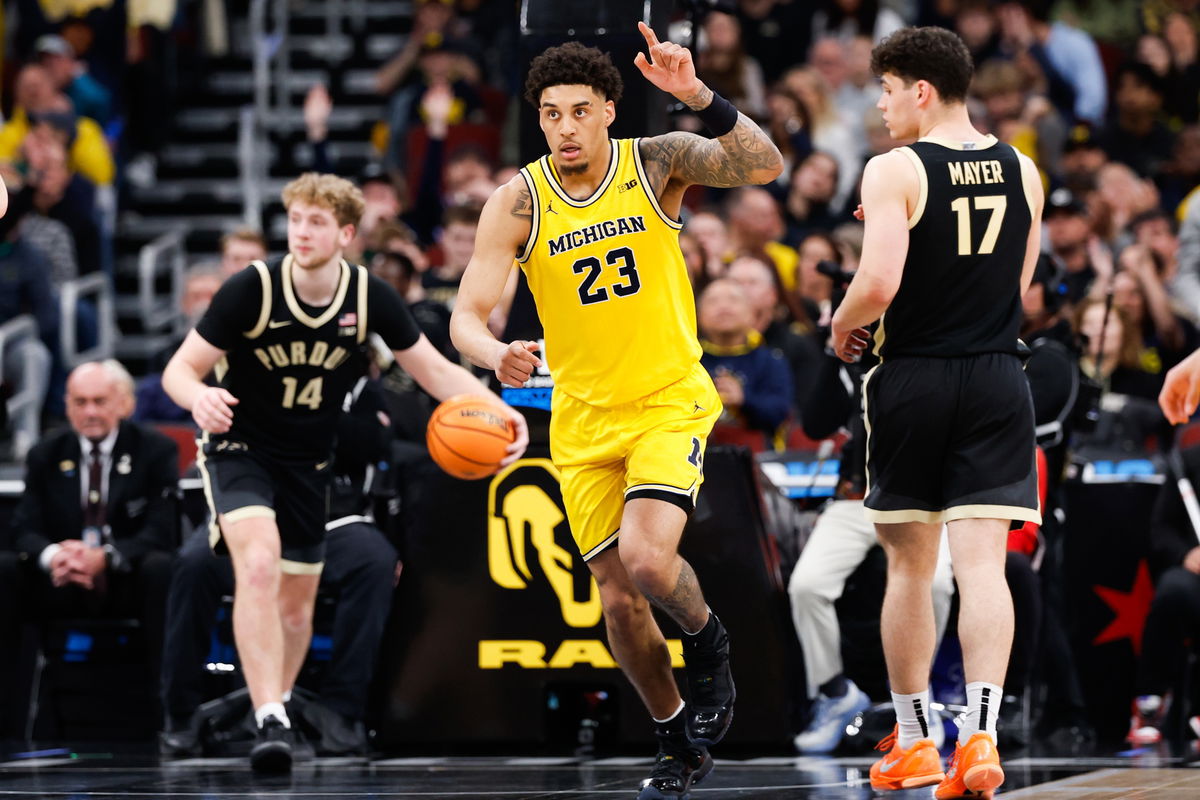
Mar 15, 2026; Chicago, IL, USA; Michigan Wolverines forward Yaxel Lendeborg (23) celebrates after a slam dunk during the first half against the Purdue Boilermakers during the men’s Big Ten Conference Tournament Championship at United Center. Mandatory Credit: Kamil Krzaczynski-Imagn Images
Imago
Mar 15, 2026; Chicago, IL, USA; Michigan Wolverines forward Yaxel Lendeborg (23) celebrates after a slam dunk during the first half against the Purdue Boilermakers during the men’s Big Ten Conference Tournament Championship at United Center. Mandatory Credit: Kamil Krzaczynski-Imagn Images
Beyond the fanfare of this year’s Final Four, NBA scouts will pay close attention to the marquee prospects set to compete for an NCAA Tournament title. In the season’s grandest moments, these future pro prospects will have the chance to continue proving their worth to NBA teams on the biggest, highest pressure stage.
Watch What’s Trending Now!
According to the Rookie Scale consensus big board (as of Mar. 26), only five of the draft’s top-40 prospects’ teams didn’t appear in the tournament (Hannes Steinbach, Cameron Carr, Tounde Yessoufou, Karim Lopez, Sergio De Larrea). Of the top 40, 25 prospects’ teams made the second weekend.
The Final Four won’t feature any consensus top-5 prospects, but the four teams vying for a title — Michigan, Arizona, UConn and Illinois — feature 12 prospects in the consensus top 60 (and quite a few more deserving of more recognition). Let’s preview those star-studded matchups and the prospects to watch this weekend.
Michigan (1) vs Arizona (1)
Prospects to watch
- Michigan: Yaxel Lendeborg, Aday Mara, Morez Johnson
- Arizona: Brayden Burries, Koa Peat, Motiejus Krivas, Ivan Kharkenchov
Two of the best college frontcourts in recent history headline this final four matchup, one constructed entirely through the portal and the other through home-grown talent (aside from Tobe Awaka, a Tennessee transfer). Michigan head coach Dusty May’s offseason additions fuel a dominant Michigan front line, spearheaded by Yaxel Lendeborg, arguably the sport’s best player.
Lendeborg jumped to the Big 10 from UAB, seamlessly tweaking his game to fit his new team. Formerly a face-up, post-centric initiator who played on the interior, he’s evolved into more of a wing player, spacing the floor, thriving in transition and creating shots for others. All three of Michigan’s big men are phenomenal passers, unlocking myriad offensive options even without elite shooting.
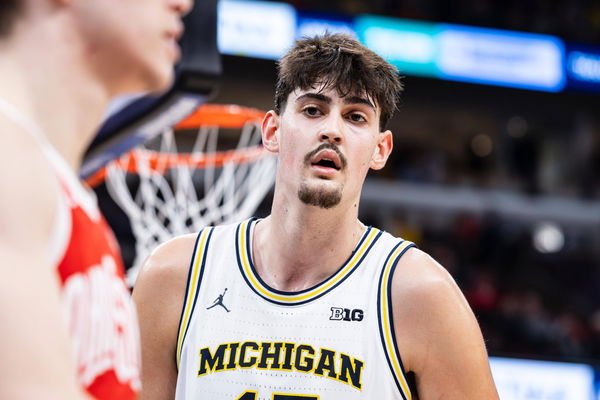
None of the aforementioned bigs add passing value like the seven-foot-three Aday Mara, who made good on his lottery talent after two uninspiring years at UCLA. Mara sports the highest assist rate of any seven-foot-two-plus player since 2008 (19.2%), firing all manner of no-look, tight window passes from the block and the perimeter. He’s improved as a mover this season, rendering his shot-blocking even more valuable.
Imago
March 13, 2026, Chicago, Illinois, USA: Michigan basketball player ADAY MARA looks on during the quarterfinal game against Ohio State in the 2026 TIAA Big Ten Men s Basketball Championship at the United Center. 2026 TIAA Big Ten Men s Basketball Tournament: Michigan 71: Ohio State 67 PUBLICATIONxINxGERxSUIxAUTxONLY – ZUMAw173 20260313_zsp_w173_010 Copyright: xLukexWelshx
Mara’s matchup with Motiejus Krivas, arguably the country’s best center defender, could swing this game. Krivas’s high moments aren’t as bright as Mara’s, but he’s far more consistent, defending the hoop with the technique, hand placement and timing of a seasoned veteran. He’s a monster on the glass, an area where both teams generally throttle opponents. Some teams may prefer Krivas’s defensive floor and rebounding chops, but others might want to swing on Mara’s unique two-way ceiling.
To achieve that rebounding dominance, both teams employ similar-sized forwards with impressive physical tools, Morez Johnson and Koa Peat, who will likely match up throughout the game. While Peat’s impressive strength, mid-range touch and straight-line explosion are tantalizing, he’s far less impactful on a play-to-play basis than Johnson, whose elite explosiveness, ground coverage and verticality let him dominate on defense. Like Lendeborg, Johnson’s perimeter game expanded this season, sprinkling in more outside shots, drives and passes than he flashed as a freshman.
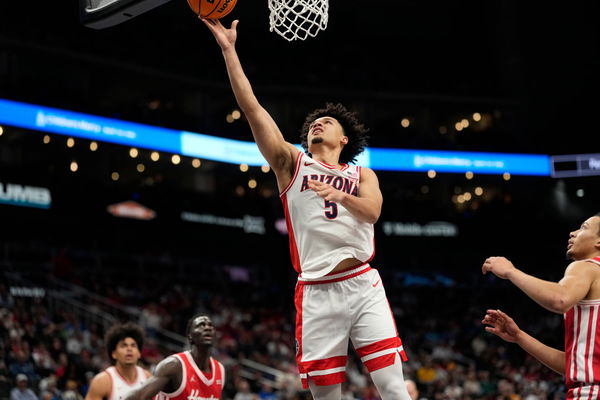
I’d place Michigan’s frontcourt slightly above Arizona’s, but the Wildcats enter with a significant guard advantage. After a slow start to the year, Brayden Burries established himself as a key piece for an otherwise shooting-needy team, thriving as an off-ball scorer and versatile defender. He’s a lethal transition threat, blending exceptional rebounding in traffic with great speed and open-floor finishing chops.
Imago
MAR 14 2026: Arizona Wildcats guard Brayden Burries 5 scores against Houston in the Big 12 Championship Game at T-Mobile center, Kansas City, Missouri. /CSM. Kansas City United States – ZUMAc04_ 20260314_zma_c04_006 Copyright: xJonxRobichaudx
And while he won’t receive much draft buzz, Ivan Kharkenchov might end up as this team’s best long-term prospect. He sports true forward size with the ball skills of a much smaller player, blossoming into a difference-making driver with first-round potential (likely after another college season). But a strong Final Four performance could vault him into 2026 NBA Draft considerations and balloon the stock of already highly touted players like Burries or Mara.
UConn (2) vs Illinois (3)
Prospects to watch
- Illinois: Keaton Wagler, David Mirkovic, Tomislav Ivisic, Zvonimir Ivisic, Kylan Boswell
- UConn: Braylon Mullins, Tarris Reed, Alex Karaban, Silas Demary
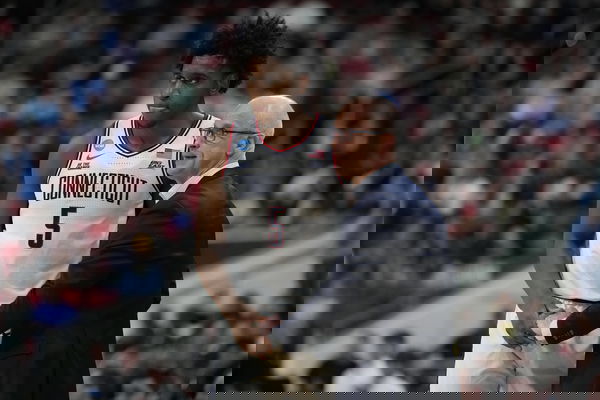
While this matchup (from a prospect standpoint) slants more towards the backcourt than the titanic battle above, Tarris Reed is playing like the country’s most dominant player. He kick-started his tournament run with a 31-point, 27-rebound evisceration of Furman. Reed’s performance against Duke, tallying 26 points, nine rebounds, three assist and six stocks (steals plus blocks), compares to any single game a prospect mustered all season.
Imago
NCAA, College League, USA Basketball: NCAA Tournament First Round-Oklahoma at Connecticut Mar 21, 2025 Raleigh, NC, USA Connecticut Huskies head coach Dan Hurley with center Tarris Reed Jr. 5 during the second half against the Oklahoma Sooners at Lenovo Center. Raleigh Lenovo Center NC USA, EDITORIAL USE ONLY PUBLICATIONxINxGERxSUIxAUTxONLY Copyright: xBobxDonnanx 20250321_ams_sd2_0351
Illinois’ primary frontcourt players, Tomislav Ivisic and David Mirkovic, both lean offensively in their strengths and likely will struggle to contain Reed on the block. He’s scoring like a lethal offensive engine, producing offense on elite volume (31.2% usage rate) and efficiency (63.2% true shooting) across four tournament games. If Reed can continue to dominate at this rate, scouts may feel more confident in projecting him as a higher usage scoring option at the next level.
Ivisic and Mirkovic (David deserves legitimate prospect recognition despite a lack of mainstream buzz) both defend at their best in the paint, sharing similar movement limitations. Tomislav’s frame could provide some resistance against Reed, but his wide array of post moves, ballerina footwork and touch with both hands should continue to act as a primary offensive weapon for the Huskies.
Illinois head coach Brad Underwood’s potent 5-out offense will stress Reed the other way, pulling him out of the paint with pick-and-pops and testing his shaky mobility and positioning defending away from the hoop. Reed held his own against Duke’s 5-out offense in the last round and, unlike most centers, sports the instincts and length to jump errant passes on the perimeter, providing utility beyond his interior defense.
Illini freshman Keaton Wagler captains his team’s elite offense, a commendable feat for an unheralded, 19-year-old freshman. He’s produced like a true engine this season, relying on a deceptive, manipulative handle and dead-eye shotmaking chops to generate his own offense. Wagler rarely makes compromising decisions with the ball, posting a sparkling 2.5 assist-to-turnover ratio this season. If Wagler can continue to prove his offensive impact despite limited athletic tools, NBA teams could feel more confident in his case as a high-lottery prospect.
I’d expect the Huskies to mirror the strategies of defenses like Houston, forcing Wagler to win on drives in isolation and score at the rim over multiple bodies. He lacks the speed, explosiveness and strength to win easily against NBA-caliber athletes, but beyond Silas Demary, the Huskies don’t roster too many elite point-of-attack defenders.
UConn’s own freshman sharpshooter, Braylon Mullins, will hope to follow his historic game-winner with a strong Final Four. He’s more than just a shooter, compensating for a slighter frame and limited twitchiness with his high feel and awareness, skilled passing and defensive playmaking. Alex Karaban shares some similarities with Mullins, thriving as an off-ball shooter and complementary playmaker with clear limitations elsewhere.
We’ll see how NBA teams value different kinds of players within this matchup, from older, productive players like Reed to younger, high-ceiling bets like Wagler. Between Reed, Karaban and Ivisic, this matchup, as well as Michigan-Arizona could produce several NBA role players, plucking from the tree of older college stars who win at the highest levels.
All Stats via Bart Torvik
Written by

Edited by

Ved Vaze