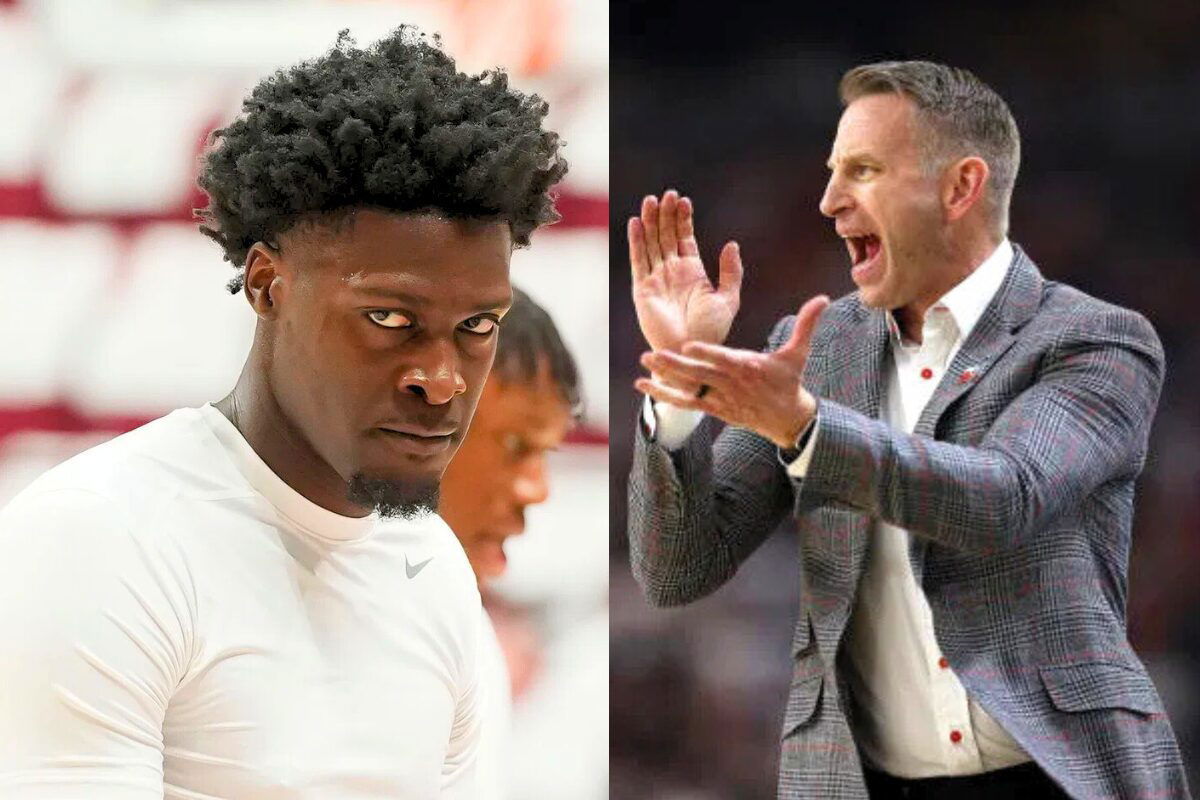
Imago
Via Imagn
Imago
Via Imagn
In the middle of the Charles Bediako eligibility mess, Nate Oats didn’t expect to be praising a rival coach. Chris Beard, the coach of Arkansas, wrote a letter to Bediako just as his court case was falling apart, and Judge Daniel Pruet ended his comeback on February 9. In college basketball, where coaches don’t often show their rivals any kindness, Beard’s gesture stood out.
Watch What’s Trending Now!
Oats didn’t hold back his gratitude for what Beard had done for his player and program during a tough time.
“It was one of the most classy notes to a kid from an opposing coach, and it doesn’t happen often. But one of the classiest moves I’ve ever seen. He didn’t do it to get any recognition,” Oats said.
“I thought it was extremely well written, a thoughtful thing of an opposing coach to do that still understands we’re still coaching young men, and this is not an object we’re dealing with. It’s a young man with a basketball career in front of him, and Coach Beard understands it.”
The context of the situation made Beard’s letter even more significant.
Nate Oats thanks Chris Beard for writing Charles Bediako a letter:
“It was one of the classiest moves from an opposing coach I’ve ever seen… I thought it was an extremely thoughtful thing to do… (Charles) is still a human and a young man, not an object”
(🎥: @BOL_On3) pic.twitter.com/RP4jm21NBj
— The Field of 68 (@TheFieldOf68) February 12, 2026
The ruling abruptly halted a promising comeback for Bediako, who had averaged 10 points over five games for Alabama, winning three and losing two, before Judge Pruet’s decision stopped him. His legal battle with the NCAA stemmed from his attempt to regain eligibility after leaving Alabama in 2023 and playing professionally in the G-League for three seasons.
On January 21, Judge James Roberts Jr. granted a temporary restraining order. But as he was no longer part of the program, Alabama Athletics, Pruet took over and eventually sided with the NCAA.
Beard said that his choice to reach out was not based on basketball rivalries, but on Bediako as a person dealing with an impossible situation.
“That’s a personal deal. I think I was just thinking about Charles Bediako, the human being. I don’t know him, but I have seen him play a lot of basketball, good player, so I have no dog in a fight in terms of the whole situation. But I do know there’s a human being involved and watching some of the stuff that was going on at the games and things,” Beard said.
“As many people have done for me in my life when I go through adversity and tough times, I think as human beings, we can encourage other people. It doesn’t always have to be somebody that you know.”
Beard’s gesture gave voice to a common sentiment: Bediako was caught in the crossfire of a bigger fight between the NCAA and players who wanted second chances.
Meanwhile, Arkansas was going to play Alabama, which made Beard’s reaching out to a rival player even more interesting. His letter talked about the human cost of a legal battle that saw Bediako score 12 points against Auburn on February 7, but two days later, he was ruled ineligible and couldn’t play college basketball again.
Nate Oats expresses disappointment with Charles Bediako’s ruling
Bediako’s comeback lasted exactly seven days of real competition before Judge Pruet’s ruling on February 9 put an end to it. This left Alabama scrambling to change its frontcourt rotation.
NCAA President Charlie Baker bluntly celebrated the decision, stating, “Common sense won a round today,” while mentioning that Alabama wouldn’t have to give up those wins.

Imago
Credit: Imagn Images
“Obviously super disappointed,” Oats said following the ruling. “Disappointed with the ruling, disappointed in the system—both the NCAA, the courts, the whole thing—just with all the inconsistencies with who’s eligible and who’s not.”
The Crimson Tide will play Arkansas on February 18, but their frontcourt is thin, so backcourt stars Labaron Philon and Aden Holloway will have to step up offensively without Bediako on the court.
Written by

Edited by

Ahana Chatterjee