Imago
Credit: IMAGO
Imago
Credit: IMAGO
Imago
Credit: IMAGO
Imago
Credit: IMAGO
For decades, NCAA basketball followed a familiar script: arrive, develop, leave for the pros. That order wasn’t just tradition; it was the foundation. However, a recent development around James Nnaji, the No. 31 pick in the 2023 NBA draft, and Baylor University, has the whole hoops community talking. And according to former UCLA and NC State head coach Matt Gottfried, that foundation is no longer cracking. It’s collapsing.
Watch What’s Trending Now!
In a recent Instagram post, Gottfried didn’t mince words, arguing that the NCAA governing body, “as we’ve known it for the last 50 or 100 years,” is effectively finished, a thought that has been on the minds of many fans now.
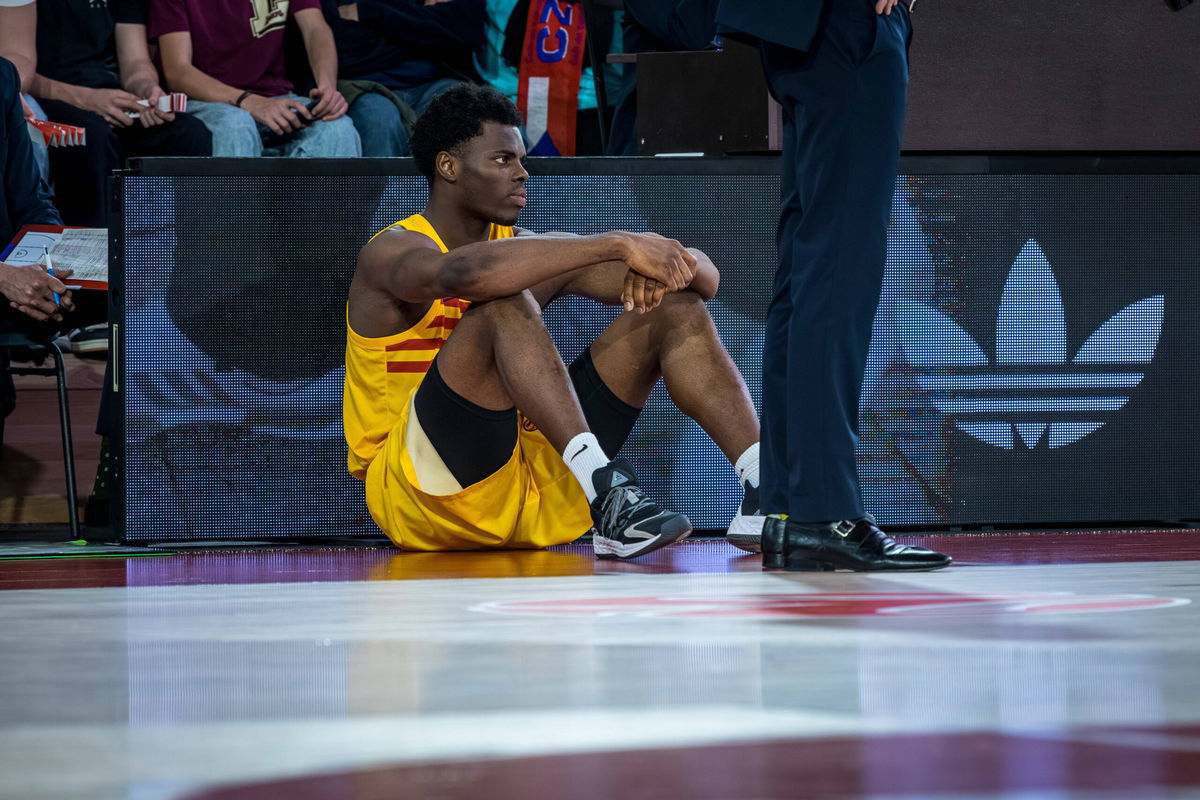
His warning comes at a moment when an unthinkable trend is becoming reality: basketball players who went pro or were drafted by NBA teams are now returning to play college basketball, and that’s what happened with Nnaji. The 21-year-old has committed to Baylor, with the hopes that he’ll be ready to get on the court in January.
Gottfried, who last coached Cal State Northridge from 2018 to 2021 before stepping away from the sidelines, framed this current moment as a legal and structural breaking point for the NCAA.
“(NCAA governing body is) done. It’s over. It’s crumbling right beneath their feet,” he said. “Right now, you have professional basketball players in the NBA who have played up to 12 games. You have professional players playing in Europe who are now going back and playing college basketball after they made the decision to give up their eligibility and become pros… We have college basketball coaches right now out there recruiting guys off of NBA rosters.”

View this post on Instagram
Nnaji’s NBA rights, currently held by the New York Knicks after being traded twice, remain intact. He has appeared in NBA Summer League games, played professionally in Europe, and fully entered the pro pipeline. Yet, because he never signed an NBA contract or appeared in an NBA or G League regular-season game, the NCAA granted him four years of eligibility.
The result? A 7-foot, 250-pound professional prospect with a 7-foot-7 wingspan suiting up against college competition in the middle of the season.
“If the NCAA governing body has gotten to a point where they feel they can win no lawsuit, zero, zip. Then the NCAA, as we’ve known it, is done. It’s over. Now, they own the basketball tournament, March Madness, till 2032, and they’re holding on to that for dear life… So, the emphasis on getting a degree, the desire to help young people graduate and stay on track for academic progress, those days are done. The NCAA, as we have known it, is over,” the former coach further added.
But the shock wasn’t limited to him or the fans. Shortly after the news became public, UConn head coach Dan Hurley summed up the disbelief many around the sport were feeling.
“Santa Claus is delivering mid-season acquisitions… this s** is crazy!!” he wrote on X.
Even Michigan State coach Tom Izzo expressed his disappointment with this new development.
“This just goes to show you how ridiculous people that are in power make decisions. I’m not real excited about the NCAA or who’s making these decisions without talking to us; (they’re) just letting it go because they’re afraid they’re going to get sued,” he said, according to the NY Times.
Whether this new reality strengthens college basketball or accelerates the unraveling of its identity remains to be seen. But one thing is clear: the system that governed the sport for generations no longer operates by the same rules, and there may be no turning back.
From the NCAA’s perspective, though, the rules themselves have not undergone any significant shift. What has changed is how aggressively schools are now pursuing these players, along with the players’ own openness to choosing the college route.
Before the rise of major NIL opportunities, this option rarely made financial sense. Today, college basketball can offer a more appealing and profitable alternative than attempting to climb to the NBA through the G League.
That shift has sparked broader questions about whether the current system still works, and whether college basketball and the NBA should explore a new framework, possibly one similar to hockey, where athletes are drafted but retain the option to develop in college until they are ready to turn professional.
Has This Ever Happened Before?
At first glance, James Nnaji’s return to NCAA basketball feels like one of a kind, but history does offer a loose comparison. In 1978, the Boston Celtics drafted Larry Bird while he was still in college, allowing him to return to Indiana State for his senior season before eventually joining the NBA.
That rare situation was so disruptive that it led directly to the creation of the Bird Collegiate Rule, designed to prevent drafted players from going back to school. So, it’s fair to say that with Nnaji’s commitment to Baylor, the legal loopholes have been found in that rule.
However, Bird never played professionally before returning to college. He didn’t suit up overseas, didn’t appear in NBA or Summer League games, and didn’t have his draft rights traded between franchises, and that’s where the comparison ends. James Nnaji has already operated inside the professional ecosystem and has been treated as a developmental asset by multiple NBA teams.

When it comes to women’s basketball, earlier this season, Kansas State landed Nastja Claessens, even after the Belgian guard had been selected with the No. 30 pick in the 2024 WNBA Draft. Claessens retained her eligibility because she never signed or practiced with the Washington Mystics, allowing her to return to college under WNBA rules that differ from the NBA’s, particularly for international prospects.
While Claessens’ situation is cleaner than Nnaji’s, the outcome points in the same direction: drafted players returning to campus and contributing immediately.
So yes, versions of this have happened before. But what makes James Nnaji’s situation different is the scale and timing. This isn’t a player finishing unfinished business; it’s a professional-caliber big man entering college basketball in the middle of the season, fully formed, fully experienced, and immediately impactful.