Imago
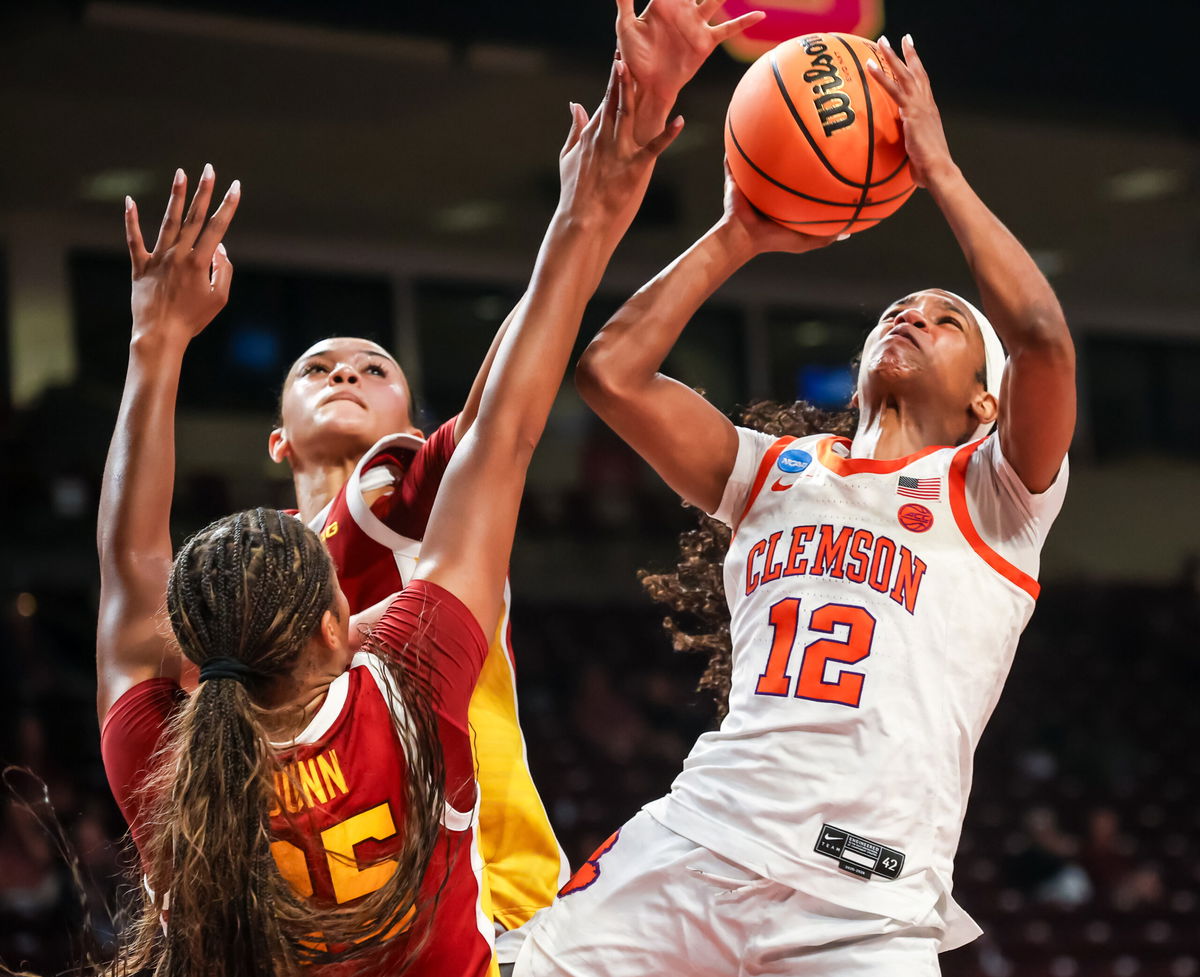
Mar 21, 2026; Columbia, South Carolina, USA; Clemson Tigers guard Mia Moore (12) shoots over USC Trojans guard Kara Dunn (25) in the second half at Colonial Life Arena. Mandatory Credit: Jeff Blake-Imagn Images
Imago
Mar 21, 2026; Columbia, South Carolina, USA; Clemson Tigers guard Mia Moore (12) shoots over USC Trojans guard Kara Dunn (25) in the second half at Colonial Life Arena. Mandatory Credit: Jeff Blake-Imagn Images
For a moment, it looked like March Madness had delivered its signature chaos. The Clemson Tigers thought they had a buzzer-beater when Mia Moore let it fly in the final seconds of their game against the USC Trojans. Fans erupted in celebration, but then everything stopped.


In their first-round clash, the Tigers appeared to steal a dramatic win, until officials waved off the shot after a lengthy review, sending the game to overtime instead. What followed was a 71–67 overtime win for USC. However, this ending quickly turned into one of the most debated moments of the NCAA Tournament, prompting a detailed explanation from NCAA officials.
Watch What’s Trending Now!
According to the official statement from NCAA rules editor Jon Levinson and national coordinator Penny Davis, the decision came down to timing, and the rules leave little room for interpretation.
NCAA statement on @ClemsonWBB disallowed buzzer beater below.
TLDR: the foul came after time expired. pic.twitter.com/G0iiu1xw2R
— Jared Parker (@jaredparkertv) March 22, 2026
“Under the rule for a mandatory replay review (Rule 11-2.1.a.3), officials must use replay to determine whether a foul was committed before the reading of zeroes on the game clock. The determining factor as to when the foul occurred is when the officials observe the illegal contact, not the official’s signal for a foul or contact that is not yet illegal (Approved Ruling 2-4, 2025-26 NCAA Women’s Basketball Case Book). When reviewing plays involving last-second shots, officials are to review the play from its start (the throw-in) through the conclusion of the play. If during a replay review involving plays impacted by the game and/or shot clock, officials must ascertain whether the appropriate clock(s) started or stopped properly,” read the statement.
“When a clock in question does not start properly, the officials shall time the play to determine whether it occurred before or after the expiration of time. Officials may use an embedded stopwatch or a handheld digital stopwatch to time the sequence, but must ensure the video is playing at real speed (2025-26 CCA Manual 4.7.C4.C). At replay, the officials determined that the illegal contact (foul) occurred after the expiration of time. The made basket could not be scored as the try was not released prior to the expiration of time and the fourth quarter ended in a tie score, sending the game to overtime.”
Officials reviewed the entire play from the inbounds to the shot, as required under replay rules. When they examined the sequence, they found that the game clock did not start properly when Moore received the ball. That triggered a manual review using a stopwatch to reconstruct the play in real time.
After timing the play, officials determined two critical things.
As Mia Moore caught the inbounds pass and drove up the floor, there was also contact on the play, which raised the possibility of a last-second foul that could have sent her to the line.
But once officials reconstructed the sequence, they concluded:
- The shot was released after time ran out
- The contact occurred after the buzzer as well
Because of that, the basket could not be counted, and no foul could be awarded. So the score remained tied at 61-61, sending the game into overtime. And that reset proved costly.
While the Tigers briefly regained control in overtime, the Trojans responded behind freshman standout Jazzy Davidson, who took over when it mattered most. She knocked down two crucial three-pointers in the extra period, including the go-ahead shot with just over a minute left, helping USC end the game at 71-67.
Clemson HC reacts after the controversial call ends their March Madness run
After the disappointing loss, Head coach Shawn Poppie acknowledged the turning point of the game, pointing to the explanation officials gave after the review.
“They said when they got the stopwatch out, I guess as they timed it, the whistle was not blown before what they said were zeroes on the stopwatch. That’s how it was explained to me,” he explained.
Still, Poppie made it clear that this loss doesn’t define his team.
Imago
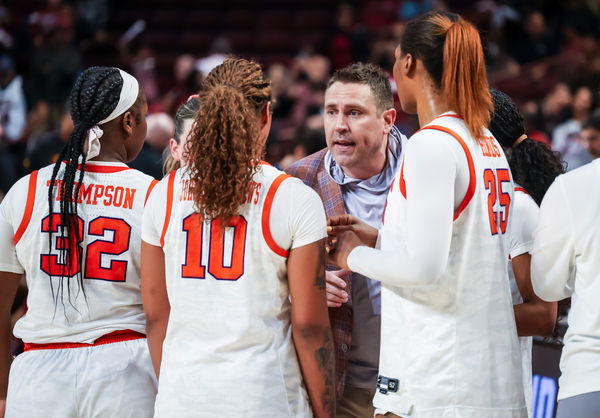
Mar 21, 2026; Columbia, South Carolina, USA; Clemson Tigers head coach Shawn Poppie directs his team in a timeout against the USC Trojans in the second half at Colonial Life Arena. Mandatory Credit: Jeff Blake-Imagn Images
“Those girls just set the standard for what Clemson basketball is going to be,” he said. “If you went man to man, roster to roster throughout this entire year, that’s probably why no one thought we could be here. But here we are.”
And at the center of it all was Mia Moore, whose near-buzzer-beater will now live as a what-if moment. Moore led the Clemson Tigers throughout the 2025-26 season, while averaging 13.5 points, 5.4 rebounds, and 4.6 assists per game.
“Initially, I thought it was good, but I guess I came up short,” Moore said.
Still, this wasn’t a team that was expected to be here in the first place. Finishing 21–12 and returning to the NCAA Tournament, Clemson showed signs of a program trending upward under coach Poppie.
However, for now, with their season officially over, the Tigers will step away from March with more than just heartbreak. They carry a foundation that suggests this run might be just the beginning of something better to come.
