

The SEC was so dominant in the recent 2025/2026 NCAA Women’s Basketball Tournament that it had four programs in the top 8. But then the selection committee eventually had to push down LSU and Vanderbilt on the seed list just because they don’t want top teams from the same conference to play each other too early in the tournament.
Watch What’s Trending Now!
That won’t happen again. According to The Associated Press, as shared by EJ Arocho on X, from 2027, the NCAA will seed the top 16 teams in the NCAA Women’s Basketball Tournament based solely on their overall rankings. They will remove any form of conference-affiliation restrictions that previously forced them to push down any team to reshape the bracket.
Imago
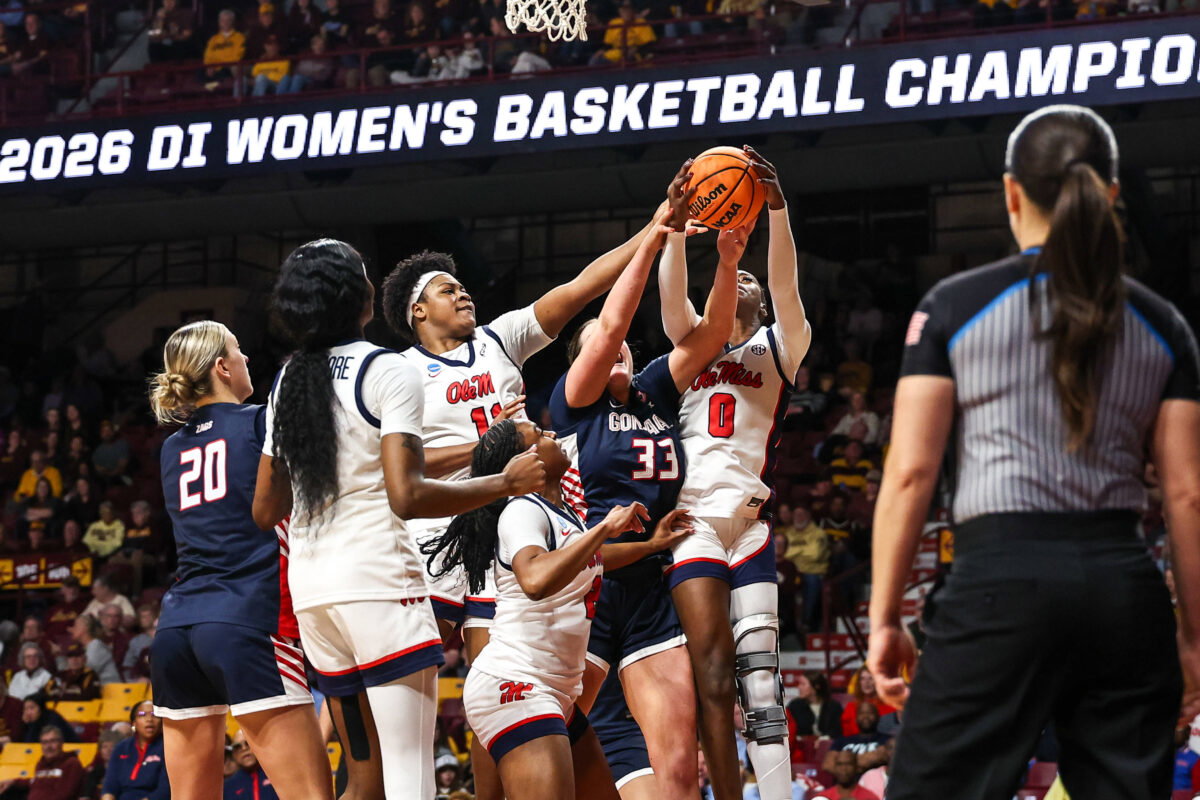
2026 NCAA, College League, USA Women s Basketball Tournament – First Round – Minneapolis Mississippi Rebels forward Christeen Iwuala 12, Gonzaga Bulldogs forward Lauren Whittaker 33, and Mississippi Rebels guard Sira Thienou 0 reach for the rebound during the second half of a first-round game of the 2026 NCAA Women s Basketball Tournament between the Ole Miss Rebels and Gonzaga Bulldogs at Williams Arena on March 20, 2026, in Minneapolis, Minnesota. Minneapolis Minnesota USA PUBLICATIONxNOTxINxFRA Copyright: xStevenxGarciax originalFilename:garcia-2026ncaa260320_npS9t.jpg
Ideally, in the NCAA Women’s Basketball Tournament, which involves 16 seeded teams, the higher a team is ranked by the selection committee, the better its seed. And that usually leads to an easier path through the tournament. However, as per the old rule, the committee had the authority to intervene in team seeding regardless of team ranking.
That happens when a conference has multiple top-ranking teams. And the goal is to spread the top four teams from that conference across different regional brackets so that they don’t face each other too early in the tournament.
That, to a large extent, sounded reasonable, but it often created an unintended problem. When a conference had more elite teams, the committee pushed them down. In other words, a team could have the résumé of a No. 5 overall seed but end up as a No. 7 or No. 8 seed.
However, starting with the 2027 tournament, that will no longer be the case. The selection committee will no longer interfere in seeding. Instead, everything will be done based on overall rankings, regardless of whether multiple top-ranking teams are from the same conference. In other words, the first, second, third, and fourth-ranked teams from the same conference can all end up in the same region if that’s where their rankings dictate.
This new rule will yield two major effects. First, it will reward teams for what they accomplish over the course of the season. It will ensure that they receive the seed they earn. Secondly, it could create more exciting matchups earlier in March Madness. This is because conference rivals may no longer have to wait until the Final Four before they meet.
With these changes in place, it’s safe to say that the women’s March Madness might just become even more exciting.
“The Work Those Teams Did Justifies It”: NCAA Chair Amanda Braun Defends Major Seeding Change
According to NCAA Women’s Basketball Committee chair Amanda Braun, the previous seeding system, which adjusted the top 16 teams due to conference affiliation, breaches the original purpose of rewarding teams for their performance and ranks throughout the season. But with these changes now in place, the committee believes they will preserve the integrity of the rankings.
“We put a lot of time into establishing those top 16 teams in the order they go in,” she told The Associated Press on Monday. “You’re splitting hairs to decide who has the edge, and some of that is undone by those principles. To all of us, the work we did and the work those teams did justifies keeping them where they are in that group of 16.”
Notably, this new seeding rule will coincide with the expansion of the NCAA Women’s Basketball Tournament to 76 teams beginning in 2027. However, while the tournament expansion will also apply to the men’s NCAA Tournament, the men’s basketball committee has not implemented this new seeding change.
It remains to be seen whether they will follow suit with this shift as well.