Imago
Credit: IMAGO
Imago
Credit: IMAGO
Imago
Credit: IMAGO
Imago
Credit: IMAGO
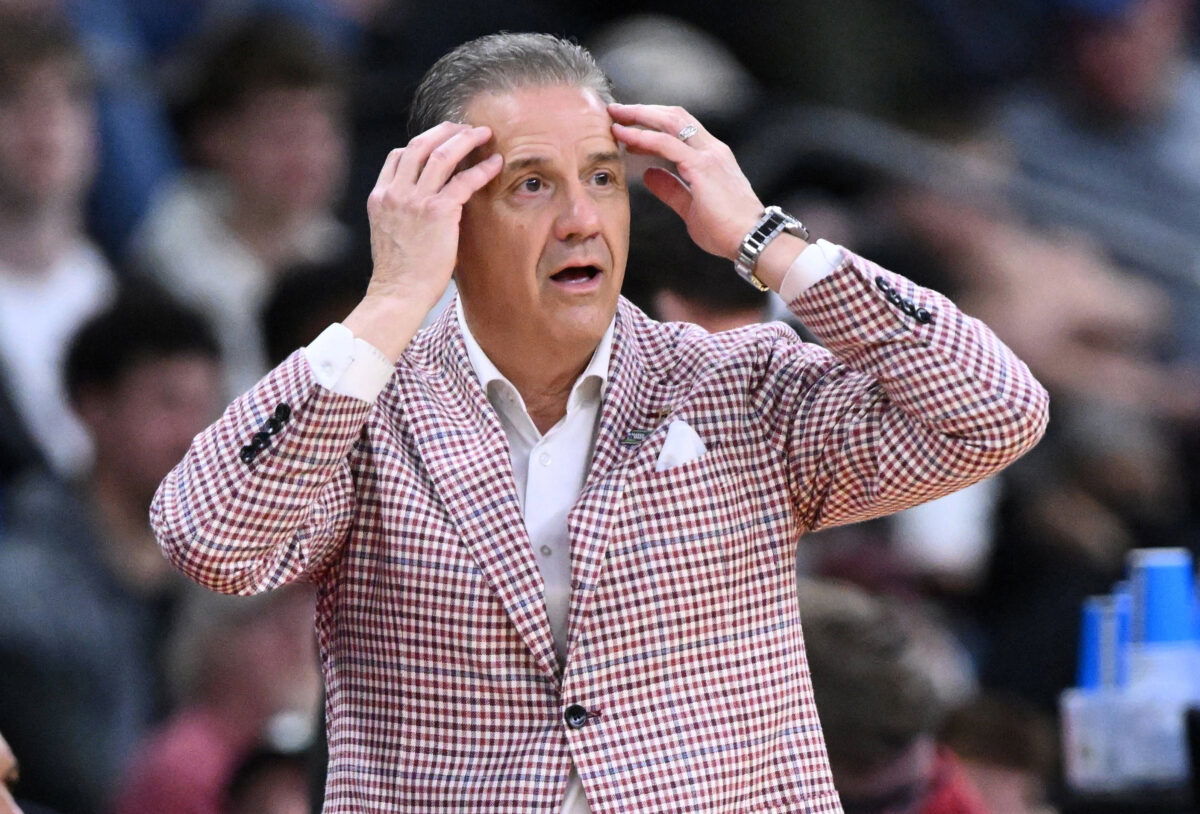
Every defeat comes with its own set of narratives. For John Calipari, the 111-77 defeat at Florida matched the worst loss in almost 35 years of coaching in the NCAA. While many on-court reasons contributed to the unceremonious defeat, it shed light on a concerning front-office mistake by the Arkansas Razorbacks.
Watch What’s Trending Now!
‘Offenses win games. Defenses win Championships.’ The Arkansas men’s basketball team is proving the quote through its adversity. Basketball analyst Rob Dauster has been consistently pointing out the lack of defensive acumen within the Arkansas roster.
In the latest episode of The Field of 68: After Dark podcast, the pundit showed his concern regarding the depth available at John Calipari’s disposal. Dauster criticized the Arkansas head coach and his lack of transfer portal usage to add more players ahead of the current season.
“They can’t guard anyone. That is the biggest red flag with them. That is the biggest red flag, I think, with Darius Acuff Jr. long-term as a prospect,” Dauster said before pointing fingers at head coach John Calipari.
“There’s going to be a criticism of Cal (Calipari) in this, and I think it’s the fact that he didn’t necessarily get enough bodies. You could’ve gotten two or three guys to just kind of sit on the bench and be practice players and pay them $750,000 and go get like veterans that have averaged double-figures at some mid-major like Arkansas State and bring them in.”


The Florida loss was perhaps an indictment, with Calipari using only 8 players the entire game. Arkansas had 6 players take the court for 25 or more minutes at Florida, and the loss should serve as an admonition of things to come when the Razorbacks enter the SEC Tournament and the NCAA Tournament.
Arkansas added 3 players before the current season. And while Nick Pringle and Malique Ewin have been regulars, Calipari could not play Karim Rtail thus far as the Lebanese freshman recovers from his back surgery. The Razorbacks failed to replace the likes of Boogie Fland, Jonas Aidoo, and Zvonimir Ivisic, and that failure has landed them in a tough spot.
John Calipari’s men are giving up an average of 78.5 points per game, which ranks them 305th in the NCAA. Conceding triple-digit figures is always a poor reflection of a team’s defense, and Arkansas has done so twice in its last four games.
While their offensive output has often bailed them out this season, the Florida loss is an important reminder that they are going to face teams that could shut them down. And if the defense continues to crumble, the Arkansas Razorbacks could be in for further rude awakenings in March Madness.
The rebounding struggle paints a dire picture for the Arkansas Razorbacks
While the 34-point defeat at Florida will rankle John Calipari a bit, there are larger problems at hand for the Arkansas head coach. The defense has been struggling this entire season. But their performance in the paint, especially in grabbing boards, had flown under the radar until the Florida game.
John Calipari’s teams have always excelled in the paint, and their interior prowess almost always outshone the opponents. However, the Razorbacks do not resemble a typical Calipari team so far, with an uneven rebounding distribution and not enough players capable of battling in the paint.
While the Gators outclassed the Razorbacks in rebounding, grabbing 51 boards compared to the visiting team’s 31, there have been signs all along.
Arkansas is, statistically, a mediocre rebounding team, with almost no positive differential to show for its efforts this season. In fact, in conference games, the Razorbacks possess a negative differential of 0.8 in rebounding. Only Nick Pringle, Malique Ewin, and Trevon Bazile are averaging 4 rebounds or more per game for Arkansas.
While they cannot make up for a difference in height, like in the game against Florida, John Calipari needs to ensure his men learn his usual ‘bulldog’ style for interior defense.
As the saying goes, “It’s not the size of the dog in the fight, it’s the size of the fight in the dog.”