
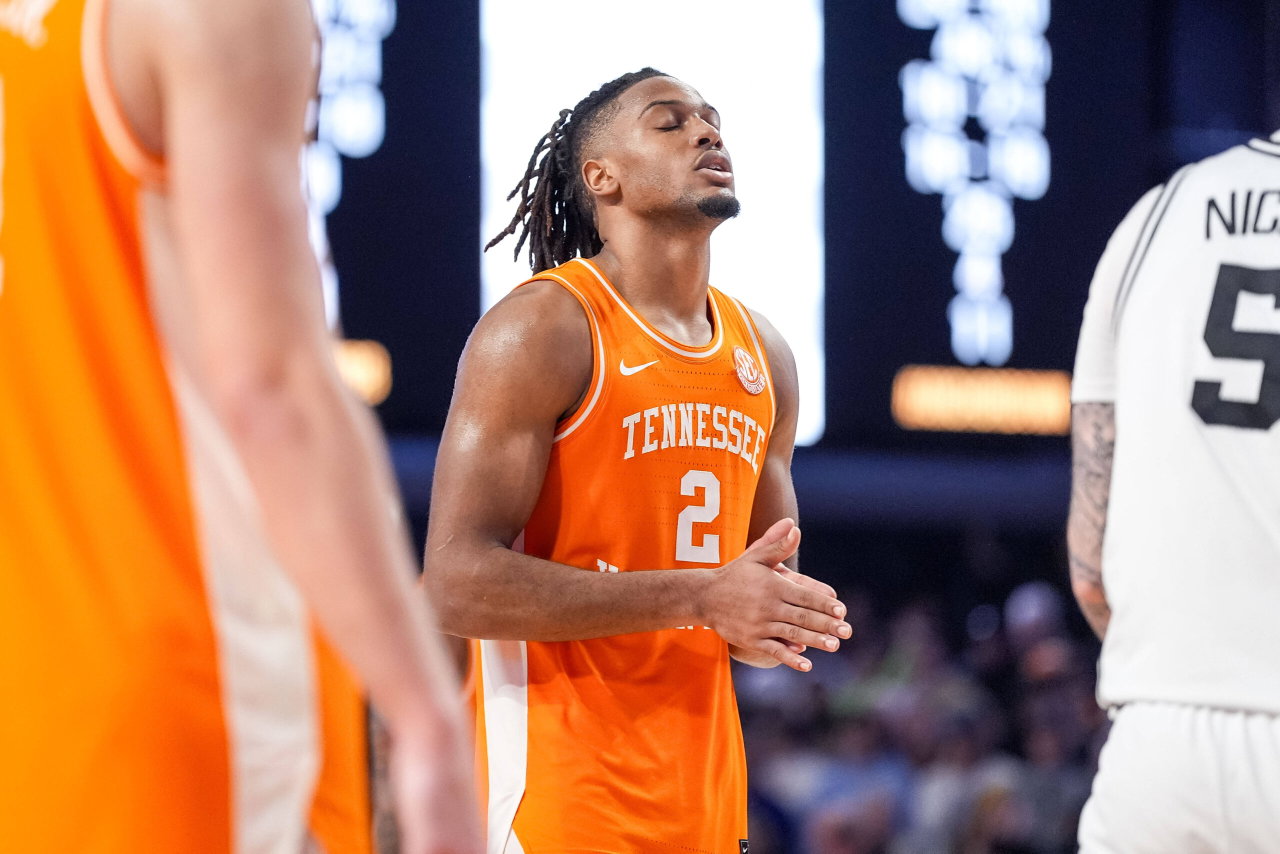
Tennessee basketball has drafted something unprecedented in college sports—a document that could reshape how athletes and schools negotiate. They have put together a comprehensive collective bargaining agreement, a first of its kind in college history, transforming the relationship between college athletes and the athletic administration.
Watch What’s Trending Now!
The proposed agreement covers the salary cap, length of the cap deal, transfer rules, and rules regarding cap circumvention; it is not signed yet.
“We know what we want and how we want to move forward,” said DeWayne Brown II, a sophomore for the 11th-ranked Volunteers, per ESPN. “Working through the collective bargaining process has been great, and I hope it’s just a stepping stone for more college athletes to replicate our process with their own schools.”
The proposed CBA replaces revenue sharing and NIL deals with one agreement, which will be universal. The date of the agreement would start from the day that student-athletes enroll or start their first practice.
Under the proposed term, freshmen would receive a pay scale on the same line as the rookies receive in professional sports like the NBA and NFL. They will also receive compensation to cover their attendance. Moreover, the terms also propose that the school should spend 89% of the salary cap on its athletes, and the allocated money should be spent over the next four years. The percentage is also negotiable.
Parts of the agreement also outline cap circumvention terms and the penalties for parties who are caught liable, but the specific figure for the cap is yet to be mentioned in the CBA, which might be subject to future discussion. Terms of eligibility, transfer portal windows and tampering fines have also been put together among the terms of the agreement. Moreover, it goes without saying that the agreement will automatically terminate if the player decides to go pro.
The deal also proposes taking care of athletes’ physical and mental health. Players are also eligible for a “dead” period when they are not required to participate in any activities related to the team. The time is allotted to them to take care of their family and spend time with them. The agreement also gives them two extra years of financial help to cover injuries related to sports.
The terms of the proposed CBA are valid for four years, but it can be renewed two years before the expiry date.
According to Tennessee athletic director Danny White, the proposed CBA will help establish regulations in college athletics and protect programs from penalties. He also said that it will bring stability in college sports.
“We’re paying them to play sports,” White said. “We’re doing that because we lost several court cases that said we’re violating antitrust law by not doing so. We need to accept our legal reality. By not accepting it, we’ve created this system that’s the most inefficient way I can think of for building rosters and organizing this thing.”
The Tennessee basketball team elected three athletes to represent players. They were expected to work with Athletes.Org, which is an association for college athletes. They went through several mock trials of negotiations with the athletics department in August and September before agreeing to a deal on Oct. 1.
Forming a players’ union is one of the goals Athletes.Org and a few other organizations have pursued in recent years. Because college athletes are primarily viewed as student-athletes, not employees, they cannot bargain.
While the proposed CBA would be able to bring uniformity, there were also roadblocks given how colleges are categorized. Colleges are public institutions, and even if the players get employee status, they won’t be allowed to have a CBA.