Imago
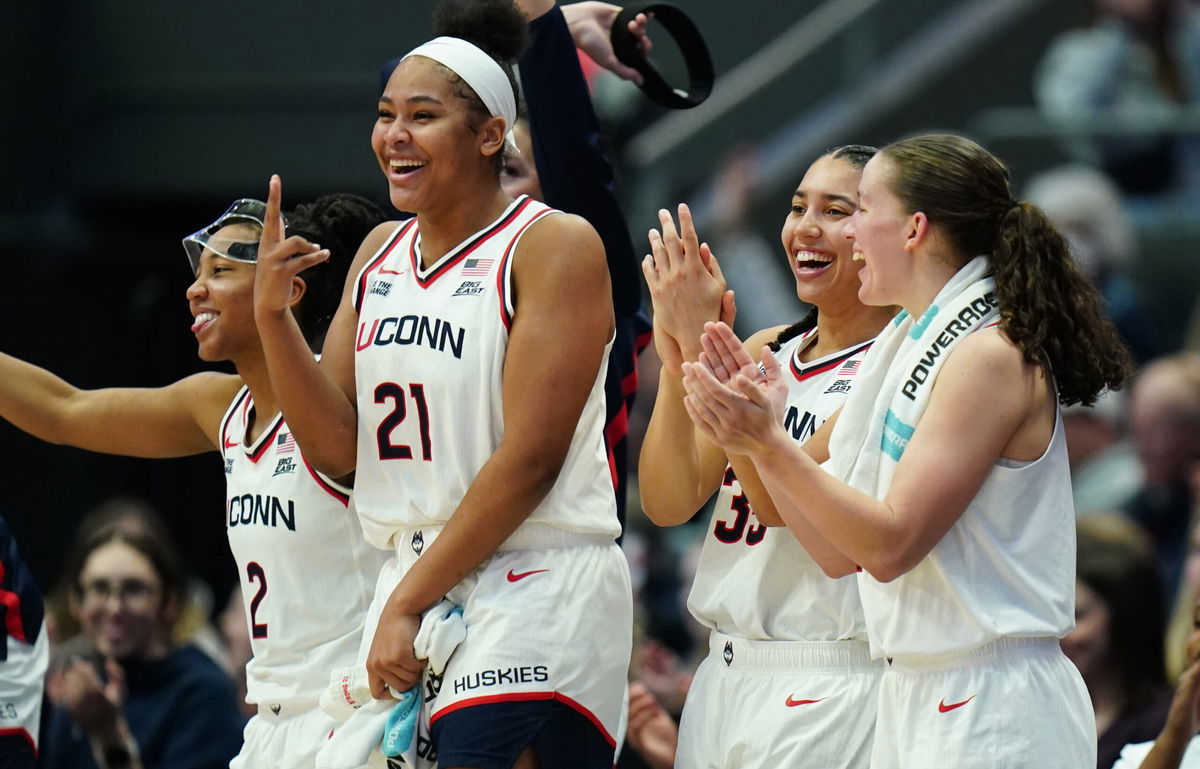
Jan 3, 2026; Hartford, Connecticut, USA; The UConn Huskies bench reacts after a basket against the Seton Hall Pirates in the second half at PeoplesBank Arena. Mandatory Credit: David Butler II-Imagn Images
Imago
Jan 3, 2026; Hartford, Connecticut, USA; The UConn Huskies bench reacts after a basket against the Seton Hall Pirates in the second half at PeoplesBank Arena. Mandatory Credit: David Butler II-Imagn Images
The Syracuse Orange ran into a WNBA-caliber UConn side coached by the legendary Geno Auriemma in the second round. “The women—it’s not even fair. It’s just not fair! They should put that women’s team in the WNBA. I bet you they’d go to the playoffs. They might even win it!” Gus Johnson said. So when Felisha Legette-Jack and Syracuse faced the defending champions, they had no answers. Nevertheless, coach Jack called out the NCAA for putting them in the same bracket as the No. 1 overall seed in the first place.


Syracuse ended their NCAA Tournament run in the Round of 32 with a 98-45 loss to No. 1 overall seed UConn. The 53-point difference marked Syracuse’s worst loss in NCAA tournament history. After this embarrassing scoreline, coach Jack accused the NCAA of disrespecting her and the team by misplacing them in the bracket.
Watch What’s Trending Now!
“For us to do what we’ve done, to continuously have to come to UConn and every single school that I go to from Buffalo, it’s unfair to the young people,” Jack said. “I don’t know whether there is something that they might have against me. If that’s the case, we need to communicate about that.”
Syracuse came into this tournament with a No. 9 seed after a 23-8 record and reached the second round of the ACC tournament. They already beat the No. 8 seed, Iowa State, in the first round. But Jack is right in pointing out that Syracuse has faced UConn in the second round each time in the last three NCAA tournament appearances. Even when she was at Buffalo, she faced UConn in the second round in 2018-19. That is a tough draw. For her, this season deserved a better seeding based on their record.
“But for us to be what we’ve done in our body of work, to have to come and play the best team in the country, Geno has this thing going and I love what he’s done, but we deserved a little more respect after being in this business for 37 years,” she said. “To have to come and be in this particular bracket every year is unacceptable. It’s wrong.”
For example, Illinois got the No.7 seed with a 21-11 record and a place in the Nashville region and faced Vanderbilt in the second round. Now, they are not an easy team to face by any regard but any team would rather face them than UConn. However, the main difference is the quad 1 wins, Syracuse went 1-7 against Quad 1 teams, while Illinois went 3-10. Syracuse was 71st in the strength of schedule column, which led to that ninth seed. But why the lowest ninth seed with UConn?
Imago
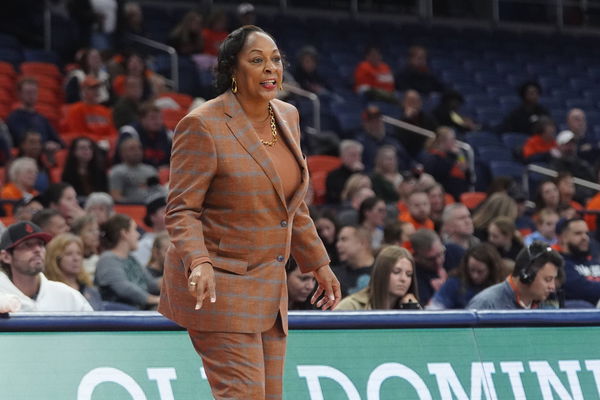
SYRACUSE, NY – NOVEMBER 13: Syracuse Orange Head Coach Felisha Legette-Jack speaks to her players on the court during the first half of the Womens College Basketball game between the Maryland Terrapins and the Syracuse Orange on November 13, 2024, at the JMA Wireless Dome in Syracuse, NY. Photo by Gregory Fisher/Icon Sportswire COLLEGE BASKETBALL: NOV 13 Women s – Maryland at Syracuse EDITORIAL USE ONLY Icon241113049
“If you’re on a committee and you’ve been around for more than a year or two or five to 10 or 15 years, you understand what that looks like,” She said. “I’ve been on those committees to see how it’s done, how you can put people on different lines, put us on a 10 line, get whatever. But for us to continue to come to Connecticut year after year is, to me, a personal attack because I just think that we are way better than what we performed today.”
To be fair, every ninth seed has an argument to be a higher ninth seed than Syracuse. USC in Sacramento 4 were 17-3 overall but 5-12 against quad 1 teams and has an SOS ranking at No. 8. Virginia Tech in Fort Worth 3 was 23-6 overall and 3-6 against quad 1 teams. Princeton from Sacramento 2 was 26-1 and 1-1 against quad 1. The extra 7 losses for the Orange mean they can be ranked lower. They also have some big losses, like the ones against Duke and Virginia Tech. Even USC has some, but their extra wins and the return of Jazzy Davidson likely compensated on the curve.
It’s another argument whether these advanced stats should be weighed this heavily. But the fact is they are. “I’m hoping that I’m not bringing shame to Syracuse by crying spilled milk,” Jack said. “But after a while, I’ve never said anything in this kind of light before. A lot of people are talking about revshare. I just want the young people in my locker room to have a fighting chance.”
Regardless, it’s hard to face the best team in the country every time you get to the big stage. They are more experienced with a bigger budget and a coach like Geno Auriemma but the numbers show what they do. And unfortunately, they walked into a UConn side at their best.
Geno Auriemma Reveals Why Syracuse Fell Apart Early
Syracuse was doomed from the tip. The ravaging UConn led Syracuse 65-12 at halftime with Azzi Fudd and Sarah Strong outscoring the Orange by themselves. Jack and Co. were pushed back immediately and there was no chance to recover from there. According to Geno Auriemma, it was the pace that outdid Syracuse.
“The situation and the NCAA tournament—you don’t go into these games thinking that’s how it’s going to play out,” Auriemma said after the game. “I think maybe Syracuse was surprised by the pace and what we’re doing. I walked into the locker room and that’s exactly what I said. I don’t know that we’ve had a better 20-minute stretch than we had that first half today.”
When the best team in the country is in that flow, there is little Syracuse could do. UConn finished with a whopping 24 fast break points. It was their second-best offensive display of the season, with an adjusted offensive rating of 156.2 per Barttorvik. They pushed with Azzi Fudd’s hot hand, getting them 34 points. Blanca Quinonez and Sarah Strong chipped in with 18 points each.
“I feel like the biggest thing for us was just being able to understand that we can’t get sped up like that in the first half and being able to take control over the game on the front end because coach pointed out to us we tied in the third and the fourth quarter,” Laila Phelia said. Losing control early against a top coach like Geno Auriemma is something any team can’t afford.
