
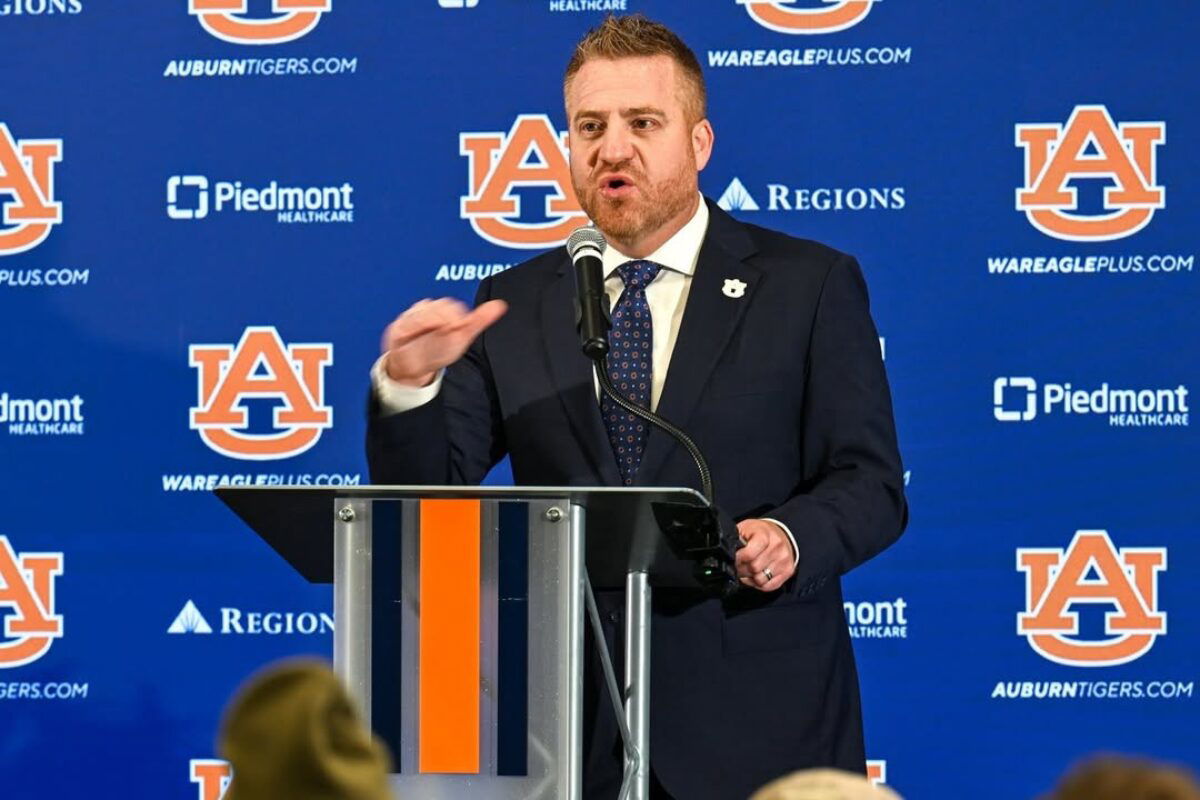
When Alex Golesh took over Auburn, it didn’t look like he was starting from scratch. Thirteen players and dozens of staff members followed him from South Florida, giving the Tigers a ready-made core for the football program after a wave of departures. Yet, as he used the portal to rebuild the Tigers, Golesh says that college football is facing another massive problem.
Watch What’s Trending Now!
“I think a hard situation isn’t a bad situation,” Alex Golesh told David Pollack on See Ball Get Ball. “Waiting your turn isn’t a bad situation. Fighting for something isn’t a bad situation. It’s real life.”
In his view, the easy exit of the transfer portal has made it harder for young men to learn that lesson. Players need more reasons to stay and grow through difficult moments instead of viewing the transfer portal as the first solution. Alex Golesh isn’t against player movement or NIL opportunities. He acknowledged there are times when transferring makes sense, especially if a player’s situation is genuinely unhealthy. His actual concern is that constant movement is cutting short an important part of a young athlete’s development.
“I would love to regulate how many times somebody can transfer,” he said when asked what he would like to change for college football. “These guys, you get them at 17, 18 years old. There’s so much development that’s got to happen. There’s so much growth that’s got to happen. And I think it takes time to grow. I think it takes guys time to get comfortable. And to be able to grow, I think the amount of change that’s happening all the time stunts that growth.”
Those words land differently because of how Golesh has rebuilt Auburn. When asked if bringing so many USF faces made the transition easier, he said yes.
“Yeah, I think it accelerates the process,” he said.
According to him, familiarity helps build trust much faster, and so he brought his people with him. Those returning faces already understand how he operates, and that allows them to reinforce his expectations inside the locker room before new teammates fully settle in. Alex Golesh stressed that trust is what ultimately determines how quickly a new program comes together. With college football seeing more roster turnover than ever, he believes authentic culture gets tested almost immediately.
“I think it’s even more important that the culture within the program is real and honest and truthful,” Golesh summed it up in one line. “In this day and age, I think it’ll get exposed way faster if it’s not.”
Auburn already has a core that knows what Golesh expects because they have run his system before. Quarterback Byrum Brown leads that group after a big 2025 season, when the Bulls went 9-3 and posted one of the nation’s top offenses. Brown is one of eleven offensive players who made the move on, plus two defensive backs.
That familiarity matters. Auburn had to rebuild after nearly 40 players left, including several key offensive names. The portal helped fill those spots, but Golesh says real winning still comes from players who trust each other, grow together and stay long enough to get better.