Imago
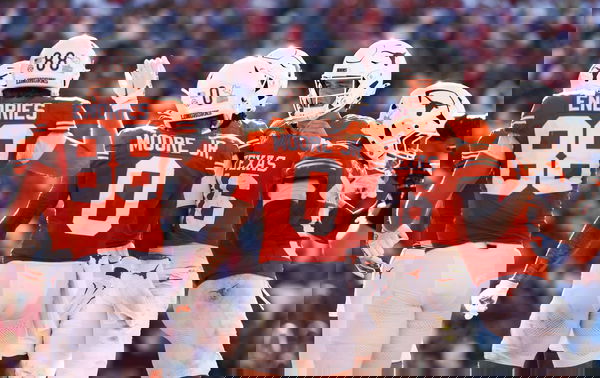
NCAA, College League, USA Football: Oklahoma at Texas Oct 11, 2025 Dallas, Texas, USA Texas Longhorns wide receiver DeAndre Moore Jr. 0 celebrates with Texas Longhorns quarterback Arch Manning 16 and other teammates after scoring a touchdown during the second half against the Oklahoma Sooners at the Cotton Bowl. Dallas Cotton Bowl Texas USA, EDITORIAL USE ONLY PUBLICATIONxINxGERxSUIxAUTxONLY Copyright: xKevinxJairajx 10112025_krj_aj6_0000327
Imago
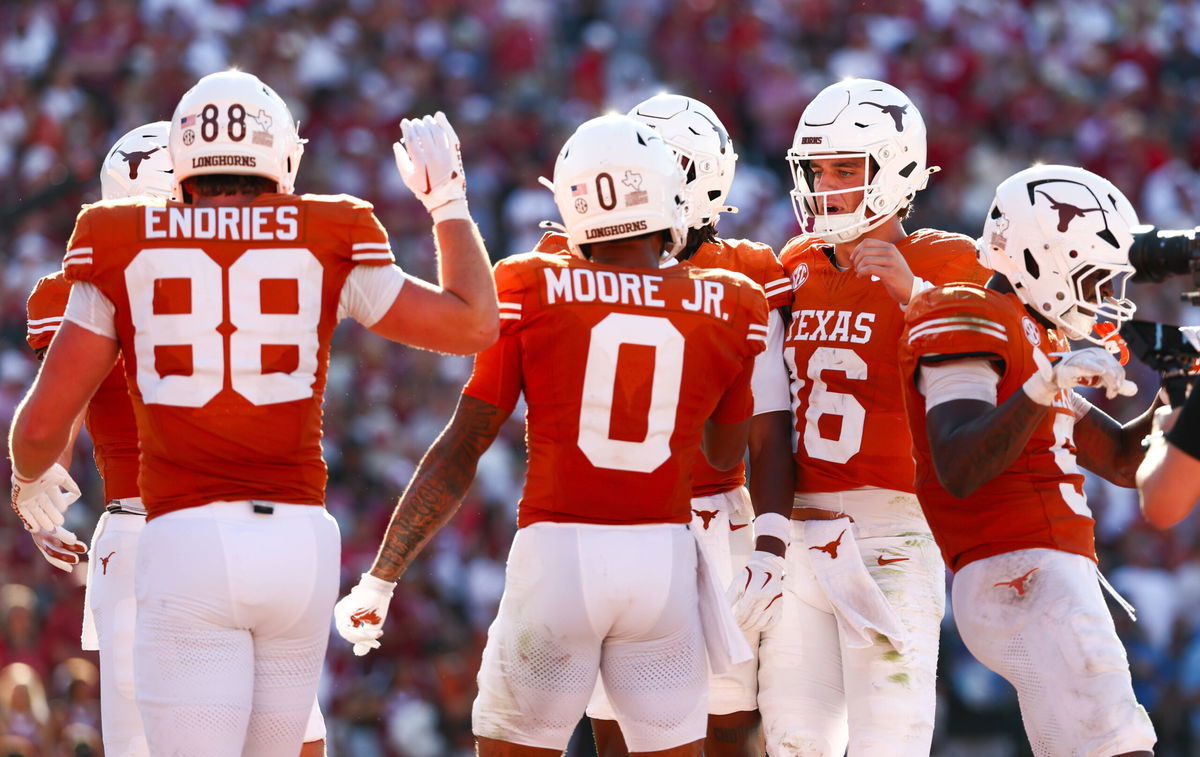
NCAA, College League, USA Football: Oklahoma at Texas Oct 11, 2025 Dallas, Texas, USA Texas Longhorns wide receiver DeAndre Moore Jr. 0 celebrates with Texas Longhorns quarterback Arch Manning 16 and other teammates after scoring a touchdown during the second half against the Oklahoma Sooners at the Cotton Bowl. Dallas Cotton Bowl Texas USA, EDITORIAL USE ONLY PUBLICATIONxINxGERxSUIxAUTxONLY Copyright: xKevinxJairajx 10112025_krj_aj6_0000327
The University of Texas experienced a mixed financial year in 2025 when it came to the profits of its athletic department. Sixteen sports, including baseball, volleyball, and softball, operated at a loss last year. However, one department stood its ground against the losses, generating massive profit: Texas Longhorns football.
Watch What’s Trending Now!
The Arch Manning-led Longhorns generated a profit of $106.9 million in 2025, according to a report by the Statesman. That figure stood out sharply, as most other sports finished around the deficit of $3 million on average. Despite the massive profit due to football, the Texas athletic department was projected to face a $41.2 million deficit, giving an idea of how important football remains to the financial backbone of Texas athletics. This raises the question: How was the football program able to generate revenue while the rest of the sports department struggled?
It comes down to several factors. Firstly, Texas’s decision to transition to the SEC in 2024. By joining the SEC a year earlier than planned, Texas accepted a partial revenue share in 2025. The Longhorns received approximately $12.5 million, while full SEC members earned more than $60 million. With that gap in revenue, the program knew it was going to be in deficit, hence it was able to plan for it.
ADVERTISEMENT
The second, and probably most powerful factor, was viewership. With stars like Arch Manning in the program, fans tuned in to watch the games. The Longhorns finished the season as the program with the second-most watched games, averaging more than 7.5 million viewers per game, only behind Alabama. With Manning and others, the Longhorns were able to bring in huge viewership immediately after joining the SEC.
Profit/loss made by Texas sports in fiscal year 2025, according to documents obtained by the Statesman:
Football: +106.9 million
BASE: -2.1 m
MBB: -5 m
WBB: -7.5 m
Beach VB: -1.7 m
MGOLF: -1.4 m
WGOLF: -1.3 m
ROW: -3.0 m
SOFT: -2.2 m
SOC: -2.0 m
MSWIM: -2.2 m
WSWIM: -1.6 m…— David Eckert (@davideckert98) January 23, 2026
The first game of the season for the Longhorns was against the Big Ten’s powerhouse Ohio State, a game that generated a lot of hype. Well, hype is an understatement because the game ended up drawing 16.6 million viewers, making it the most-watched Week One game in college football history. Another game that brought in huge viewership for the Longhorns this season was the Lone Star Showdown.
ADVERTISEMENT
Considered one of the sport’s biggest matchups, the Lone Star Showdown lived up to its name, as 13 million viewers watched the Longhorns beat their archrival 27-17, setting a record for the most-watched regular-season weekday game. Overall, the Longhorns pulled in more than four million viewers in six of their twelve regular-season games.
So, even after the partial revenue share by the SEC, Texas was able to generate profits from its viewership, ticket sales, sponsorships, and media exposure. With full SEC revenue sharing expected in 2026 and the heroics from the football department, the Longhorns could expect a turnaround next year.
ADVERTISEMENT
Looking at it from a perspective, alongside the 3,163 yards and 26 touchdowns, Arch Manning and co did more than deliver a good season. They helped to validate the logic behind Texas’s move to the SEC and helped the Longhorns absorb a costly yet calculated loss during a transition period.
The Bigger Financial Picture for the Texas Longhorns
The transition year was never going to be easy for the Longhorns. Despite the $106.9 million profit, the athletic department still reported a deficit of around $23.3 million, a number that was already expected by the University of Texas. The deficit is largely due to Texas’s early move from the Big 12 to the SEC and accepting the partial revenue distribution.
ADVERTISEMENT
However, even with the payout, Texas generated approximately $353 million in total athletic revenue during the fiscal year, an increase of about $21 million from the previous year. At the same time, expenses rose to nearly $376 million, the highest ever for a single athletic department. The expenses were due to investments in facilities, staffing, and NIL infrastructure to improve integration into the new conference.
So, why is the $23.3 million deficit positive news for Texas? Simply put, the deficit was far less than what the program had originally planned and budgeted for. Thanks to the outstanding profit that the Longhorns’ football department brought this season, the originally planned $47 million loss was cut down by $23.7 million.
Top Stories
UFC 324 Payouts: How Much Will Justin Gaethje, Paddy Pimblett, Sean O’Malley, and Others Earn?

Pittsburgh Steelers Make Final Mike McCarthy Decision as Aaron Rodgers Gets His HC Wish

Sources: Bears Emerge as Suitors for Travis Etienne Jr., Chargers Expected to Cut Mekhi Becton, Toledo QB Not Focused on NFL

Fans in Awe as Wholesome Blades Brown Moment Is Caught on Camera

Fans in Disbelief as Mysterious Figure Around Scottie Scheffler Is Caught on Camera: “Got a Hex Him”

Michael Chandler Finally Moves On From Conor McGregor After Dana White’s Firm Verdict

With full SEC revenue sharing expected this year and a 10-year $3 billion media contract between the SEC and ESPN in 2027, it looks like the financial trajectory of the Longhorns will go upward.
ADVERTISEMENT
Related Newsletters




ADVERTISEMENT
ADVERTISEMENT
ADVERTISEMENT