Imago
Credits: Joey Aguilar Instagram
Imago
Credits: Joey Aguilar Instagram
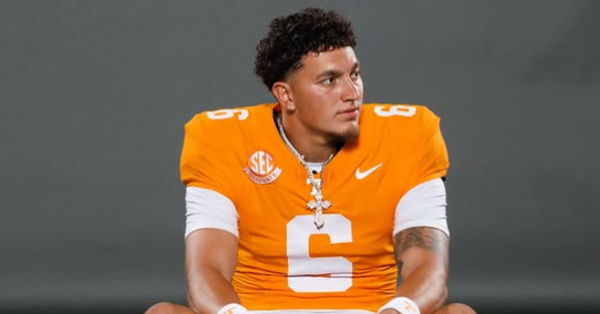
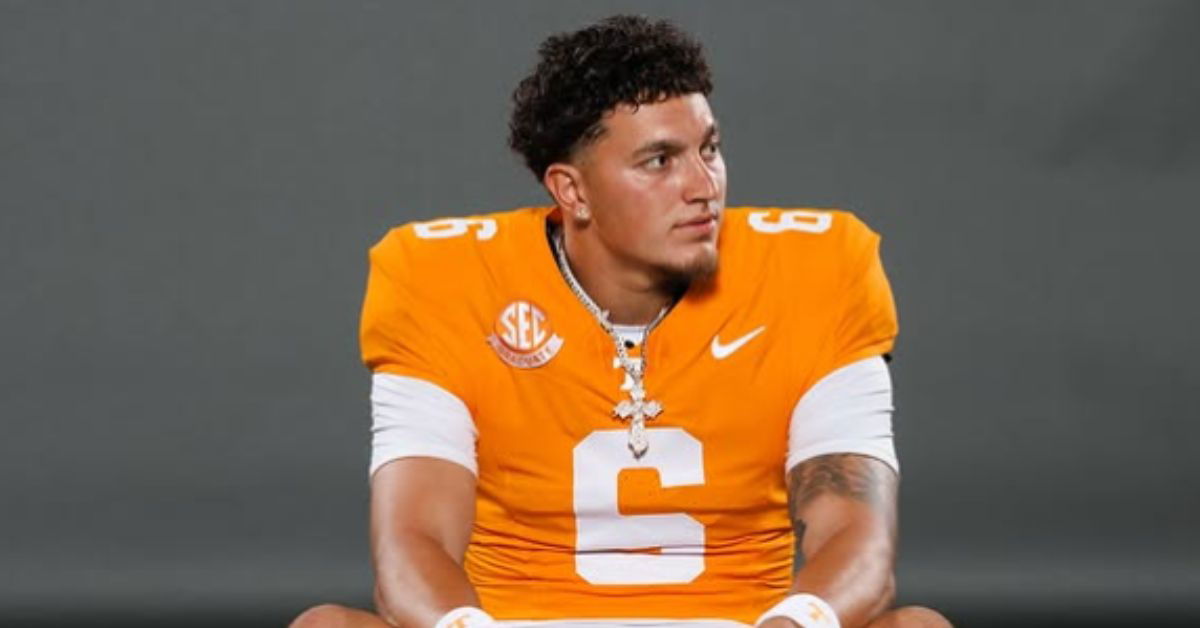
Friday is going to be a big day for Joey Aguilar. The Tennessee quarterback, who transferred to the Vols in December 2024, has a lawsuit hearing against the NCAA over eligibility rules that could block him from playing in 2026.
Watch What’s Trending Now!
His attorney, Cam Norris, argues that beyond football for Aguilar, it’s about millions of dollars in potential earnings that could be lost if he is barred from the field.
“If this Court grants Aguilar relief from the NCAA’s JUCO rule in the near term,” the complaint read, “Tennessee has a spot for him on the roster and would welcome him back.
“His compensation for playing college football in 2026 would be approximately $2 million. So by counting his JUCO years against him, the NCAA is depriving Aguilar of millions of dollars.”
.png)
.png)
.png)
He redshirted at City College of San Francisco in 2019 and missed the 2020 season due to the pandemic. Then spent two years at Diablo Valley before starting his Division I career. At App State, he played the 2023 and 2024 season, then transferred to play with the Vols.


Aguilar has spent seven years in college football, but only three seasons at NCAA member schools. Now, he’s asking the court to hold the NCAA’s junior college eligibility rule, which counts his JUCO years against his Division I clock.
Joey Aguilar’s attorney Cam Norris, says the QB would lose $2-4 million if he was not allowed to play next season for Tennessee
— Trey Wallace (@TreyWallace) February 13, 2026
But Tennessee has a roster spot for him. Norris’ filings brings in Vanderbilt quarterback Diego Pavia successfully challenging the same rule in federal court and getting an injunction to play in 2025. Despite that, the NCAA has refused to issue similar waivers for Aguilar.
“Despite Pavia’s injunction, the NCAA’s blanket waiver for JUCO players and the record-breaking successes of the 2025 season, the NCAA decided to enforce the JUCO rule again in 2026,” the complaint says. “It refuses to grant waivers, even on an individual basis, to any athletes who ask that their junior-college years not be counted against them. The NCAA has given no rational explanation for that disparate treatment.”
The Friday hearing could turn that temporary restraining order into a preliminary injunction, giving Aguilar the green flag to prep for Tennessee in 2026.
Josh Heupel pushes for clarity
Josh Heupel made it pretty clear in a court brief filed last week that this isn’t some wait-and-watch situation for the Vols. There’s a roster spot sitting there for Joey Aguilar and the program needs clarity, really quick.
“UT would love to have Aguilar back for the upcoming 2026 season,” Heupel said, according to Knox News. “But UT needs to know whether he will be eligible. It is essential for Joey, his coaches and teammates, and for UT to all know the status of his eligibility as soon as possible.” The staff is trying to plan a season without knowing who its quarterback is going to be.
And honestly if Aguilar is cleared, this probably isn’t a quarterback competition. He threw for 3,565 yards and 24 touchdowns in 13 games last season. He’s proven. Right now, Tennessee’s quarterback room includes redshirt freshman George MacIntyre, freshman Faizon Brandon, and Colorado transfer Ryan Staub. They are definitely talented but not experienced at this level. If he gets the extra year, he will undoubtedly be the QB1.
Josh Heupel even lays out his credentials almost like he’s stepping into the witness box himself. “This declaration is based on my own personal knowledge,” Heupel says, “If called to do so, I could testify competently to these facts under oath.”
But beyond wins and stats, Heupel really needs clarity. Spring practice starts March 16, and you can’t build an offense halfway.
He stresses how important it is to know whether Aguilar will be available when the team hits the field. Heupel also brings his own perspective to the argument, admitting that he was also was a junior college player himself before transferring to Oklahoma, where he became a Heisman runner-up and national champion in 2000.
“I am familiar with the NCAA’s eligibility rules,” Heupel says, specifically pointing to the laws that limit athletes to four seasons in a five-year window and count junior college time against them. He knows how the system works. And right now, he clearly believes it’s working against his quarterback.