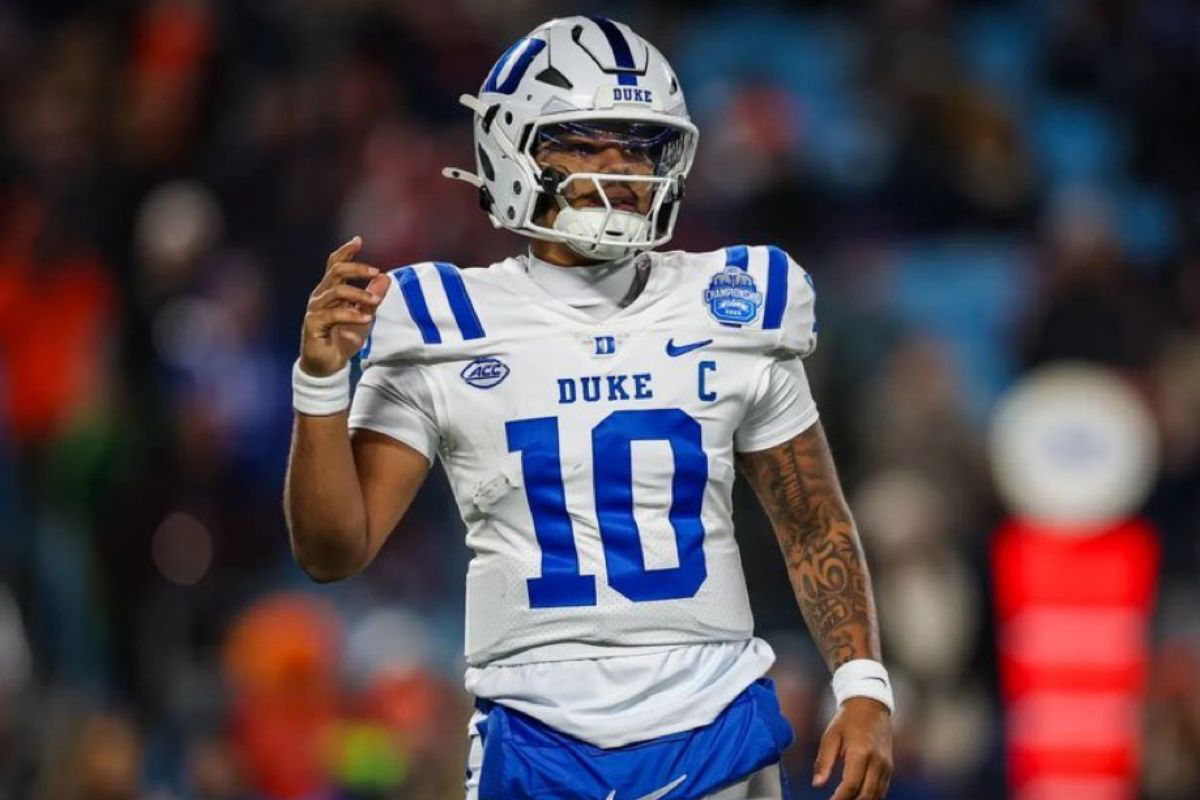
There are signs of progress in Darian Mensah’s attempt to leave Duke amid a legal battle unfolding in a Durham courtroom. While lines of communication remain open between the Blue Devils and Mensah’s camp, both sides are working toward a resolution that could keep the matter out of court. Here, attorney Rob Weaver stepped in to deliver his take on this courtroom fiasco.
“I would be very surprised if Duke doesn’t reach a settlement with Mensah,” wrote Weaver. “Why? The stakes of Thursday’s hearing are probably lose-lose for Duke. This isn’t about Mensah playing for Duke. That’s not happening no matter what. This isn’t about Duke getting paid monetary damages. That’s going to happen no matter what.”
Watch What’s Trending Now!
Simply put, although nothing has been finalized, Weaver’s words suggest a resolution could be reached before the two sides are scheduled to return to court on Jan. 29 for a preliminary injunction hearing. That sense of urgency makes sense, as time is not on Mensah’s side. For now, he isn’t allowed to enroll at another school, adding pressure to resolve the situation quickly.
After a breakout 2024 season at Tulane, Darian Mensah signed a two-year contract with Duke worth $4 million per year. Interestingly, the agreement clearly stated that he would not enroll, play football, or license his NIL rights at another school during the contract’s term. But when Mensah entered the portal anyway, Duke pushed back hard. On Jan. 20, they filed for arbitration and followed it with a request for a temporary restraining order.
I would be very surprised if Duke doesn’t reach a settlement with Mensah. Why? The stakes of Thursday’s hearing are probably lose-lose for Duke.
This isn’t about Mensah playing for Duke. That’s not happening no matter what. This isn’t about Duke getting paid monetary damages.…
— Rob Weaver (@PatentWeaver) January 25, 2026
Just a day later, a Durham County Superior Court judge granted the TRO, blocking Mensah from enrolling, playing, or using his NIL rights elsewhere. His camp filed an emergency motion seeking reconsideration of a temporary restraining order and pushed for a faster hearing. Following that request, originally set for February 2, the hearing was moved up.
Yet, the order didn’t stop him from entering the portal, and Duke officially placed his name there at midnight on January 21. Now, while the legal fight is far from over, the TRO remains in effect until the PI hearing. At that hearing, Duke must prove it would suffer irreparable harm if the QB is allowed to move on despite being under contract.
“If Duke loses the PI hearing, threats of enjoining athletes breaching their agreements will ring hollow. If Duke wins, athletes will get precariously close to being viewed as employees in the eyes of the courts. Either way, the whole industry could be turned on its head,” declared the attorney.
But if Duke eventually settles the case, they win an important point, according to Weaver. They would remain the first school to secure a temporary restraining order against a player, which sends a strong warning to others in the future. It sets a deterrent precedent. While the TRO doesn’t clearly label Mensah as an employee, a Duke victory could shift how courts view college athletes, treating them more like employees than students. That could have major ripple effects for NIL and player rights across college sports. Now it’s up to Duke officials to settle the case or wait it out until the hearing.
But the Duke–Darian Mensah lawsuit isn’t breaking new ground. It’s part of a growing trend in the NIL era, where schools are no longer hesitating to take players to court when contracts collide with the transfer portal.
Student-athlete vs. School debates rage across the CFB landscape
We are seeing schools and players locked in courtroom battles that would’ve been unthinkable a few years ago. Take Demond Williams at Washington. The QB signed a $4 million deal to stay with the Huskies, then tried to bolt to the transfer portal just four days later. Washington said absolutely not, threatened legal action, and eventually, Williams backed down and stayed put.
Meanwhile, Wisconsin went nuclear and actually sued Miami for allegedly tampering with defensive back Xavier Lucas, who had a revenue-sharing deal with the Badgers but transferred to the Hurricanes anyway. Georgia’s in the mix too, going after former player Damon Wilson for $390,000 in damages after he transferred to Missouri. They are claiming that he violated his NIL contract.
But the Darian Mensah situation at Duke might be the one that changes everything. This case is different because Duke’s going all-in on enforcing exclusive NIL rights they say they paid for. They argue that contracts have to mean something, or the whole system collapses. Whatever the judge decides could set the precedent for how binding these NIL contracts really are and whether schools can actually stop players from leaving.
Related Newsletters