
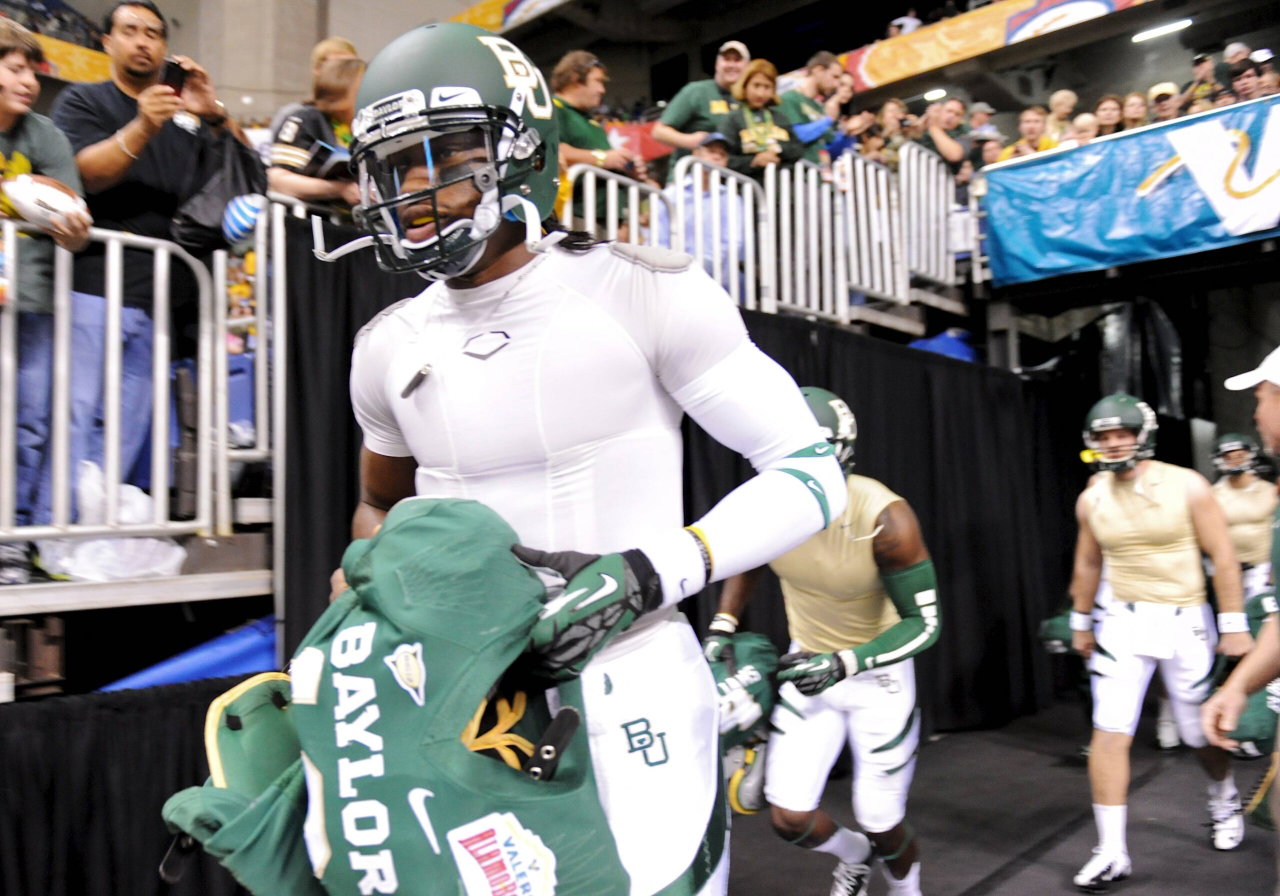
The lights of New York City glittered on a December night in 2011 as a young quarterback from Copperas Cove, Texas, stood on stage holding the most prestigious individual award in college football. Robert Griffin III had just become the first and still only Heisman Trophy winner in Baylor history.
Watch What’s Trending Now!
That season he threw for 4,293 yards and 37 touchdowns, added 699 rushing yards and 10 more scores, and led the Bears to a 10-3 record and an Alamo Bowl victory. For one magical year, Waco felt like the center of the college football universe.
Fifteen years later, the same program that once rode Griffin’s dual-threat brilliance finds itself searching for a new identity. A few weeks ago, Baylor fired head coach Dave Aranda after a heartbreaking 25-24 loss at Kansas. Defensive coordinator Joe Klanderman was named interim coach, and the search for a permanent leader began in earnest.
Just one day after the firing, Griffin went public with a bold declaration. Appearing on The Dan Patrick Show, the former Baylor star and current Fox Sports analyst said he was “100 percent” interested in the job. He revealed he had already spoken with athletic director Doug McNamee.
“If Baylor wants to get back to winning and have a university that isn’t just respectable on the football field, but the fans can be proud of, they need people who know what it looks like to win at Baylor,” Griffin said. “So yeah, I would 100 percent be interested.”
That public plea set the stage for the latest development.
On Friday, reports confirmed that Baylor is expected to interview Griffin for the head coaching vacancy. The former Heisman winner, who has never coached at the collegiate or professional level, has reportedly been preparing for the meeting with the help of a former college head coach. The interview marks a step in a process that McNamee indicated would likely stretch into December due to the realities of the football calendar.
Griffin’s candidacy is unconventional. At 36, he brings unmatched name recognition in Waco, deep Texas recruiting roots, and an intimate understanding of what sustained success once looked like at Baylor.
During his playing days under Art Briles, he helped transform a long-struggling program into a consistent winner. His 2011 season remains the gold standard, the first 10-win campaign for the Bears since 1980. In the NFL, he was the No. 2 overall pick in 2012 and spent seven seasons with Washington, Cleveland, and Baltimore before transitioning to broadcasting.
Yet the lack of formal coaching experience remains the biggest question mark. Griffin has argued that modern college head coaching is more about leadership, culture, and being a CEO than pure play-calling. He has pointed to his Texas roots, ability to recruit the state, and alignment with Baylor’s Christian mission as strengths that check the boxes the university seeks. He has also named other candidates he believes would fit, including Boise State’s Spencer Danielson, UTSA’s Jeff Traylor, and even floated Lincoln Riley as a dark-horse possibility.
Meanwhile, interim coach Joe Klanderman has provided a strong temporary boost. Since taking over, the Bears have won consecutive games, including a dominant victory at UCF and a solid win over Iowa State, improving to 6-3 overall and 4-2 in Big 12 play. The positive results have created an interesting dynamic: success under the interim could either strengthen Klanderman’s own case or give the athletic department more time and flexibility in the permanent search.
Baylor’s recent history adds layers to the decision. The program has experienced both soaring highs and frustrating plateaus. The 2021 Big 12 championship and Sugar Bowl victory under Aranda represented the peak, but the inability to sustain that level in the NIL era contributed to the coaching change.
Athletic director Doug McNamee, who took over in late 2025, has emphasized the need for a leader who can deliver consistent winning while keeping the program aligned with the university’s values.
For Griffin, the opportunity carries personal weight. He has spoken openly about being tired of watching Baylor serve as a stepping stone or afterthought in the Big 12. Returning as head coach would close a full-circle journey, from the player who put the program on the national map to the leader tasked with restoring it. Whether the interview leads to an offer remains uncertain. Other experienced coaches remain in the mix, and the timeline suggests a decision may not come until after the regular season ends.
Still, the mere fact that Baylor is granting its most famous living alumnus a formal interview weeks after his passionate public plea speaks volumes. In an era when programs increasingly value name recognition, recruiting clout, and cultural fit alongside traditional coaching résumés, Robert Griffin III has forced his way into the conversation.