
Two years after leaving the Pac-12 for the Big Ten, the University of Washington is running a sports budget that does not balance. The school’s athletic department expects to spend $206 million in the 2027 fiscal year but bring in only about $190 million, leaving a $16 million deficit tied directly to the conference move.
Watch What’s Trending Now!
The shortfall is not a one-time surprise, per Seattle Times. Washington’s sports operation has not posted a positive cash flow since fiscal 2023, and officials warn that the pressure will continue through at least 2030, when the Big Ten’s current media deal ends.
The deficit grows because the Big Ten costs more to play in than the Pac-12 ever did. Travel is longer, staff salaries are higher, and the school still has to pay for major stadium renovations. At the same time, Washington does not receive a full share of the Big Ten’s TV money until the league negotiates a new contract, which is not expected until 2030.
“Costs related to operating in the Big Ten exceed historic levels experienced in the Pac-12,” UW’s athletics financial performance report cited in June.
Imago
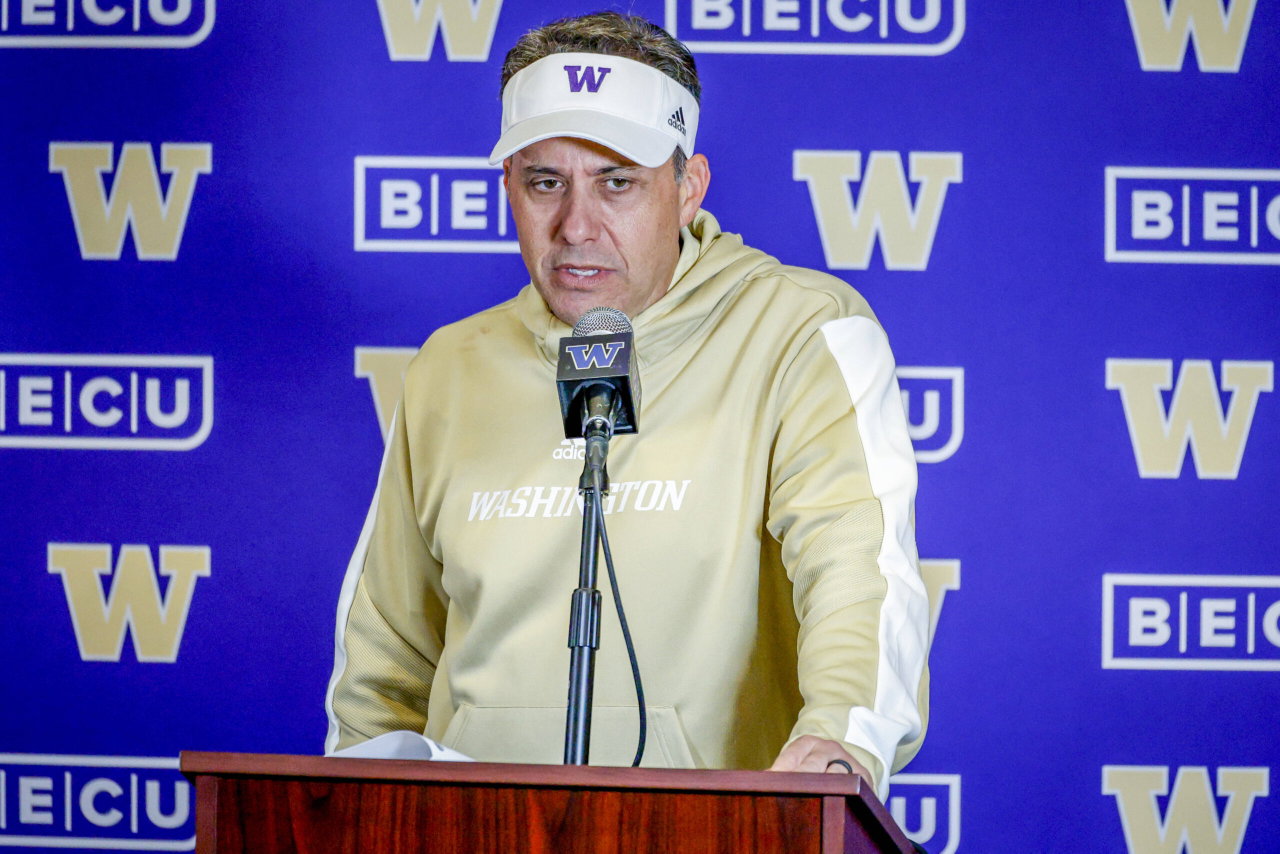
September 21, 2024, Seattle, Washington: Washington Head Coach Jedd Fisch post game interview game between the Washington Huskies and Northwestern Wildcats in the NCAA, College League, USA Big10 matchup at Husky Stadium,Seattle,Washington. Seattle – ZUMAj111 20240921_zsp_j111_051 Copyright: xTomxJonesx
In the meantime, peer programs that joined earlier can draw closer to $91 million in annual distributions, while Washington’s share has hovered near $46 million, a gap that matters when expenses keep climbing.
“It is anticipated that ICA will face ongoing financial pressures through at least [the 2030 fiscal year]. Additionally, continued uncertainty around changes in NCAA regulations, outcomes of pending litigation, and increased Big Ten operating costs presents many complicated risks to ICA’s bottom line,” the treasurer wrote.
To cover the gap, UW will again borrow from its internal Capital Asset Pool, use part of a $13 million donor-restricted contribution from fiscal 2025, take another $10 million interest-free advance from the Big Ten against future media-rights earnings, and navigate an operating deficit projected at $16 million for fiscal 2027. The school has already used similar interest-free loans from the Big Ten and Fox in earlier years to stay afloat during the transition.
But if UW wants to address the financial crisis, it has to adopt a new approach to generating revenue.
The Big Ten schools’ revenue streams
That is why UW is pushing harder on commercial deals. The school already renewed its arena naming partnership with Alaska Airlines in a 10-year, eight-figure agreement for Hec Edmundson Pavilion. Athletic director Pat Chun has said the program is also exploring uniform patches and a new stadium naming-rights partner as it looks to close the gap.
The Alaska deal alone is expected to bring in about $28 million over the next decade, but that money is spread over many years and shared across the athletic department. With limited options to raise ticket prices or cut major sports, sponsorship and naming-rights deals have become one of the few realistic ways to add revenue without shrinking the program.
Other programs face similar strain. LSU, for example, has tested new donor-focused revenue ideas while carrying heavy coaching buyout costs. For Washington, the task is the same: find reliable income streams before the next Big Ten media deal begins.